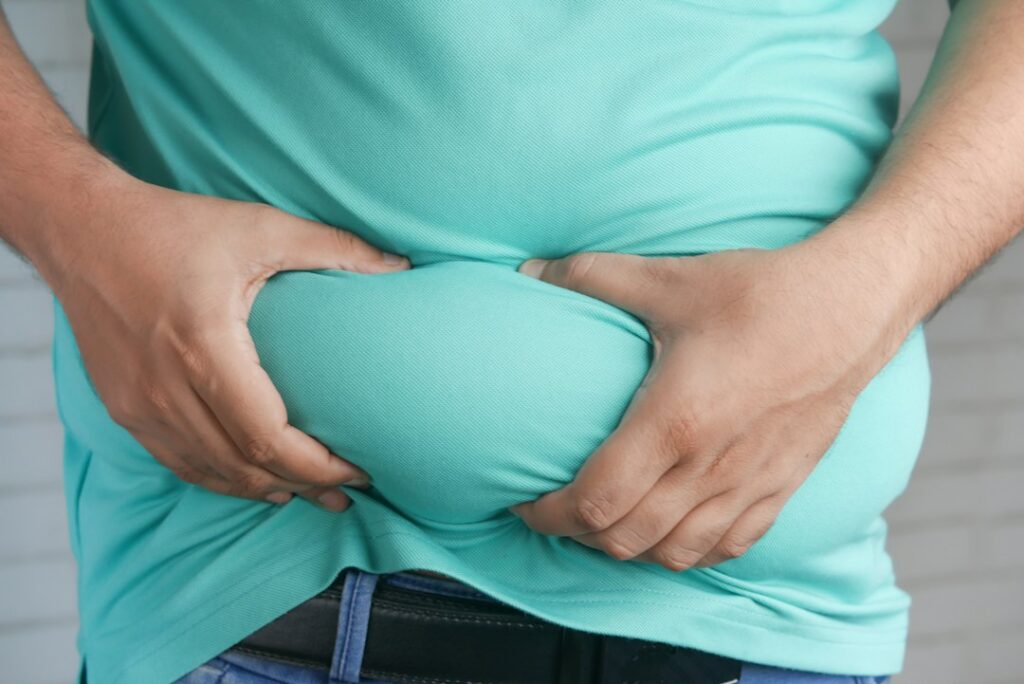
Most bloating is caused by gas from gut bacteria fermenting foods like onion, garlic, wheat, beans and milk, plus constipation, swallowed air, salt and a sensitive gut. To ease it, walk after meals, eat slowly, cut sugar-free sweets, treat constipation and raise fibre gradually. See a doctor if bloating is new or constant.
In this article
- What causes bloating?
- Is it bloating or distension?
- The 12 most common bloating causes
- What does your gut microbiome have to do with bloating?
- How do I get rid of bloating fast?
- How do I stop bloating from coming back?
- Do traditional remedies like fennel and ginger help bloating?
- Is it a myth that bloating means you should cut out fibre?
- When is bloating a warning sign?
- Frequently asked questions
- What I want you to remember
Nearly 1 in 5 adults feels bloated every single week. That is what a 2023 Rome Foundation survey of 51,425 people in 26 countries found. Women were about twice as likely as men to report it.
So if your jeans feel tight by evening, you are far from alone. The good news is that most bloating causes are common, harmless and fixable once you know which one is yours. Here are 12 of the most common, what the newest research says about each, and what to do about them.
What causes bloating?
The most common cause of bloating is gas made when gut bacteria ferment certain foods. Slow gut movement, constipation, swallowed air and an extra sensitive gut are close behind. Hormones, salt, stress and a reflex in your belly muscles can add to it. Often two or three of these work together.
A 2025 European expert consensus describes bloating as a mix of causes. They include a sensitive gut, an unusual reflex in the belly wall, slow gut movement and changes in gut bacteria. That is why one quick fix rarely works for everyone.
Is it bloating or distension?
Bloating is a feeling of pressure, fullness or trapped gas. Distension is when your belly visibly grows bigger. You can have one without the other, but they often come together.
This difference matters, because the fixes are not always the same. A feeling of fullness with a flat belly often points to a sensitive gut. A belly that swells through the day and is flat again by morning often points to gas, constipation or a belly reflex.
The 12 most common bloating causes
1. Fermentable carbs called FODMAPs
FODMAPs are carbs that your small intestine does not absorb well. They travel to your large intestine, where bacteria ferment them and make gas. Onion, garlic, wheat, beans, apples and pears are rich sources.
For people with IBS, the low FODMAP diet has the best evidence for bloating. A 2022 review of 13 trials with 944 people ranked it first for bloating and belly swelling. It also beat standard diet advice for this symptom.
Try this. If onion and garlic bloat you, start with my guide on garlic and its low FODMAP swaps. For the full plan, read my complete IBS diet guide.
2. Lactose in milk
Lactose is the natural sugar in milk. Many adults around the world make less of the enzyme that digests it. Undigested lactose then reaches the colon and can cause bloating, pain and diarrhoea.
A 2019 review in the journal Gut explains that symptoms depend on the dose, your enzyme levels and your gut bacteria. People with IBS or anxiety are more likely to react. Many people still handle a small amount, like milk in tea or a pot of yogurt.
Try this. Swap to lactose-free milk for two weeks and see if your bloating changes. Hard cheeses and kefir are naturally lower in lactose.
3. Sugar-free sweets and gum
Sorbitol, mannitol, xylitol and other sugar alcohols are common in sugar-free gum, mints, protein bars and diet sweets. Your body absorbs them poorly, and they pull water into the gut. Bacteria then ferment them into gas.
Try this. Check labels for words ending in “itol”. Cut them out for a week and notice the difference.
4. Swallowed air
Every gulp of food or drink brings a little air with it. Eating fast, talking while eating, chewing gum, drinking through a straw and fizzy drinks all add more. Most of it comes back up as burps, but some moves down into the gut.
Try this. Put your fork down between bites and aim for meals that last at least 15 to 20 minutes. Choose still water over fizzy drinks for a week.
5. A sudden jump in fibre
Fibre is great for your gut, but adding a lot at once can bloat you. In the DASH-Sodium feeding trial, 412 adults ate a high-fibre diet with about 32 g a day or a low-fibre diet with about 11 g. The high-fibre diet raised the risk of bloating by about 41%.
A second feeding trial of 164 adults found the same pattern. About 18% reported bloating on their usual diet, rising to between 24% and 33% on high-fibre diets. Interestingly, the high-fibre diet rich in protein bloated people more than the one rich in carbs.
This does not mean fibre is bad. It means your gut bacteria need time to adapt. I explain how to raise fibre gently in my guide to fibermaxxing.
6. Too much salt
Salt is a surprising one. In the same DASH-Sodium trial, a high-salt diet raised the risk of bloating by about 27%, whatever else people ate. Lower salt partly offset the extra bloating from the high-fibre diet.
Try this. Cook more at home and go easy on salty snacks, instant noodles, cured meats and takeaway meals for two weeks. Use herbs, lemon and spices for flavour instead.
7. Constipation
When stool moves slowly, gas gets trapped behind it. Bacteria also have more time to ferment what is sitting in your colon. Many people with daily bloating are actually mildly constipated without realising it.
A 2021 review by gastroenterologists at the Mayo Clinic lists slow gut transit as one of the main drivers of chronic bloating. If you go less than every other day, or you strain and never feel empty, treat the constipation first. My guide to IBS constipation covers kiwi, psyllium and more.
8. Sitting still all day
Movement helps push gas through your gut. In a small Spanish study, researchers slowly infused gas into the gut of 8 people with bloating. At rest they kept about 45% of the gas inside. While gently pedalling, that dropped to about 24%, and their symptoms eased.
It was a tiny lab study, so treat it as a clue, not proof. Still, a walk after dinner is a safe, free habit worth testing for evening bloating.
9. A reflex in your belly muscles
This is one of the most surprising findings in bloating research. In some people, a normal meal triggers the diaphragm to push down while the belly wall relaxes and pushes out. Doctors call it abdominophrenic dyssynergia.
The belly then swells even without much extra gas. In a 2024 trial, 42 people with visible swelling after meals had either breathing biofeedback or a dummy capsule. After the biofeedback, swelling scores fell by about 66%. The dummy group did not improve.
Try this. After a meal, sit upright and breathe slowly, letting your ribs widen sideways rather than pushing your belly out. My free Breathe With Me exercise helps you practise slow breathing.
10. A sensitive gut and stress
Some people feel normal amounts of gas much more strongly. This is called visceral hypersensitivity, and it is common in IBS. Stress and anxiety turn the volume up, because your gut and brain are wired together.
The European consensus says brain-gut therapies such as cognitive behavioural therapy and gut-directed hypnotherapy can help bloating linked to IBS. A 2024 review of 42 trials found these therapies reduced IBS belly pain too.
11. Your hormones and your cycle
Many women notice more bloating in the days before their period. In a survey of 156 healthy women, 73% had at least one gut symptom before or during their period. Belly pain and diarrhoea were the most common.
Hormone shifts change how fast the gut moves and how much water the body holds. Women with low mood or anxiety around their period were also more likely to have several gut symptoms. Track your cycle alongside your bloating to see if there is a pattern.
12. Changes in your gut bacteria
The mix of bacteria in your gut decides how much gas you make. A stomach bug, a course of antibiotics or a very limited diet can shift that mix. The Mayo Clinic review lists a previous gut infection as one known trigger of chronic bloating.
Sometimes too many bacteria grow in the small intestine, which is called small intestinal bacterial overgrowth or SIBO. The American College of Gastroenterology’s 2020 guideline says a breath test can check for it. Your doctor decides if testing makes sense for you.
What does your gut microbiome have to do with bloating?
I strongly believe gut health plays a major role in nearly every health condition, and bloating is one of the clearest examples. Gas is made by your gut bacteria. What you feed them, and which ones live there, shapes how bloated you feel.
A 2019 review of 24 studies in Gastroenterology found that people with IBS often have a different gut bacteria mix from people without IBS. The studies did not all agree, so we cannot yet name one “bad” bacterium. The 2025 European consensus also lists changes in gut bacteria among the main causes of bloating.
That is why I never just tell clients to cut foods forever. A very narrow diet can starve the helpful bacteria. The goal is to find your true triggers, then rebuild variety slowly. My Trigger or Safe game is a fun way to learn which foods are high in FODMAPs.
How do I get rid of bloating fast?
To ease bloating fast, take a gentle 10 to 15 minute walk, loosen tight clothes, sip a warm drink and breathe slowly into your ribs. If you need the toilet, go and do not rush. These steps help gas move and calm the belly reflex.
- Walk. Light movement helped clear trapped gas in the Spanish study above.
- Breathe slowly. Breathe in for 4 seconds and out for 6. Let your ribs widen instead of pushing your belly out.
- Sip something warm. Warm water or peppermint tea is gentle. Skip peppermint if it gives you heartburn.
- Lie on your left side or try a gentle knees-to-chest stretch. Many people find this eases trapped wind. It has not been tested in trials, but it is safe.
- Massage clockwise. Rub your belly slowly in a clockwise circle for a few minutes.
The European consensus also lists peppermint oil capsules among treatments for bloating. They can cause heartburn, so ask your pharmacist first. If bloating is part of an IBS flare, my guide on calming an IBS flare-up has more steps.
How do I stop bloating from coming back?
To stop bloating long term, find your personal triggers with a two week diary, then change one thing at a time. The most common winners are eating more slowly, less salt, fewer sugar alcohols, treating constipation and adding fibre gradually.
- Keep a diary for 14 days. Note what you ate, how you slept, your stress, your cycle and your bloating score from 0 to 10.
- Change one thing at a time. Give each change one to two weeks before you judge it.
- Choose gentle fibre. Psyllium husk is a soluble fibre that is often easier on the gut than bran. A 2014 review of 14 trials found soluble fibre helped IBS, while bran did not. In a small 2026 study, psyllium gel even reduced gas made from another fibre.
- Try low FODMAP with support. It works best for 2 to 6 weeks, followed by bringing foods back one by one. A dietitian can guide you so you do not cut more than you need.
- Move every day. A walk after your largest meal is a simple habit with real benefits.
- Calm your nervous system. Slow breathing, good sleep and gut-directed therapies all help the gut-brain link.
In my clinic, I always ask about sleep hours, sleep quality, gut health and poop. Those answers usually point to the cause faster than any single test.
Do traditional remedies like fennel and ginger help bloating?
Global traditional Ayurveda has long used warming spices such as fennel, cumin, ginger and carom seeds after meals to support digestion. They are safe for most people in food amounts, and a cup of fennel or ginger tea after dinner is a gentle ritual.
The research is still thin. In a small 2011 trial of 11 people with indigestion, 1.2 g of ginger made the stomach empty faster than a dummy pill. But it did not change their symptoms. So ginger may help food move, but I would not promise it will flatten your belly.
Ginger supplements can interact with blood thinners, and concentrated herbal products are not tested for safety in pregnancy. Please stick to food amounts unless your doctor agrees.
Is it a myth that bloating means you should cut out fibre?
Yes, for most people it is a myth. Bloating from fibre is usually a sign that your gut bacteria need time to adjust, not that fibre is harmful. Cutting fibre long term can leave your gut bacteria without their main food.
The fix is usually the type and pace of fibre. Soluble fibre like psyllium, oats and chia is often gentler than bran. Raise your intake slowly over a few weeks and drink plenty of water.
When is bloating a warning sign?
Most bloating is harmless, but a few signs need a doctor. Coeliac disease is one cause that is easy to miss. A 2018 review of 275,818 people found that about 1.4% had positive blood tests for it. Stay on your normal diet until you are tested, because cutting gluten first can hide the result.
Persistent bloating can also be an early sign of ovarian cancer, although this is rare. The UK’s National Institute for Health and Care Excellence advises tests when bloating is persistent or frequent. That means more than 12 times a month, especially in women aged 50 and over.
Please see your doctor if your bloating is new, constant or getting worse. The same goes for any warning sign in the box on this page. Losing weight without trying, even a few kilograms (several pounds), is always worth checking.
Frequently asked questions
Why am I bloated every day?
The usual causes of daily bloating are mild constipation, fermentable foods like onion, garlic and wheat, eating quickly, sugar alcohols or a sensitive gut. A two week diary usually reveals the pattern. If it started recently or keeps getting worse, see your doctor.
Why is my stomach flat in the morning and bloated at night?
This pattern is very common. Gas builds up through the day as you eat and your gut bacteria ferment food. A reflex in the belly muscles can also push the belly out after meals. Overnight, gas is absorbed or released, so the belly flattens again.
What foods cause the most bloating?
Common culprits are onion, garlic, wheat, beans, lentils, apples and pears. Milk, sugar-free sweets with sorbitol, fizzy drinks and very salty foods are also frequent triggers. Triggers are personal, so test them one at a time.
How long does bloating last?
Bloating after a meal often settles within a few hours, especially if you walk. Bloating from a big jump in fibre usually improves within a few weeks as your gut adapts. If bloating lasts for weeks without a clear reason, ask your doctor to check it.
Can stress cause bloating?
Yes. Stress makes the gut more sensitive, so normal amounts of gas feel uncomfortable. It can also change how fast your gut moves. Slow breathing, better sleep and brain-gut therapies like gut-directed hypnotherapy can all help.
What I want you to remember
Bloating is very common and usually harmless. It is also a message from your gut. Most of the time the cause is a food your bacteria love to ferment, a sluggish bowel, swallowed air or a sensitive, stressed gut.
Start small. Walk after meals, slow down while eating, check for sugar alcohols, cut back on salt and treat constipation. Then use a diary to find your own triggers.
If you would like daily support, join my free 30-Day Calm Gut Challenge. One small, calming step arrives in your inbox each day.
Sources
- Ballou S, et al. Prevalence and associated factors of bloating. Results from the Rome Foundation Global Epidemiology Study. Gastroenterology, 2023
- Melchior C, et al. European consensus on functional bloating and abdominal distension. United European Gastroenterology Journal, 2025
- Lacy BE, et al. Management of chronic abdominal distension and bloating. Clinical Gastroenterology and Hepatology, 2021
- Barba E, et al. Thoracoabdominal wall motion-guided biofeedback treatment of abdominal distention. A randomized placebo-controlled trial. Gastroenterology, 2024
- Black CJ, et al. Efficacy of a low FODMAP diet in irritable bowel syndrome. Systematic review and network meta-analysis. Gut, 2022
- Misselwitz B, et al. Update on lactose malabsorption and intolerance. Gut, 2019
- Peng AW, et al. Effects of the DASH diet and sodium intake on bloating. Results from the DASH-Sodium trial. American Journal of Gastroenterology, 2019
- Zhang M, et al. Effects of high-fiber diets and macronutrient substitution on bloating. Findings from the OmniHeart trial. Clinical and Translational Gastroenterology, 2020
- Villoria A, et al. Physical activity and intestinal gas clearance in patients with bloating. American Journal of Gastroenterology, 2006
- Bernstein MT, et al. Gastrointestinal symptoms before and during menses in healthy women. BMC Women's Health, 2014
- Pittayanon R, et al. Gut microbiota in patients with irritable bowel syndrome. A systematic review. Gastroenterology, 2019
- Pimentel M, et al. ACG clinical guideline. Small intestinal bacterial overgrowth. American Journal of Gastroenterology, 2020
- Moayyedi P, et al. The effect of fiber supplementation on irritable bowel syndrome. A systematic review and meta-analysis. American Journal of Gastroenterology, 2014
- Dellschaft N, et al. Randomised placebo-controlled trial of methylcellulose and psyllium gels on inulin-induced colonic gas. Alimentary Pharmacology and Therapeutics, 2026
- Goodoory VC, et al. Effect of brain-gut behavioral treatments on abdominal pain in IBS. Systematic review and network meta-analysis. Gastroenterology, 2024
- Hu ML, et al. Effect of ginger on gastric motility and symptoms of functional dyspepsia. World Journal of Gastroenterology, 2011
- Singh P, et al. Global prevalence of celiac disease. Systematic review and meta-analysis. Clinical Gastroenterology and Hepatology, 2018
- National Institute for Health and Care Excellence. Suspected cancer. Recognition and referral (NG12)
- Monash University. High and low FODMAP foods
This article shares general information. It is not a diagnosis or a treatment plan. Please talk to your own doctor before you change your diet, medicines or supplements.

Dt. Hashika Vyas
Hashika is a dietitian who works with clients in 15+ countries on gut health, PCOS and weight. She healed her own IBS, and writes every guide on this site to be calm, clear and practical.