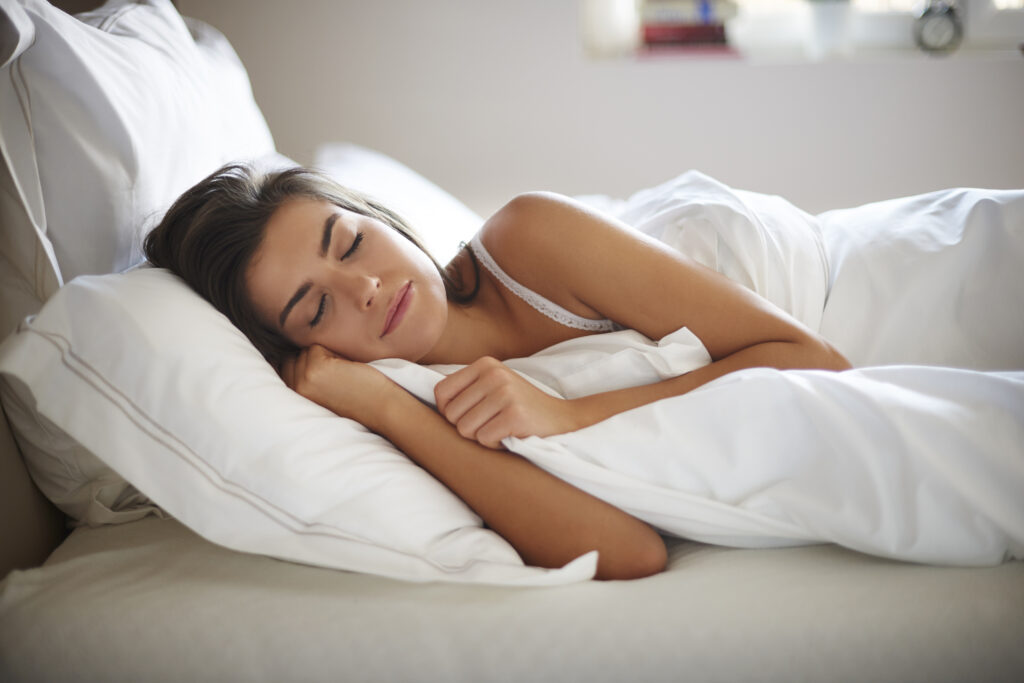
Short sleep is linked to more deep belly fat, more hunger and less fat loss when dieting. Most adults do best with 7 to 9 hours. A fixed wake-up time, morning light, no caffeine after 2 pm, a dark bedroom and an early dinner help you sleep better and support belly fat loss.
In this article
- Short sleep sends fat to your middle
- Surprising finding 1. Dieting on short sleep costs you muscle, not fat
- Surprising finding 2. One extra hour of sleep cut 270 calories a day
- Your gut bacteria keep a sleep diary
- The weekend catch-up myth
- Light at night may matter more than you think
- Caffeine stays longer than you feel
- Can food help you sleep? The kiwi and cherry debate
- Night shifts need a different plan
- How to sleep better to lose belly fat, step by step
- Frequently asked questions
- What I want you to remember
In a Mayo Clinic study, healthy young adults slept only 4 hours a night for two weeks. Their deep belly fat grew by 11 percent. When they caught up on sleep, their eating settled down. But that deep fat kept rising.
That is why I never start a weight plan without asking about sleep. I ask my clients how many hours they sleep and how rested they feel. I also ask about their gut health, and yes, about their poop.
I strongly believe gut health plays a major role in nearly every health condition. Sleep is no exception. Your gut bacteria and your sleep affect each other every single night.
So this guide covers both. You will see what the newest research says about sleep and belly fat, and how to sleep better to lose belly fat, starting tonight.
Short sleep sends fat to your middle
The Mayo Clinic study was small, with just 12 people. But large studies point the same way.
A Canadian study followed adults for six years. People who slept 5 to 6 hours gained about 2 kg, or 4 pounds, more than people who slept 7 to 8 hours. They were also 35 percent more likely to gain 5 kg, about 11 pounds.
A US study used CT scans to measure belly fat over five years. Adults under 40 who slept 5 hours or less gained more deep belly fat than those who slept 6 to 7 hours.
Here is the twist. Very long sleep was also linked to fat gain in both studies. So the goal is not endless sleep. For most adults, the sweet spot is 7 to 9 hours.
Surprising finding 1. Dieting on short sleep costs you muscle, not fat
In a 2010 study at the University of Chicago, 10 adults with overweight followed the same diet twice. Once they slept 8.5 hours a night. Once they slept 5.5 hours.
They lost a similar amount of weight both times. But on short sleep, they lost 55 percent less fat and 60 percent more lean tissue, like muscle. They also felt hungrier.
Think about that. You can eat perfectly and still lose the wrong kind of weight if you do not sleep.
Surprising finding 2. One extra hour of sleep cut 270 calories a day
In a 2022 trial, 80 young adults with overweight usually slept less than 6.5 hours. Half of them got simple, personal sleep advice. Then everyone went home and lived their normal lives.
The advice group slept about 1.2 hours more each night. Nobody told them to diet. Yet they ate about 270 fewer calories a day, and they lost a little weight. The other group did not change.
This is the kind of finding I love. Better sleep made eating less feel easy, which is the heart of the link between sleep and belly fat.
Your gut bacteria keep a sleep diary
Your gut and your sleep talk to each other. In a 2019 US study, people with a wider variety of gut bacteria slept more efficiently. They slept longer and spent less time awake during the night.
The link seems to run the other way too. In a small Swedish study, nine young men slept about 4 hours a night for two nights. Their gut bacteria shifted toward a pattern seen in people with obesity. Their bodies also handled insulin less well.
These are small studies that show links, not proof. But they match what I look for. So I always ask about sleep and digestion together.
Try this. Feed your gut during the day so it can support you at night. Eat a wide mix of vegetables, fruit, beans and whole grains. Add plain yogurt or kefir. Keep your last meal light and early.
The weekend catch-up myth
Many of us sleep short all week and try to pay it back on Saturday. A 2019 study at the University of Colorado tested this idea.
One group slept 5 hours on weeknights, then slept as long as they liked at the weekend. It did not protect them. They kept snacking after dinner, and their bodies used insulin less well.
Try this. Keep your wake-up time within an hour of your weekday time, even on days off. If you need more rest, go to bed earlier instead.
Light at night may matter more than you think
A US study followed 43,722 women for about five years. Women who slept with a TV or a light on in the room were 17 percent more likely to gain 5 kg, about 11 pounds.
It shows a link, not proof. But the fix is free.
Morning light matters too. In a Northwestern University study, people who got most of their bright light earlier in the day tended to have a lower body mass index.
Try this. Make your bedroom fully dark, or wear an eye mask. Charge your phone outside the room. Step outside for 10 to 20 minutes of daylight soon after you wake up.
Caffeine stays longer than you feel
In a 2013 study, people took a large dose of caffeine at bedtime, 3 hours before bed or 6 hours before bed. The dose was 400 mg, about four cups of brewed coffee.
Even 6 hours before bed, it still disturbed their sleep. Sleep monitors showed they lost more than an hour of sleep.
Try this. Have your last coffee, black tea, cola or energy drink before 2 pm. If you are sensitive, stop at noon.
Can food help you sleep? The kiwi and cherry debate
You may have read that kiwi fruit or tart cherry juice can help you sleep. Here is the honest picture.
In a Taiwanese study, 24 adults with sleep problems ate two kiwis an hour before bed for four weeks. They fell asleep faster and slept longer. But there was no comparison group, so we cannot rule out other reasons.
In a small US trial, 8 adults over 50 with insomnia drank tart cherry juice twice a day for two weeks. On sleep tests, they slept about 84 minutes longer than when they drank a dummy juice.
These studies are tiny. So I see kiwi and cherries as a nice extra, not a cure. Both are fruits that feed your gut, which is a bonus.
Night shifts need a different plan
If you work nights, your body clock fights your schedule. A review of 28 studies found that shift workers had a 35 percent higher chance of abdominal obesity.
Try this. Sleep in one long block when you can. Use blackout curtains and earplugs. Eat your main meal before your shift, and keep night snacks light. My guide to stress belly has more help for shift workers.
How to sleep better to lose belly fat, step by step
- Fix your wake-up time. Keep it the same every day, within an hour.
- Get morning light. Spend 10 to 20 minutes outside after waking.
- Set a caffeine curfew. Have your last cup before 2 pm.
- Eat dinner early. Finish 2 to 3 hours before bed. In a Harvard study, eating late made people hungrier.
- Make it dark. No TV or lights on while you sleep.
- Put the phone away. Stop screens an hour before bed.
- Breathe slowly. Try four rounds of 4-7-8 breathing in bed.
- Feed your gut by day. Plants, fibre and fermented foods all help.
Sleep is one part of the bigger plan in my guide to losing belly fat without counting calories.
Frequently asked questions
Can you lose belly fat while you sleep?
Not directly. But good sleep helps you eat less, keep your muscle and store less deep belly fat. Poor sleep does the opposite.
How many hours of sleep do I need to lose belly fat?
Most adults do best with 7 to 9 hours. In studies, both very short and very long sleep were linked to fat gain.
Is it bad to eat right before bed?
A large late meal can disturb both sleep and digestion. In a Harvard study, eating later made people hungrier the next day. Try to finish dinner 2 to 3 hours before bed.
Does sleeping in at the weekend help?
Not much. In a 2019 study, weekend catch-up sleep did not undo the effects of short sleep during the week. A steady routine works better.
What I want you to remember
Sleep is not lazy time. It is when your body sorts out hunger, hormones and fat storage. Protect it like a meeting you cannot miss.
Start with one change tonight. A fixed wake-up time is the best first step.
Sources
- Covassin N, et al. Effects of experimental sleep restriction on energy intake, energy expenditure, and visceral obesity. Journal of the American College of Cardiology, 2022
- Chaput JP, et al. The association between sleep duration and weight gain in adults. A 6-year prospective study from the Quebec Family Study. Sleep, 2008
- Hairston KG, et al. Sleep duration and five-year abdominal fat accumulation in a minority cohort. The IRAS Family Study. Sleep, 2010
- Nedeltcheva AV, et al. Insufficient sleep undermines dietary efforts to reduce adiposity. Annals of Internal Medicine, 2010
- Tasali E, et al. Effect of sleep extension on objectively assessed energy intake among adults with overweight in real-life settings. JAMA Internal Medicine, 2022
- Smith RP, et al. Gut microbiome diversity is associated with sleep physiology in humans. PLoS One, 2019
- Benedict C, et al. Gut microbiota and glucometabolic alterations in response to recurrent partial sleep deprivation in normal-weight young individuals. Molecular Metabolism, 2016
- Depner CM, et al. Ad libitum weekend recovery sleep fails to prevent metabolic dysregulation during a repeating pattern of insufficient sleep and weekend recovery sleep. Current Biology, 2019
- Park YM, et al. Association of exposure to artificial light at night while sleeping with risk of obesity in women. JAMA Internal Medicine, 2019
- Reid KJ, et al. Timing and intensity of light correlate with body weight in adults. PLoS One, 2014
- Drake C, et al. Caffeine effects on sleep taken 0, 3, or 6 hours before going to bed. Journal of Clinical Sleep Medicine, 2013
- Lin HH, et al. Effect of kiwifruit consumption on sleep quality in adults with sleep problems. Asia Pacific Journal of Clinical Nutrition, 2011
- Losso JN, et al. Pilot study of the tart cherry juice for the treatment of insomnia and investigation of mechanisms. American Journal of Therapeutics, 2018
- Sun M, et al. Meta-analysis on shift work and risks of specific obesity types. Obesity Reviews, 2018
- Vujovic N, et al. Late isocaloric eating increases hunger, decreases energy expenditure, and modifies metabolic pathways. Cell Metabolism, 2022
This article shares general information. It is not a diagnosis or a treatment plan. Please talk to your own doctor before you change your diet, medicines or supplements.

Dt. Hashika Vyas
Hashika is a dietitian who works with clients in 15+ countries on gut health, PCOS and weight. She healed her own IBS, and writes every guide on this site to be calm, clear and practical.