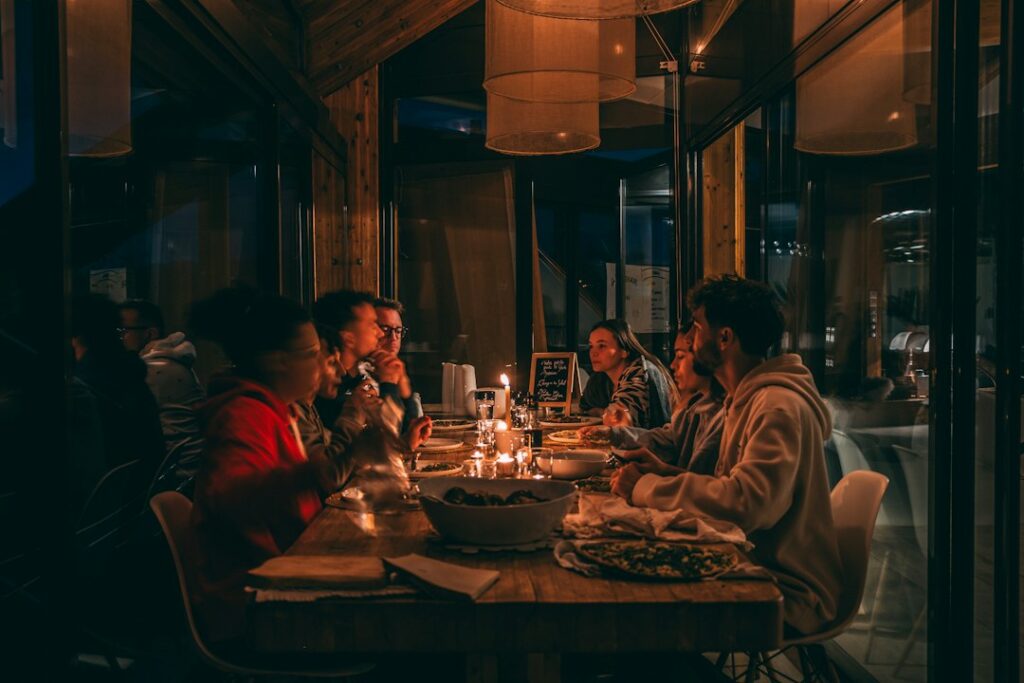
Eating out with IBS is easier with a plan. Check the menu ahead, know your main triggers and choose grilled fish, chicken or meat with rice, potato or vegetables. Ask for sauces on the side, because they often hide garlic and onion. Eat slowly and keep the portion moderate, since restaurant meals are often very large.
In this article
- Why is eating out hard with IBS?
- Does IBS affect your social life around food?
- How do I prepare before eating out with IBS?
- What should I order at a restaurant with IBS?
- What can I eat at Italian, Asian and other restaurants?
- What about drinks, coffee and dessert?
- How can I eat out without fear?
- When should I talk to a doctor or dietitian?
- Frequently asked questions
- What I want you to remember
Restaurant meals are bigger than most of us think. A 2018 study measured 223 popular meals from restaurants in five countries. Only meals in China held less energy than American meals, which averaged about 1,090 calories. And 94% of full service meals had at least 600 calories.
Large, rich meals are hard on a sensitive gut. Yet eating out with IBS does not have to mean salad and fear. With a few simple habits, you can order almost anywhere and still enjoy the evening.
Why is eating out hard with IBS?
Eating out is hard because you cannot see what goes into the food. Garlic, onion, rich sauces and big portions are all common in restaurant cooking, and each can trigger IBS.
Portion size matters too. A 2016 study tested popular meals from small, local restaurants in three American cities. They held about 1,200 calories each on average, and 92% held more than a person needs at one meal.
Fat is a big part of this. A 2026 review found that the colon starts to move within minutes of a meal, and this lasts 30 to 120 minutes. Fat is an important trigger for this response. That is why a big, creamy meal can send you looking for the toilet before dessert.
Does IBS affect your social life around food?
For many people, yes. A 2019 study looked at food-related quality of life in 80 people with IBS. It was as low as in people with active inflammatory bowel disease. The more diets people used to manage symptoms, the lower it fell.
A 2022 Swedish study of 955 people with IBS found that 13.2% reported severe food avoidance and restriction. This group had worse symptoms, a lower quality of life and ate less protein and energy. Fear of food can quietly shrink your life, and that matters as much as the symptoms.
I strongly believe a calm gut needs a calm mind at the table. Your gut and brain talk all the time, so worry before a meal can turn up symptoms on its own. My guide to IBS and anxiety explains this loop and how to break it.
How do I prepare before eating out with IBS?
Do a little homework and you will order with more confidence. Monash University, the team behind the low FODMAP diet, gives the first three tips below.
- Check the menu online first. Pick one or two dishes that look safe before you arrive.
- Know your worst triggers. Ask for your main ones, such as garlic, onion or wheat, to be left out.
- Call ahead outside busy hours. Kitchens have more time to adapt a dish when they know in advance.
- Eat regular meals that day. Arriving starving makes it easy to eat too much, too fast.
The NHS backs this up for IBS. It advises not to delay or skip meals and not to eat too quickly. A 2022 study of 4,599 adults found that people with regular meal times had 40% lower odds of IBS. That study cannot show cause and effect, but regular meals are easy to try.
What should I order at a restaurant with IBS?
Choose a simple protein with a plain side. Monash suggests grilled fish, red meat or chicken with vegetables, salad, potato, rice or rice noodles instead of bread or pasta.
- Ask for sauces, dips and dressings on the side. They often hide garlic and onion, and you can decide how much to use.
- Go easy on rich, heavily sauced dishes. Monash says curries are hard to change because garlic and onion are often the base.
- Be careful with soups and risotto. Stock often contains garlic and onion.
- Ask the staff for a recommendation. Tell them what you need to avoid, and let them suggest a dish.
A gluten-free meal is not always low FODMAP. Monash points out that it can still contain onion or garlic, so ask for your triggers to be left out too. My guides to garlic and onion explain why these two cause so much trouble.
What can I eat at Italian, Asian and other restaurants?
Most cuisines have a safe option if you know what to ask for. Here are ideas taken from Monash’s dining out guides.
- Italian. Many places now offer gluten-free pasta and pizza bases. Ask whether the tomato sauce has garlic or onion, because many kitchens can make it with just tomatoes and salt.
- Vietnamese. Rice vermicelli bowls with beef, chicken, prawn or tofu and salad are good choices. Ask for no onion. Rice paper rolls work well too.
- Thai. Choose a stir-fry over a curry, ask for no onion or garlic and have it with steamed jasmine rice. Ask for mild chilli if spice bothers you.
- Japanese. Try grilled fish, chicken, beef or tofu with steamed rice, or plain sashimi with sauces on the side.
- Korean barbecue. You choose the ingredients and they are cooked in front of you.
- Chinese. Ask whether sauces contain onion or garlic, and ask for soy or oyster sauce instead. Choose rice dishes over wheat noodles or wonton wrappers.
- French. With steak and fries, check the sauce for onion or garlic. Mustard and a salad with oil and vinegar are simple swaps.
- Greek. Grilled halloumi, olives, chargrilled fish or octopus, roast lamb and roast potatoes are gentler picks. Monash suggests avoiding dips, moussaka and honey desserts.
Rice is one of the safest sides on any menu. My guide on whether rice is low FODMAP explains which types suit IBS best. If bread is your weak spot, see my guide to sourdough and IBS.
What about drinks, coffee and dessert?
Keep drinks simple. The NHS advises no more than 3 cups of tea, coffee or other caffeinated drinks a day, and not too much alcohol or fizzy drink.
Water, still or with lemon, is always safe. If you want a coffee after dinner, my guide to coffee and IBS explains how to drink it without a flare. For dessert, a few squares of dark chocolate are often gentler than a large creamy pudding. If milk bothers you, my lactose and IBS guide has easy swaps.
How can I eat out without fear?
Remember that the goal is a low FODMAP diet, not a no FODMAP diet. One meal out will rarely undo your progress, and a little of a trigger food is often fine.
Try these habits at the table.
- Eat slowly and put your fork down between bites. This gives your gut time to keep up.
- Stop when you are comfortably full. Take the rest home. Restaurant portions are often much larger than one meal needs.
- Share a starter or dessert instead of having your own.
- Take a slow breath before you order. The Breathe With Me game teaches a simple pattern you can use anywhere.
If you are not sure which foods are your triggers, play Trigger or Safe to test what you know. The reintroduction phase in my low FODMAP diet in 3 phases guide helps you find your own limits, so menus feel far less scary.
When should I talk to a doctor or dietitian?
Get help if you avoid eating out or social meals because of your gut. Studies link strong food avoidance with worse symptoms and lower intake of energy and protein, and a dietitian can help you widen your diet safely.
See your doctor if you notice blood in your stool or if pain wakes you at night. Also see them if you lose weight without trying, such as 3 kg (about 7 lb) or more. My complete IBS diet guide covers the full plan for everyday meals.
Frequently asked questions
What is the safest restaurant meal for IBS?
Grilled fish, chicken or meat with plain rice or potato and steamed vegetables is a safe choice for most people. Ask for any sauce on the side and for no onion or garlic. Keep the portion moderate.
Should I tell the waiter I have IBS?
You do not have to say IBS if you do not want to. It is enough to say you cannot eat onion or garlic, or whatever your triggers are. Clear, short requests are easiest for the kitchen to follow.
Is fast food bad for IBS?
Fast food is often high in fat, and large fatty meals can trigger the gut. A 2018 study found fast food meals held less energy than full service meals, but 72% still had at least 600 calories. Choose a smaller size and a grilled option where you can.
Can I eat out during the strict low FODMAP phase?
Yes. Choose simple dishes of protein with rice or potato, ask for sauces on the side and check the menu ahead. The strict phase only lasts a few weeks, so do not let it stop you seeing friends.
What I want you to remember
Eating out with IBS works best with a plan. Check the menu, know your top triggers, choose grilled protein with rice or potato, ask for sauces on the side and eat slowly.
Food should bring you joy, not fear. If you are planning a trip, read my guide to travelling with IBS. Then join my free 30-Day Calm Gut Challenge for daily habits that calm your gut.
Sources
- Roberts SB, et al. Measured energy content of frequently purchased restaurant meals. Multi-country cross sectional study. BMJ, 2018
- Urban LE, et al. Energy contents of frequently ordered restaurant meals and comparison with human energy requirements and US Department of Agriculture database information. Journal of the Academy of Nutrition and Dietetics, 2016
- Shibata C, et al. Role of neural and humoral mediators in the gastrocolonic response. Journal of Smooth Muscle Research, 2026
- Guadagnoli L, et al. Food-related quality of life in patients with inflammatory bowel disease and irritable bowel syndrome. Quality of Life Research, 2019
- Melchior C, et al. Food avoidance and restriction in irritable bowel syndrome. Relevance for symptoms, quality of life and nutrient intake. Clinical Gastroenterology and Hepatology, 2022
- Bavani NG, et al. The relationship between meal regularity with irritable bowel syndrome (IBS) in adults. European Journal of Clinical Nutrition, 2022
- Varney J. Eating out tips and tricks. Monash University FODMAP blog, 2020
- Dwyer E. Eating out on a low FODMAP diet. Italian, Chinese, French and more. Monash University FODMAP blog, 2017
- Iacovou M. Eating out Asian style. Monash University FODMAP blog, 2015
- Iacovou M. Eating out on a low FODMAP diet. Greek cuisine. Monash University FODMAP blog, 2014
- Monash FODMAP team. Travelling on a low FODMAP diet. Monash University FODMAP blog, 2016
- Monash University. High and low FODMAP foods. Monash FODMAP, accessed 2026
- NHS. Irritable bowel syndrome (IBS). Diet, lifestyle and medicines. Reviewed 2025
This article shares general information. It is not a diagnosis or a treatment plan. Please talk to your own doctor before you change your diet, medicines or supplements.

Dt. Hashika Vyas
Hashika is a dietitian who works with clients in 15+ countries on gut health, PCOS and weight. She healed her own IBS, and writes every guide on this site to be calm, clear and practical.