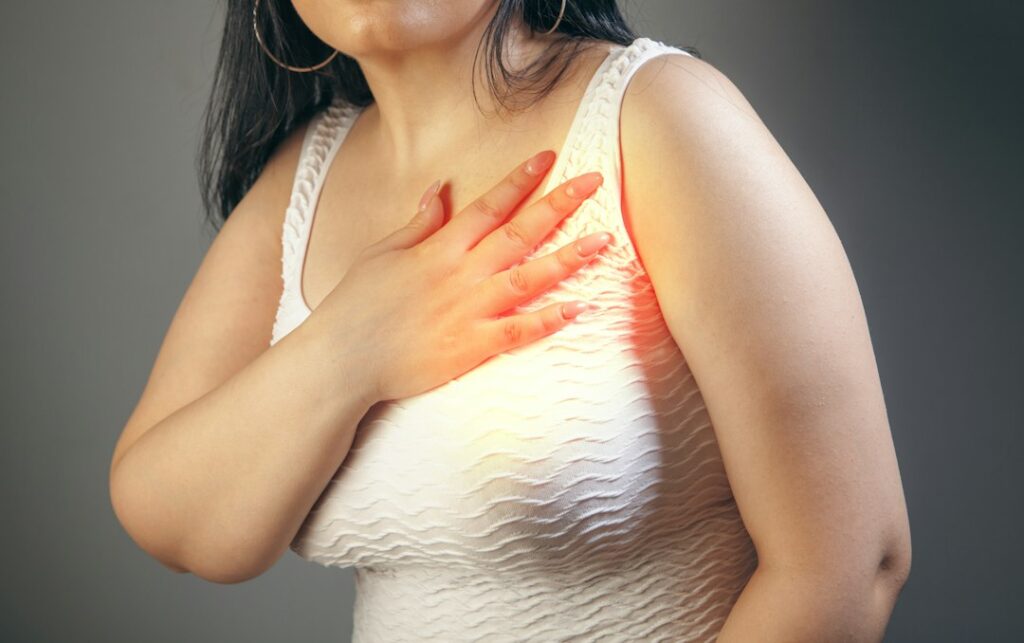
Heartburn is a burning feeling in your chest from stomach acid rising into your food pipe. IBS causes belly pain linked to diarrhoea or constipation. Many people have both. People with IBS are about 4 times more likely to have reflux. Smaller meals, an earlier dinner, left-side sleeping and finding your triggers can ease both.
In this article
- Heartburn vs IBS, what is the difference?
- Why do heartburn and IBS happen together so often?
- Can gas from your bowel make heartburn worse?
- Do heartburn medicines affect your gut bacteria?
- What helps heartburn, according to research?
- What helps IBS when you also have heartburn?
- Is it heartburn or something more serious?
- Frequently asked questions
- What I want you to remember
If you have IBS, you are about 4 times more likely to have heartburn too. That was the finding of a 2012 review of 13 community studies with almost 50,000 people. About 42% of people with IBS also had reflux symptoms. So the question heartburn vs IBS often has a simple answer. Many people have both.
In this guide I explain how to tell heartburn and IBS apart and why they so often travel together. I also cover what the research says helps each one. You will also find the gut link that most heartburn advice leaves out, and the warning signs that mean you should see a doctor.
Heartburn vs IBS, what is the difference?
Heartburn starts in your food pipe, and IBS starts in your bowel. Heartburn is a burning feeling in the middle of your chest. It happens when stomach acid moves up into the food pipe, also called the oesophagus. IBS causes belly pain linked to your bowel habits, with diarrhoea, constipation or both.
When people search heartburn vs IBS, they usually want to know which one they are feeling. Here is a simple way to tell.
- Where it hurts. Heartburn burns behind the breastbone, sometimes up to the throat. IBS pain sits lower, in the belly, often below the belly button.
- When it happens. Heartburn is often worse after eating, when lying down and when bending over. IBS pain often eases or changes after you open your bowels.
- What comes with it. Heartburn can bring a sour taste, burping, a cough or a hoarse voice. IBS comes with changes in how often you go and what your stool looks like.
- Bloating. Both can cause bloating, which is one reason people mix them up.
When reflux keeps happening, doctors call it gastro-oesophageal reflux disease, or GERD (GORD in the UK). A 2020 review of 102 studies estimated that about 14% of adults worldwide have GERD. That is around 1 billion people.
Why do heartburn and IBS happen together so often?
Heartburn and IBS share some of the same drivers, so they often show up in the same person. The 2012 review found that people with IBS had about 4 times the odds of reflux symptoms. This was true in every region and with every set of IBS criteria the authors checked.
The authors said the reasons are still unclear. Shared causes are one likely answer. Both conditions are linked with a more sensitive gut, and both can flare with stress, large meals and certain foods.
Many cases of heartburn are also a gut-brain problem. Rome IV experts describe a condition called functional heartburn. People feel real burning, but tests show normal acid levels. The experts think a more sensitive food pipe and a brain that is on high alert play a big role. This is the same kind of oversensitive gut signalling we see in IBS.
Can gas from your bowel make heartburn worse?
Yes, a small study suggests that gas made in your bowel can trigger more reflux. This is the gut angle I find most interesting. In a 2003 French study, 9 people with GERD took a fibre called fructo-oligosaccharides (FOS) after meals for 7 days. FOS is a fast-fermenting carb, similar to the fructans in wheat, onion and garlic.
Compared with a dummy powder, FOS led to more reflux episodes, more acid in the food pipe and worse heartburn. It also made the valve at the top of the stomach relax more often. The authors linked this to a gut hormone called GLP-1 that is released when bacteria ferment carbs in the bowel.
This was a very small study, so we cannot say every gassy food causes heartburn. But I strongly believe it shows how connected your whole gut is. When clients come to me, I always ask about their gut health and their poop, even if they only mention heartburn. Bloating low down and burning up high are often part of the same story.
Do heartburn medicines affect your gut bacteria?
Yes, acid-lowering medicines called proton pump inhibitors (PPIs) do change gut bacteria. PPIs include omeprazole and lansoprazole. They are very good at healing an inflamed food pipe, and many people truly need them. But they also lower a natural acid barrier that keeps some bacteria in check.
A 2016 Dutch study looked at the stool of 1,815 people across 3 groups. The 211 people using PPIs had less diverse gut bacteria. About 20% of bacterial groups were different. Bacteria usually found in the mouth showed up more often in their bowel. The authors said these changes point towards a less healthy gut microbiome.
A 2025 review of 29 studies looked at small intestinal bacterial overgrowth (SIBO). It affected about 37% of PPI users, compared with about 20% of people not taking them. The longer people took PPIs, the higher their risk. My guide to SIBO vs IBS explains how this can cause bloating and IBS-like symptoms.
Please do not stop a prescribed medicine on your own. The American College of Gastroenterology (ACG) 2022 guideline does suggest trying to stop PPIs after an 8-week course if symptoms settle. Talk to your doctor about the lowest dose that works for you.
What helps heartburn, according to research?
Losing extra weight, eating earlier in the evening and changing how you sleep have the best evidence for heartburn. The ACG 2022 guideline gives a strong recommendation for weight loss in people who are overweight. It also suggests avoiding meals 2 to 3 hours before bed and raising the head of your bed for night-time symptoms.
Weight
A large Norwegian study followed 29,610 adults for about 11 years. The more weight people lost, the more their reflux eased. People whose BMI dropped by more than 3.5 units had about twice the odds of losing their reflux symptoms. For someone 1.70 m (5 ft 7 in) tall, that is about 10 kg (22 lb).
Meal timing
A 2005 study from Japan compared 147 people with GERD and 294 people without it. Finishing dinner less than 3 hours before bed was linked with about 7 times the odds of GERD, compared with 4 hours or more. This study shows a link, not proof of cause. The NHS gives similar advice, and suggests not eating within 3 or 4 hours of bedtime.
Sleep position
A 2022 trial in 100 people with night-time reflux used a small device that buzzed when they rolled onto their right side. Symptoms halved in 44% of the device group, compared with 24% of the sham group. Sleeping on your left side keeps the top of your stomach above the acid pool.
Raising the head of the bed may help too. A 2021 review found 5 small trials with 228 people, and most showed some benefit, though the studies had flaws. The NHS suggests raising the head of the bed by about 10 to 20 cm (4 to 8 inches) with blocks or books. Extra pillows are not the same, because they bend you at the waist and press on your belly.
Breathing
Belly breathing trains the diaphragm, the muscle that wraps around the bottom of the food pipe. A 2026 review of 10 trials with 476 people found that diaphragmatic breathing modestly eased heartburn scores. The results varied a lot between studies, so the authors called for bigger trials. It is free, safe and also calms the gut-brain axis, which is why I like it.
Alginates
Alginates form a raft that floats on top of your stomach contents. A 2017 review of 14 trials with 2,095 people found alginates worked better than placebo or antacids for heartburn. The NHS says antacids and alginates are for short-term relief, not for regular long-term use, so speak to a pharmacist.
What helps IBS when you also have heartburn?
The best plan calms both the upper and lower gut at the same time. Many of the steps overlap. Smaller meals, a calmer mind and finding your food triggers help both conditions.
A low FODMAP diet is the best-studied diet for IBS. It cuts fast-fermenting carbs for a few weeks, then brings them back one by one. Given the 2003 FOS study, it may ease some reflux in people who have both. That is my reading of the evidence, not a proven fact. My guide to the low FODMAP diet in 3 phases explains how to do it safely.
Some common heartburn triggers are also IBS triggers. The NHS lists coffee, alcohol, chocolate, tomatoes and fatty or spicy foods. My guide to coffee and IBS explains how to keep your morning cup with less trouble.
Try this
- Keep a 2-week symptom diary. Write down chest burning, belly pain, bloating, stools, meals and bedtime. Note where each symptom sits.
- Finish dinner 3 hours before bed. If you eat late, make it a small, low-fat meal.
- Eat smaller meals. Big meals stretch the stomach and push acid upwards. They can also set off IBS cramps.
- Sleep on your left side. Raise the head of your bed by 10 to 20 cm (4 to 8 inches) if night-time burning wakes you.
- Practise belly breathing. Try 5 to 10 minutes a day. My free Breathe With Me exercise guides you through it.
- Loosen your waistband. Tight clothes press on your belly and push stomach contents up.
- Test your triggers one at a time. Swap coffee for a gentler drink for a week, then try it again.
- Calm your stress daily. Join my free 30-Day Calm Gut Challenge for one small habit a day.
Is it heartburn or something more serious?
Most heartburn is not dangerous, but some symptoms need a doctor quickly. The ACG guideline advises a camera test, called an endoscopy, if heartburn comes with trouble swallowing, weight loss, bleeding, vomiting or anaemia. The NHS says to see a doctor if you have heartburn most days or if pharmacy medicines do not help.
Chest pain can also come from the heart. If you have chest pain with breathlessness, sweating, or pain spreading to your arm, jaw or back, call emergency services. Do not assume it is heartburn.
For IBS, blood in your stool, weight loss and diarrhoea that wakes you at night are red flags too. My guide to IBS vs IBD explains what your doctor may check.
Frequently asked questions
Can IBS cause heartburn?
IBS does not directly cause heartburn, but the two often happen together. A 2012 review found that people with IBS had about 4 times the odds of reflux symptoms. A more sensitive gut, stress and gas from the bowel may all play a part. Treating both together often works best.
How do I know if my chest burning is heartburn or IBS?
Heartburn is a burning feeling behind the breastbone that is often worse after meals or when lying down. IBS pain is lower in the belly and is linked to your bowel habits. If you are not sure, keep a symptom diary for 2 weeks and show it to your doctor.
Can a low FODMAP diet help heartburn?
It might help some people, but the evidence is limited. A small 2003 study found that a fast-fermenting fibre raised reflux in people with GERD. A low FODMAP diet is proven for IBS, so it is worth trying with a dietitian if you have both conditions.
Is it safe to take heartburn medicine for a long time?
Many people need long-term acid medicine, and it can be safe under a doctor’s care. PPIs do change gut bacteria and may raise the risk of SIBO. The ACG guideline suggests trying to stop after 8 weeks if symptoms settle. Never stop or change a dose without speaking to your doctor.
Does stress cause heartburn and IBS?
Stress does not cause either one on its own, but it can make both feel worse. Your gut and brain talk all the time, and a stressed brain turns up gut pain signals. Breathing, sleep and gentle movement can help. My guide to the gut-brain axis explains why.
What I want you to remember
Heartburn burns in your chest and IBS hurts in your belly, but many people have both. People with IBS are about 4 times more likely to have reflux. The two share a sensitive gut, stress and possibly gas from the bowel.
Start with the steps that help both. Eat smaller meals, finish dinner early, sleep on your left side, breathe slowly and find your food triggers. See a doctor about trouble swallowing, weight loss, bleeding or chest pain that worries you. If you have IBS, my complete IBS diet guide is the best place to start.
Sources
- Lovell RM, Ford AC. Prevalence of gastro-esophageal reflux-type symptoms in individuals with irritable bowel syndrome in the community. A meta-analysis. American Journal of Gastroenterology, 2012
- Nirwan JS, et al. Global prevalence and risk factors of gastro-oesophageal reflux disease (GORD). Systematic review with meta-analysis. Scientific Reports, 2020
- Katz PO, et al. ACG clinical guideline for the diagnosis and management of gastroesophageal reflux disease. American Journal of Gastroenterology, 2022
- Aziz Q, et al. Functional esophageal disorders. Gastroenterology, 2016
- Piche T, et al. Colonic fermentation influences lower esophageal sphincter function in gastroesophageal reflux disease. Gastroenterology, 2003
- Imhann F, et al. Proton pump inhibitors affect the gut microbiome. Gut, 2016
- Khurmatullina AR, et al. The duration of proton pump inhibitor therapy and the risk of small intestinal bacterial overgrowth. A systematic review and meta-analysis. Journal of Clinical Medicine, 2025
- Ness-Jensen E, et al. Weight loss and reduction in gastroesophageal reflux. The HUNT study. American Journal of Gastroenterology, 2013
- Fujiwara Y, et al. Association between dinner-to-bed time and gastro-esophageal reflux disease. American Journal of Gastroenterology, 2005
- Schuitenmaker JM, et al. Sleep positional therapy for nocturnal gastroesophageal reflux. A double-blind, randomized, sham-controlled trial. Clinical Gastroenterology and Hepatology, 2022
- Albarqouni L, et al. Head of bed elevation to relieve gastroesophageal reflux symptoms. A systematic review. BMC Family Practice, 2021
- Abureesh O, et al. Efficacy and safety of diaphragmatic breathing exercises for gastroesophageal reflux disease. A systematic review and meta-analysis. Journal of Clinical Medicine, 2026
- Leiman DA, et al. Alginate therapy is effective treatment for GERD symptoms. A systematic review and meta-analysis. Diseases of the Esophagus, 2017
- NHS. Heartburn and acid reflux, 2026
This article shares general information. It is not a diagnosis or a treatment plan. Please talk to your own doctor before you change your diet, medicines or supplements.

Dt. Hashika Vyas
Hashika is a dietitian who works with clients in 15+ countries on gut health, PCOS and weight. She healed her own IBS, and writes every guide on this site to be calm, clear and practical.