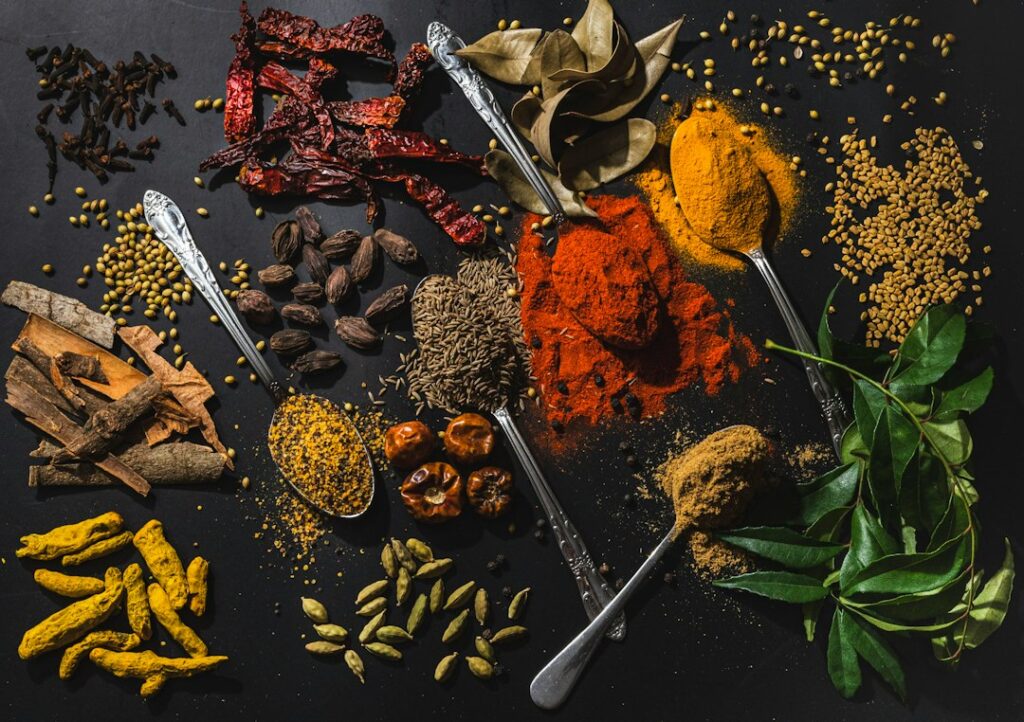
Yes, low FODMAP Indian food can taste like home. Most Indian spices, including cumin, turmeric, ginger, mustard seeds and asafoetida, are low FODMAP. Swap onion and garlic for asafoetida and garlic-infused oil, use small portions of rinsed canned lentils, and build meals on rice, potatoes, firm tofu, lactose-free yogurt and low FODMAP vegetables.
In this article
- Can low FODMAP Indian food still taste good?
- What is the sattvic link to low FODMAP eating?
- How do I replace onion and garlic in Indian cooking?
- Are lentils and chickpeas low FODMAP?
- What about wheat, dairy and nuts?
- A full day of low FODMAP Indian vegetarian meals
- Will I get enough protein and fibre as a vegetarian?
- What does a low FODMAP diet do to your gut bacteria?
- Frequently asked questions
- What I want you to remember
When I tell people with IBS that they can still eat Indian food, many look at me as if I have said something impossible. Onion and garlic are in almost every curry. Lentils and chickpeas are the heart of most vegetarian meals. And both are classic FODMAP triggers.
But low FODMAP Indian food is not only possible, it can taste like home. I lived with diarrhoea-type IBS for years, and today I eat the food I love without fear. This guide is for anyone with IBS who grew up on Indian food, or simply loves it.
Here is what the research says about low FODMAP Indian food, which ingredients to swap and a full day of meals you can cook tonight.
Can low FODMAP Indian food still taste good?
Yes. Most Indian spices are low FODMAP, and the main triggers can be swapped or portioned. The trick is to change a few ingredients, not the whole cuisine.
Monash University, the team that created the low FODMAP diet, lists many Indian spices as low FODMAP. These include asafoetida, cumin, turmeric, ginger, mustard seeds, curry leaves, curry powder, fennel seeds, cardamom, coriander, fenugreek and tamarind. That is most of a spice box.
The challenge is in a handful of everyday ingredients. Onion, garlic, most beans and lentils, wheat, regular milk and yogurt, cashews and some fruits like mango and apple are high FODMAP. Each one has a workable swap, which I share below.
Why this is harder than it sounds
A 2025 review led by Monash and Asian experts looked at why the low FODMAP diet is used less often in Asia. Reasons included a lack of FODMAP testing for local foods, few specialist dietitians and traditional cooking that relies on high FODMAP staples. An earlier 2019 Indian review made the same point. There is only limited data on the FODMAP content of Indian foods.
So if you have felt that most low FODMAP advice ignores your food, you are right. That gap is exactly why I wrote this.
What is the sattvic link to low FODMAP eating?
Global traditional Ayurveda describes sattvic food as fresh, simple and easy to digest. A classic sattvic kitchen leaves out onion and garlic. Modern science gives this an interesting twist. Monash lists onion and garlic among the richest sources of fructans, one of the FODMAPs that most often trigger IBS symptoms.
So many sattvic recipes are already close to low FODMAP. They rely on cumin, ginger, asafoetida and curry leaves for flavour instead. If your family cooks this way for religious or traditional reasons, you may have a head start.
Is there evidence that an Ayurvedic way of eating helps IBS? A little. In a 2021 trial in Berlin, 69 people with IBS were given either Ayurvedic nutrition advice or standard advice that included a low FODMAP diet. After 3 months, symptom scores fell by about 124 points in the Ayurveda group and 73 points in the standard group. Both groups improved, and the Ayurveda group improved more.
This was a small, early study, so it is promising, not proof. I use these ideas alongside the low FODMAP diet, not in place of it.
How do I replace onion and garlic in Indian cooking?
Use asafoetida, garlic-infused oil and the green tops of spring onions. These 3 swaps rebuild most of the flavour without the fructans.
- Asafoetida (hing). Monash suggests a pinch of asafoetida powder for an onion-like flavour. Fry it in oil for a few seconds at the start. Check the label, because some brands blend it with wheat or other flours.
- Garlic-infused oil. Fructans do not dissolve in fat, but the flavour does. Monash notes that garlic-infused oil is low FODMAP. Read more in my guide is garlic low FODMAP.
- Spring onion greens and chives. Use only the green parts, chopped fine, for a fresh onion taste in raita, rice and vegetables.
- Fresh ginger, green chilli and curry leaves. These add warmth and depth. Go gently with chilli, because Monash notes that capsaicin can bother some people with IBS.
Try this. Heat 1 tablespoon of garlic-infused oil. Add half a teaspoon of cumin seeds, a pinch of asafoetida and a few curry leaves. When they sizzle, add grated ginger and chopped tomato. This tempering, called tadka, is the flavour base for most of the recipes below.
Are lentils and chickpeas low FODMAP?
In small portions, canned and well-rinsed lentils and chickpeas can be low FODMAP. Large bowls of home-cooked lentils usually are not.
Legumes contain galacto-oligosaccharides, often called GOS. Monash explains that these carbohydrates dissolve in water. During canning or boiling, some of them leak into the liquid. Draining and rinsing washes them away.
A 2018 Monash lab study tested 35 plant foods used in vegetarian and vegan diets. It found that canning and pickling cut FODMAP content the most of any processing method. It also found 20 of the 35 foods were low FODMAP, including tempeh and canned coconut milk.
Monash gives some practical low FODMAP portions.
- Canned chickpeas, a quarter cup (42 g, about 1.5 ounces), drained and rinsed
- Boiled and drained mung beans, a quarter cup (53 g, about 1.9 ounces)
- Canned lentils, in small portions, drained and rinsed
Try this. Cook dal from canned lentils. Drain and rinse them well, then simmer for 5 minutes with your tadka, turmeric and water. Serve a small portion alongside plenty of rice and vegetables, instead of a big bowl on its own. Check current portion sizes in the Monash FODMAP app, because they are updated as foods are retested.
What about wheat, dairy and nuts?
You may not need to cut these out completely. A 2023 Indian survey asked 204 people with IBS and 400 healthy adults which high FODMAP foods bothered them. About 72% of people with IBS reported at least one food intolerance. But each specific food bothered only 2.5% to 32% of people.
Only 11.3% of people with IBS reported problems with wheat. Milk bothered 30% of people with IBS and 23% of healthy people, which was a smaller gap than many expect. People with diarrhoea-type IBS more often reported problems with milk, pulses, capsicum, cauliflower, leafy greens and dried fruit.
The authors concluded that each person should be the final judge of their own triggers. I agree. That is why the low FODMAP diet is a short test, followed by bringing foods back one at a time.
Wheat and flatbreads
Monash lists wheat-based breads as high FODMAP, mostly because of fructans. During the short elimination phase, swap some wheat flatbreads for rice, rice flatbreads, oats or quinoa. During reintroduction, test a small flatbread to see how your gut reacts.
Milk, yogurt and cheese
Regular milk and yogurt are high FODMAP because of lactose. Lactose-free milk, lactose-free yogurt, hard cheeses and feta are low FODMAP. Firm tofu makes a good swap in dishes that usually use fresh cheese. Fresh cheeses vary, so check them in the Monash app.
Nuts in curries
Cashews and pistachios are high FODMAP, and cashew paste is common in rich curries. Peanuts, walnuts, macadamias and pumpkin seeds are low FODMAP. A spoon of peanut butter or ground pumpkin seeds can add creaminess instead.
A full day of low FODMAP Indian vegetarian meals
Here is a sample day built from Monash low FODMAP foods. Portions are a guide. Adjust them to your appetite and your dietitian’s advice.
Breakfast
- Flattened rice with peanuts. Rinse a cup of poha (flattened rice), then cook it with mustard seeds, curry leaves, turmeric, grated carrot and a handful of roasted peanuts. Skip the onion and add spring onion greens.
- Masala oats. Cook oats in water with cumin, ginger, carrot, green beans and a little salt.
- Scrambled tofu. Crumble firm tofu into a tadka with turmeric, tomato and spinach. Serve with a slice of sourdough spelt bread.
Lunch
- Cumin rice with canned lentil dal. Plain rice tempered with cumin, a small portion of rinsed canned lentils and a side of stir-fried green beans with coconut.
- Cucumber raita. Lactose-free yogurt with grated cucumber, roasted cumin and mint.
Snack
- A kiwi, an orange or a cup of pineapple
- Roasted peanuts or pumpkin seeds with a pinch of chaat spice, if your blend has no onion or garlic
- Boiled potato cubes with lemon, chilli and coriander
Dinner
- Potato and eggplant curry. Cook both in a tomato and ginger base with your tadka.
- Tofu tikka. Marinate firm tofu in lactose-free yogurt, turmeric, cumin and lemon, then grill or bake.
- Rice and a small portion of mung bean khichdi. This soft rice and lentil porridge is a classic comfort food. Use mostly rice and keep the mung beans to a small portion.
Want to practise spotting triggers in a playful way? Try my Trigger or Safe game.
Will I get enough protein and fibre as a vegetarian?
You can, but it needs a little planning. Cutting most beans and lentils removes a big source of both protein and fibre for vegetarians.
Most adults need at least 0.8 g of protein per kg of body weight each day. For a person weighing 60 kg (about 132 lb), that is about 48 g a day. Firm tofu, tempeh, lactose-free yogurt, hard cheese and eggs if you eat them all help. So do peanuts, pumpkin seeds, quinoa and small portions of canned legumes.
For fibre, lean on oats, quinoa, potatoes with skin, carrots, green beans, kiwi, oranges and chia seeds. A dietitian-led approach matters here. In a 2020 New Zealand study, 20 older adults followed a low FODMAP diet with a dietitian for 6 weeks. Their gut symptoms improved, and their nutrient intake did not drop in any meaningful way.
What does a low FODMAP diet do to your gut bacteria?
I strongly believe gut health plays a major role in nearly every health condition. That is why I never keep clients on a strict low FODMAP diet for long.
FODMAPs are fermented by your gut bacteria. That causes gas in a sensitive gut, but it also feeds helpful bacteria. A 2021 UK trial compared a low FODMAP diet with a sham diet. People on the low FODMAP diet had lower levels of Bifidobacterium, a helpful group of bacteria.
Variety helps balance this out. The American Gut Project found that people who ate more than 30 different plant foods a week had more diverse gut bacteria. They were compared with people who ate 10 or fewer. Indian cooking is a gift here. Every spice, herb, seed and vegetable counts as a plant. A single dal can hold 6 or 7.
Count your plants this week with my Gut Garden game. Then bring back high FODMAP foods one at a time once your symptoms settle. My complete IBS diet guide explains how to do this step by step.
Frequently asked questions
Is Indian food bad for IBS?
No. Indian food is not bad for IBS, but some common ingredients can trigger symptoms. Onion, garlic, large portions of lentils and beans, wheat, regular milk and cashews are the main ones. Most spices are low FODMAP, so with a few swaps you can keep the flavours you love.
Is asafoetida low FODMAP?
Yes. Monash University lists asafoetida as a low FODMAP spice and suggests a pinch for an onion-like flavour. Some asafoetida powders are blended with wheat or other flours, so check the label if you are also avoiding wheat or gluten.
Can I eat dal on a low FODMAP diet?
Yes, in a small portion. Use canned lentils that you drain and rinse well, because some of the FODMAPs wash out into the liquid. Serve dal as a side with plenty of rice and vegetables, and check the current portion size in the Monash FODMAP app.
Is basmati rice low FODMAP?
Yes. Rice is low FODMAP, and it is one of the most useful foods on this diet. Plain rice, cumin rice, lemon rice and flattened rice are all good bases. Keep onion and garlic out of the tempering.
Is yogurt low FODMAP?
Regular yogurt is high FODMAP because of its lactose. Lactose-free yogurt is low FODMAP and works well in raita and marinades. You may tolerate a small amount of regular yogurt, so test it during the reintroduction phase.
What I want you to remember
You do not have to give up Indian food to calm your IBS. Keep the spices and swap onion and garlic for asafoetida and garlic-infused oil. Rinse canned lentils, keep them to small portions, and lean on rice, potatoes, tofu and low FODMAP vegetables.
The low FODMAP diet is a short test, not a life sentence. Find your own triggers, bring foods back one at a time and feed your gut bacteria with as many different plants as you can.
If a flare is happening right now, start with my guide on how to calm an IBS flare-up. For one small gut friendly habit each day, join my free 30-Day Calm Gut Challenge.
Sources
- Monash University. High and low FODMAP foods
- Monash University FODMAP. A guide to low FODMAP herbs and spices
- Monash University FODMAP. Including legumes on a low FODMAP diet
- Monash University FODMAP. Adding flavour without adding symptoms
- Monash University FODMAP. All about onion, garlic and infused oils on the low FODMAP diet, 2023
- Muir JG, et al. Fructan and free fructose content of common Australian vegetables and fruit. Journal of Agricultural and Food Chemistry, 2007
- Varney JE, et al. Implementing a FODMAP diet in Asia. Addressing cultural, clinical and practical challenges. Journal of Neurogastroenterology and Motility, 2025
- Mehtab W, et al. All that a physician should know about FODMAPs. Indian Journal of Gastroenterology, 2019
- Jeitler M, et al. Ayurvedic vs conventional nutritional therapy including low-FODMAP diet for patients with irritable bowel syndrome. A randomized controlled trial. Frontiers in Medicine, 2021
- Tuck C, et al. FODMAP content of common plant-based foods and processed foods suitable for vegetarian and vegan eating patterns. Journal of Human Nutrition and Dietetics, 2018
- Abraham P, et al. Self-reported food intolerances in an Indian population. Need for individualization rather than a universal low-FODMAP diet. JGH Open, 2023
- O'Brien L, et al. A low FODMAP diet is nutritionally adequate and therapeutically efficacious in community dwelling older adults with chronic diarrhoea. Nutrients, 2020
- Staudacher HM, et al. Gut microbiota associations with diet in IBS and the effect of low FODMAP diet and probiotics. Clinical Nutrition, 2021
- McDonald D, et al. American Gut. An open platform for citizen science microbiome research. mSystems, 2018
- Mozaffarian D, et al. Nutritional priorities to support GLP-1 therapy for obesity. A joint advisory from the American College of Lifestyle Medicine, the American Society for Nutrition, the Obesity Medicine Association and The Obesity Society. Obesity, 2025
This article shares general information. It is not a diagnosis or a treatment plan. Please talk to your own doctor before you change your diet, medicines or supplements.

Dt. Hashika Vyas
Hashika is a dietitian who works with clients in 15+ countries on gut health, PCOS and weight. She healed her own IBS, and writes every guide on this site to be calm, clear and practical.