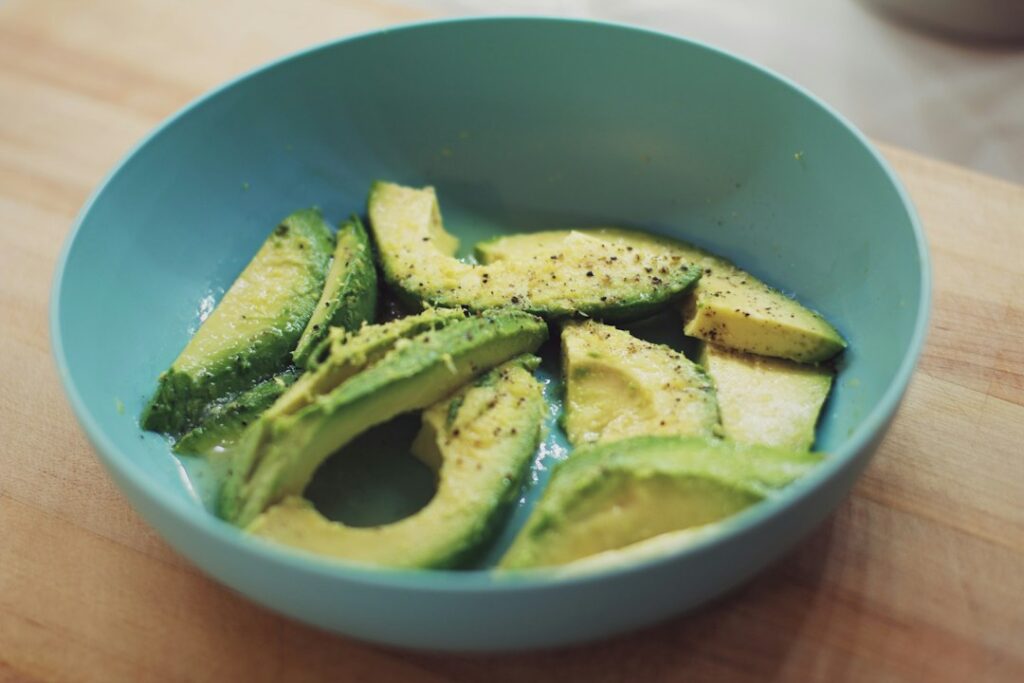
Avocado is low FODMAP only in a small serve, such as a thin spread. Monash University still rates a standard serve as high because of perseitol, a sugar alcohol found in 2024 retesting. Choose ripe avocado, start with about 1 oz and keep the meal light, because the fat can trigger IBS too.
In this article
For more than a decade, avocado was flagged as high in sorbitol. Then Monash University retested it in 2024 and found something else. The sugar alcohol in avocado is mostly perseitol, a compound almost nobody had heard of.
So is avocado low FODMAP? Only in a small portion, and the portion is what matters most. Here is how much avocado a sensitive gut usually handles, why ripeness and fat count too, and what avocado does for your gut bacteria.
Is avocado low FODMAP?
Avocado is low FODMAP only in a small serve, and a standard serve is still rated high. Monash University kept its red, high FODMAP rating for a standard serve after retesting it in 2024.
Monash says the team was hesitant to change the rating from red to green. So a thin spread is very different from half an avocado on your plate.
The exact gram amounts for each traffic light live in the Monash app, and they change after new tests. Please check the app for the latest serve of Hass avocado.
What is perseitol, and why does it matter?
Perseitol is a sugar alcohol, or polyol, found in avocado. When Monash retested avocado, its lab saw a peak close to sorbitol that did not quite match. A pure perseitol standard matched it.
Monash thinks perseitol may act in the gut much like sorbitol and mannitol. Polyols are poorly absorbed, pull water into the bowel and feed gas-making bacteria.
People with IBS react to polyols more strongly. In a 2014 Monash study, 20 people with IBS and 21 healthy people took 10 g of sorbitol or mannitol. Gut symptoms rose only in the IBS group, whether or not they absorbed it well.
Monash also found that unripe avocado had more perseitol than ripe avocado. That gives you one simple lever to pull.
Try this. Choose avocados that are fully ripe and give a little when you press them. Skip hard, unripe ones if you are sensitive.
How much avocado can you eat with IBS?
Start with a small portion, about 1 oz, and build up only if you feel well. Monash’s own low FODMAP guacamole recipe gives a useful guide.
It uses 3 medium avocados, or 285 g (10 oz), shared across 12 serves. That works out to about 24 g of avocado per serve, just under 1 oz.
- Use avocado as a topping, not the base of the meal. A thin spread on toast or a few slices in a salad is enough.
- Weigh it once or twice. It helps you learn what a small serve looks like, then you can judge it by eye.
- Do not stack polyols. Skip sugar-free gum, mushrooms or celery at the same meal. Monash lists these as rich in mannitol, another polyol.
- Flavour without onion and garlic. Monash’s guacamole uses garlic-infused oil and green onion tops. My guide on whether onion is low FODMAP has more swaps.
Can the fat in avocado trigger IBS?
Yes, for some people the fat matters as much as the FODMAPs. Monash notes that avocado’s high fat content is a second possible trigger.
A 2024 Monash blog explains that high fat meals may slow the emptying of the gut. That can bring fullness, bloating and discomfort. The NHS also advises people with IBS not to eat lots of fatty food.
Lab studies show why. In a 2002 Spanish study, 30 people with IBS and 45 healthy people had gas and fat infused into the gut. People with IBS held on to gas at a lower fat dose than healthy people.
In a 2007 Swedish study of 61 people with IBS, fat in the small intestine made the colon more sensitive to pain. This happened in IBS with diarrhoea, constipation and mixed habits alike.
These were lab tests with fat infused by tube, not whole avocados. Still, they suggest that a big, rich meal is more likely to upset an IBS gut than a small one.
Try this. If avocado bothers you, eat it in a lighter meal rather than next to cheese, fried food or creamy sauces.
Is avocado good for your gut bacteria?
Yes, avocado appears to feed helpful gut bacteria. I strongly believe gut health plays a major role in nearly every health condition. Avocado has good trial evidence for the gut.
In a 2021 US trial, 163 adults with overweight ate a meal with or without avocado every day for 12 weeks. Men ate 175 g (about 6 oz) and women 140 g (about 5 oz) a day.
The avocado group had a wider range of gut bacteria. Three groups of fibre-fermenting bacteria, including Faecalibacterium, rose by 26 to 65%. Their stools had 18% more acetate, a short chain fatty acid that bacteria make from fibre.
The Habitual Diet and Avocado Trial went bigger. It gave 1,008 adults with a large waist either one avocado a day or their usual diet for 6 months. In 230 of them, gut bacteria diversity rose within 4 weeks and stayed higher.
Faecalibacterium prausnitzii, a bacteria often linked with a healthy gut, also rose. The effect was strongest in people whose usual diet was poorer.
These trials did not include people with IBS, and they used portions far larger than a low FODMAP serve. So a sensitive gut may not get the same result from a small spread.
Does avocado help with weight or cholesterol?
Avocado helps cholesterol a little, but it is not a weight loss food. The main HAT trial found that one avocado a day for 6 months did not reduce belly fat measured by MRI.
Body weight did not change either. Total and LDL cholesterol fell modestly. A 2026 analysis of 786 people from the same trial found fewer LDL particles, the kind linked to heart disease.
For a gut-friendly way to raise fibre without bloating, read my fibermaxxing guide.
A strict low FODMAP diet should be short. A 2022 review of 9 trials with 403 people found that it lowers bifidobacteria, a helpful gut bacteria. Bring foods like avocado back in portions you tolerate.
Please see a doctor before you change your diet if you have blood in your stool. The same goes for weight loss without trying, such as 3 kg (about 7 lb).
Frequently asked questions
Is guacamole low FODMAP?
Most shop guacamole is high FODMAP because it contains onion and garlic as well as avocado. Monash has a low FODMAP guacamole recipe that uses green onion tops and garlic-infused oil, with about 24 g of avocado per serve.
Is avocado oil low FODMAP?
FODMAPs are carbohydrates, and pure oils contain almost no carbohydrate. So avocado oil is not a FODMAP source, but it is still fat. Use it in normal cooking amounts if fat is a trigger for you.
Can I eat avocado during the strict low FODMAP phase?
Yes, in a small serve. Keep it to a thin spread, choose ripe fruit and avoid other polyols at the same meal. Check the Monash app for the current green serve.
Should I use avocado to test my sorbitol tolerance?
No. Monash says avocado is probably not the best food for testing sorbitol, because it contains perseitol instead. You can still test avocado on its own to learn your own limit. My IBS diet guide explains how to test foods.
What I want you to remember
Avocado is low FODMAP only in a small serve. Choose ripe fruit, start with about 1 oz, keep the rest of the meal light and add it as a topping. Your gut bacteria seem to love avocado, so find the amount your gut can enjoy.
Fruit can be tricky too, so read my guide on whether apple is low FODMAP. Build a happy gut in the Gut Garden game, and join my free 30-Day Calm Gut Challenge.
Sources
- Monash University FODMAP. Avocado and FODMAPs. A smashing new discovery, 2024
- Monash University FODMAP. Guacamole recipe
- Monash University FODMAP. Non-FODMAP dietary triggers of IBS symptoms, 2024
- Monash University FODMAP. Where FODMAPs are found in foods
- Yao CK, et al. Dietary sorbitol and mannitol. Food content and distinct absorption patterns between healthy individuals and patients with irritable bowel syndrome. Journal of Human Nutrition and Dietetics, 2014
- NHS. Irritable bowel syndrome (IBS). Diet, lifestyle and medicines, reviewed 2025
- Serra J, et al. Lipid-induced intestinal gas retention in irritable bowel syndrome. Gastroenterology, 2002
- Simrén M, et al. Lipid-induced colonic hypersensitivity in the irritable bowel syndrome. The role of bowel habit, sex, and psychologic factors. Clinical Gastroenterology and Hepatology, 2007
- Thompson SV, et al. Avocado consumption alters gastrointestinal bacteria abundance and microbial metabolite concentrations among adults with overweight or obesity. A randomized controlled trial. Journal of Nutrition, 2021
- Yang J, et al. Impact of daily avocado consumption on gut microbiota in adults with abdominal obesity. An ancillary study of HAT, a randomized controlled trial. Food and Function, 2025
- Lichtenstein AH, et al. Effect of incorporating 1 avocado per day versus habitual diet on visceral adiposity. A randomized trial. Journal of the American Heart Association, 2022
- Damani JJ, et al. Effect of incorporating 1 avocado per day on lipoprotein particle concentrations compared to habitual intake in adults with abdominal obesity. Journal of Clinical Lipidology, 2026
- So D, et al. Effects of a low FODMAP diet on the colonic microbiome in irritable bowel syndrome. A systematic review with meta-analysis. American Journal of Clinical Nutrition, 2022
This article shares general information. It is not a diagnosis or a treatment plan. Please talk to your own doctor before you change your diet, medicines or supplements.

Dt. Hashika Vyas
Hashika is a dietitian who works with clients in 15+ countries on gut health, PCOS and weight. She healed her own IBS, and writes every guide on this site to be calm, clear and practical.