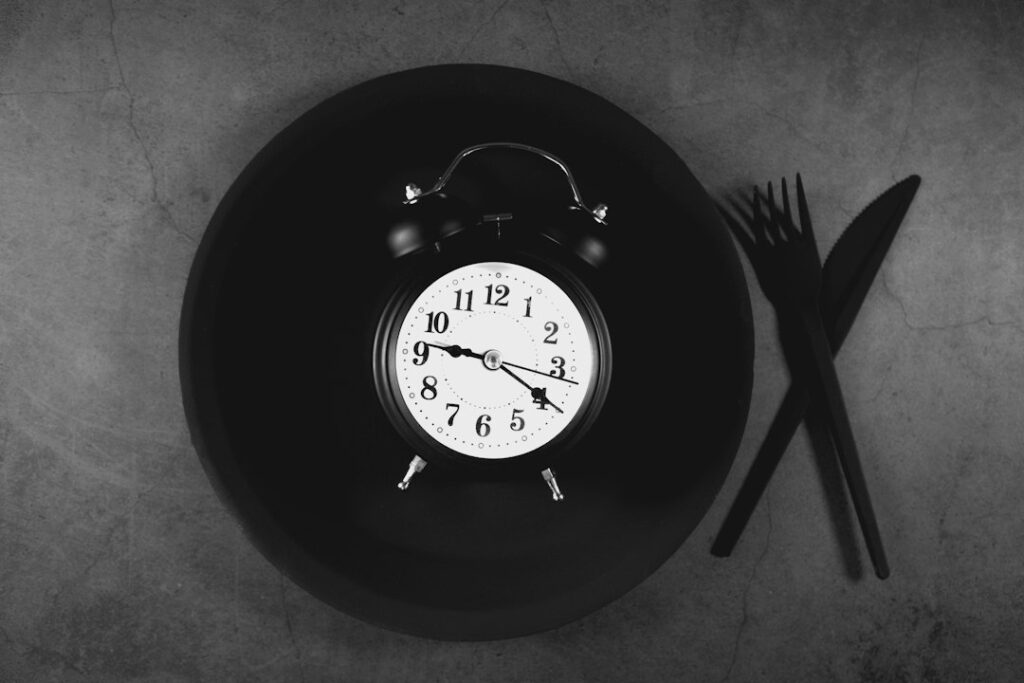
Fasting and IBS research is still early. A small 2026 study found that 16:8 eating eased IBS symptoms, but it had no control group. Regular meal times have stronger support, and a big meal after a long fast can trigger cramps. If you try fasting, start with a 12-hour overnight gap and break it gently.
In this article
- What is intermittent fasting?
- Can fasting and IBS go together?
- Can fasting make IBS worse?
- What does research say about regular meals and IBS?
- How does fasting affect your gut and its bacteria?
- Is intermittent fasting good for weight loss?
- Who should not try intermittent fasting?
- How can I try fasting with IBS safely?
- When should I see a doctor?
- Frequently asked questions
- What I want you to remember
In a 2022 study of 4,599 adults, people who ate at regular times had 40% lower odds of IBS than people with irregular meals. Yet many popular diets ask you to skip meals on purpose. So which is right for your gut?
Fasting and IBS is a newer research topic, and the honest answer is that we do not know yet. A few early studies look hopeful, and others raise warnings. Here is what the evidence says, and how to try it safely if you want to.
What is intermittent fasting?
Intermittent fasting means you eat only at set times and go without food for longer stretches than usual. It is a pattern of when you eat, more than what you eat.
The most common types are these.
- Time-restricted eating. You eat within a daily window, such as 8 hours, and fast for the other 16. This is often called 16:8.
- Alternate day fasting. You eat very little or nothing every other day.
- Whole day fasting. You fast for one or two full days a week.
- Religious fasting. During Ramadan, for example, people do not eat or drink from dawn to sunset for a month.
Can fasting and IBS go together?
For some people they can, but the evidence is early and weak. Only a few studies have looked at fasting in people with IBS.
The newest is a 2026 pilot study. People with IBS followed a 16:8 eating pattern for 8 weeks. Of 134 who started, 97 finished. Their IBS symptom scores fell by about 100 points on average, and every IBS type improved.
That sounds impressive, but there are big limits. There was no control group, so we cannot rule out the placebo effect or simply eating more carefully. The study was registered only after the data were collected. One author also receives royalties from a book on time-restricted eating.
An older study from Japan, published in 2006, tested a much more extreme approach. Hospital patients with severe IBS had 10 days without food, then 5 days of slow refeeding. The 36 people who fasted improved on 7 of 10 symptoms, compared with 3 of 10 in 22 people on usual care.
That study looked back at hospital records and was closely supervised by doctors. Please never try a fast like that at home.
Can fasting make IBS worse?
Yes, for some people. The problem is often not the fast itself but how you break it.
Eating wakes up the colon. A 2026 review explained that the colon starts to move within minutes of a meal, and this lasts 30 to 120 minutes. Fat is an important trigger. A large, rich meal after a long fast can set off cramps and an urgent dash to the toilet.
IBS also makes the gut more sensitive to meals. In a 2013 study from Sweden, 67 people with IBS and 16 healthy people ate the same breakfast after an overnight fast. Bloating and discomfort rose in the IBS group but not in the healthy group.
Long gaps can also lead to rushed, oversized meals. The NHS advises people with IBS not to delay or skip meals and not to eat too quickly. Fasting can clash with both of those tips.
What does research say about regular meals and IBS?
Several studies link regular meals with fewer IBS symptoms. In the 2022 Iranian study of 4,599 adults, people with regular meals also had 53% lower odds of severe IBS symptoms.
A 2025 study of 204 adults with IBS in Saudi Arabia found something else. People who snacked more often had milder symptoms. About 1 in 3 skipped breakfast, and about 1 in 5 did not eat on a regular schedule.
Both studies took a snapshot in time, so they cannot prove cause and effect. People with bad symptoms may skip meals because they feel unwell. Still, they suggest that a steady eating rhythm suits many sensitive guts.
How does fasting affect your gut and its bacteria?
I strongly believe the gut works best with rhythm, and fasting changes that rhythm in two ways.
First, there is the migrating motor complex. A 2012 review describes it as a repeating wave of gut contractions that runs through the stomach and small bowel between meals. Eating switches it off. When this pattern is missing, it has been linked with small intestinal bacterial overgrowth, or SIBO.
Leaving a few hours between meals lets this wave run. That is one reason steady meals with gaps may suit your gut better than constant grazing. My guide to SIBO vs IBS explains why this matters.
Second, fasting can shift your gut bacteria. A 2020 pilot study of 9 adults found that Ramadan fasting increased bacterial richness. Some helpful butyrate-making groups, such as Faecalibacterium and Roseburia, went up.
Other results are mixed. A 2026 study of 17 adults with prediabetes found gut diversity rose during Ramadan but partly fell back within 3 months. A 2025 pilot of time-restricted eating found almost no change in gut bacteria. A 2022 review of 28 studies noted that many were done in animals.
So going without food does seem to move the microbiome, but the changes may be small, short-lived and different for each person. What you eat in your eating window still matters most. My guide to the gut-brain axis explains how your gut bacteria talk to the rest of your body.
Is intermittent fasting good for weight loss?
It works about as well as cutting calories in the usual way. A 2025 BMJ review pooled 99 trials with 6,582 adults.
Every fasting style and standard calorie cutting led to weight loss compared with eating freely. Alternate day fasting did a little better than daily calorie cutting, by about 1.3 kg (about 2.9 lb). Most trials were short, so long-term results are less clear.
So if you have IBS, you do not have to fast to lose weight. Pick the approach your gut and your life can handle.
Who should not try intermittent fasting?
It is not safe or wise for everyone. Talk to your doctor before you try it, and avoid it if any of these apply to you.
- You are pregnant, breastfeeding or under 18.
- You take insulin or other medicine that can cause low blood sugar.
- You have had an eating disorder, or you feel anxious or guilty about food.
- You are underweight or have lost weight without trying.
The eating disorder point matters for IBS. A 2022 study of 64 people doing intermittent fasting found that 31% scored at or above the clinical cut-off on an eating disorder questionnaire. That study cannot show that fasting caused it, but it is a reason to be careful. If food fear is part of your IBS, my guide to IBS and anxiety may help.
How can I try fasting with IBS safely?
If your doctor agrees and you want to try, start gently. Try this plan.
- Start with a 12-hour overnight gap. For example, finish dinner by 7 pm and eat breakfast at 7 am. Move to a longer gap only if your gut feels fine.
- Keep your meal times the same each day. A steady rhythm suits most IBS guts.
- Break the fast with a small, gentle meal. Choose something low in fat, such as oats with lactose-free yogurt and kiwi. My low FODMAP breakfast ideas are a good place to start.
- Avoid one huge meal at the end of the day. Split food into 2 or 3 moderate meals in your window.
- Drink water through the fasting hours. Enough fluid helps keep stools soft.
- Spread fibre across your meals. Squeezing a full day of fibre into one meal can cause bloating.
- Keep a symptom diary for 4 weeks. If your symptoms get worse, stop and go back to regular meals.
Want to practise building gut-friendly plates? Try the Feed the Tummy game. If constipation is your main issue, see my guide to IBS with constipation. Also watch for hidden sweeteners in “keto” and “sugar-free” snacks, explained in my guide to sorbitol and IBS.
When should I see a doctor?
See a doctor before fasting if you have diabetes or take daily medicine. Also get help if fasting brings on dizziness, fainting or strong cravings that feel out of control.
Get checked for any blood in your stool or diarrhoea that wakes you at night. The same goes for weight loss of 3 kg (about 7 lb) or more that you did not plan. My complete IBS diet guide covers the full approach.
Frequently asked questions
Is 16:8 fasting good for IBS?
It may help some people, but the proof is thin. A 2026 pilot study found that IBS symptoms improved after 8 weeks of 16:8 eating, but it had no control group. Start with a 12-hour overnight gap and stop if your symptoms get worse.
Why does my IBS flare after I break a fast?
Eating sets off the gastrocolonic response, which makes the colon move within minutes. A large or fatty meal after a long gap makes this stronger. Break your fast with a small, low fat meal and eat it slowly.
Is it safe to fast during Ramadan with IBS?
It can be, but talk to your doctor first, especially if you take medicine. In a 2026 study of 696 students, gut symptoms during Ramadan were mostly mild. Bread, sweets and late-night eating were linked with more symptoms, so keep the evening meals moderate.
Does fasting help reset the gut?
A fast gives the gut a rest and lets the migrating motor complex run, and it can shift gut bacteria. But studies show these changes are small and often fade. Regular meals with plenty of plant foods are a more reliable way to support your gut.
What I want you to remember
Fasting and IBS can work together for some people, but the research is early. Regular meal times have stronger support, and a big meal after a long fast can trigger symptoms.
If you try it, start with a 12-hour gap, break your fast gently and listen to your gut. For calm daily habits that help your gut, join my free 30-Day Calm Gut Challenge.
Sources
- Clausen C, et al. Time-restricted eating and symptom severity in irritable bowel syndrome. Results from a pilot study. Nutrients, 2026
- Kanazawa M, Fukudo S. Effects of fasting therapy on irritable bowel syndrome. International Journal of Behavioral Medicine, 2006
- Bavani NG, et al. The relationship between meal regularity with irritable bowel syndrome (IBS) in adults. European Journal of Clinical Nutrition, 2022
- Ajabnoor SM. Effects of meal regularity and snacking frequency on irritable bowel syndrome. Frontiers in Public Health, 2025
- Shibata C, et al. Role of neural and humoral mediators in the gastrocolonic response. Journal of Smooth Muscle Research, 2026
- Posserud I, et al. Symptom pattern following a meal challenge test in patients with irritable bowel syndrome and healthy controls. United European Gastroenterology Journal, 2013
- Deloose E, et al. The migrating motor complex. Control mechanisms and its role in health and disease. Nature Reviews Gastroenterology and Hepatology, 2012
- Ozkul C, et al. Structural changes in gut microbiome after Ramadan fasting. A pilot study. Beneficial Microbes, 2020
- Boyaci I, et al. Ramadan fasting induces temporal gut microbiome remodeling without metabolic improvement in adults with prediabetes. Microbiology Spectrum, 2026
- Johnson AJ, et al. A randomized pilot study of time-restricted eating shows minimal microbiome changes. Nutrients, 2025
- Mousavi SN, et al. Effects of Ramadan and non-Ramadan intermittent fasting on gut microbiome. Frontiers in Nutrition, 2022
- Semnani-Azad Z, et al. Intermittent fasting strategies and their effects on body weight and other cardiometabolic risk factors. Systematic review and network meta-analysis of randomised clinical trials. BMJ, 2025
- Cuccolo K, et al. Intermittent fasting implementation and association with eating disorder symptomatology. Eating Disorders, 2022
- Al-Amouri F, et al. Gastrointestinal symptoms and eating patterns during Ramadan fasting among university students in Palestine. A cross-sectional study. BMC Public Health, 2026
- NHS. Irritable bowel syndrome (IBS). Diet, lifestyle and medicines. Reviewed 2025
This article shares general information. It is not a diagnosis or a treatment plan. Please talk to your own doctor before you change your diet, medicines or supplements.

Dt. Hashika Vyas
Hashika is a dietitian who works with clients in 15+ countries on gut health, PCOS and weight. She healed her own IBS, and writes every guide on this site to be calm, clear and practical.