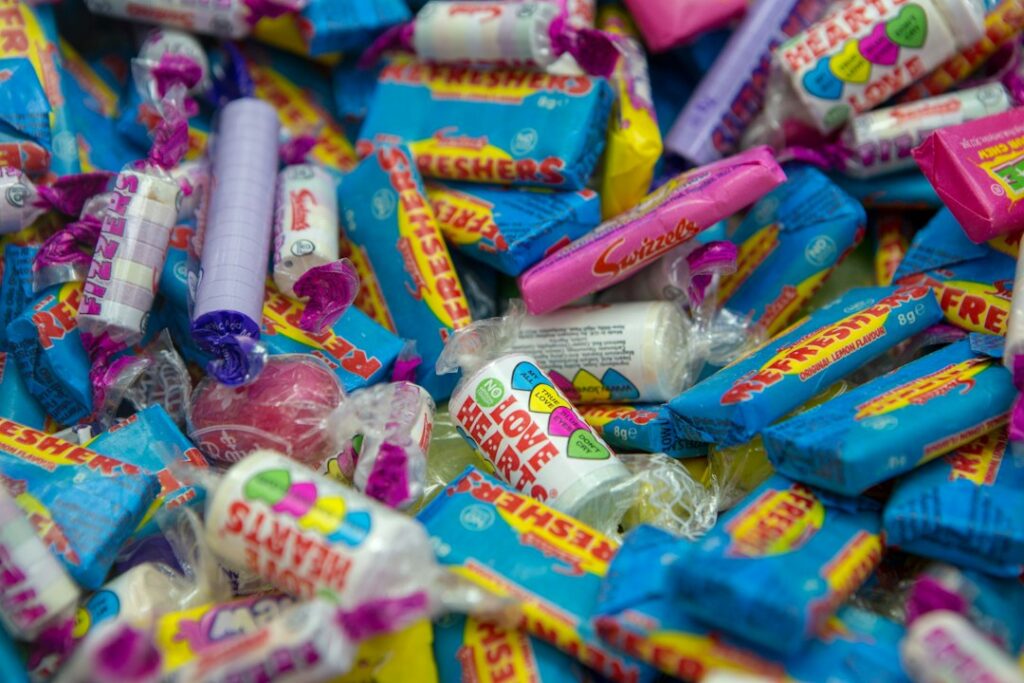
Sorbitol and IBS often clash. Sorbitol is a sugar alcohol found in apples, pears, stone fruit and sugar-free gum and sweets. It pulls water into the bowel and feeds gas-making bacteria, causing bloating and diarrhoea. In a 2014 trial, 10 g raised symptoms in people with IBS but not in healthy people. Test it during low FODMAP reintroduction.
In this article
- What are sugar alcohols?
- How are sorbitol and IBS linked?
- How much sorbitol does it take to cause symptoms?
- Which foods are high in sorbitol and mannitol?
- Is erythritol or xylitol safer for IBS?
- What does sorbitol have to do with your gut bacteria?
- How do I find out if sorbitol is my trigger?
- When should I see a doctor?
- Frequently asked questions
- What I want you to remember
In 2008, doctors in Berlin reported something unusual in the BMJ. They described severe weight loss and chronic diarrhoea caused by sugar-free chewing gum. The culprit was sorbitol, the sweetener inside.
Sorbitol and IBS are a common pair, and many people never find the link. It is a sugar alcohol that hides in mints, gum, “diabetic” sweets and many fruits. If your gut flares and you cannot find a reason, this guide will help you check for it.
What are sugar alcohols?
Sugar alcohols, also called polyols, are sweet carbohydrates that your small intestine absorbs only partly. They are the “P” in FODMAP. Monash University, the team behind the low FODMAP diet, says they occur naturally in fruits and vegetables.
Food makers also add them to chewing gum, mints and diabetic products. Common names on labels include sorbitol, mannitol, xylitol, maltitol, isomalt and erythritol. A simple trick is to look for ingredient names that end in “itol”.
Monash notes that these products often carry a warning that too much can have a laxative effect. That warning is there for a reason.
How are sorbitol and IBS linked?
Polyols cause trouble in two ways. The part you do not absorb pulls water into the bowel, which can loosen stools. It then reaches the colon, where gut bacteria ferment it and make gas.
A 2017 systematic review by Lenhart and Chey looked at 79 studies on polyols. In healthy people, the amount poorly absorbed rose with the dose. It rose further when polyols were eaten together. Polyols caused dose-related gas, tummy discomfort and laxative effects in healthy people and in people with IBS.
People with IBS seem more sensitive. In a 2014 Monash trial, 20 people with IBS and 21 healthy people took 10 g of sorbitol or mannitol. Symptoms rose significantly after both polyols only in the IBS group. This happened whether or not they absorbed the polyol well.
That last point matters. Your gut does not need to fail at absorbing a polyol to react to it. A sensitive gut can feel normal amounts of water and gas more strongly, so a modest dose can still bring on a flare.
How much sorbitol does it take to cause symptoms?
For some people with IBS, very little. A 1988 study gave sugars to 25 people with functional bowel disease. Just 5 g was poorly absorbed in 8 of 13 people tested.
Mixing sugars made it worse. In the same study, 25 g of fructose taken with 5 g of sorbitol caused much more tummy distress. This is why apples and pears, which carry both fructose and sorbitol, can hit a sensitive gut twice.
Doses add up fast. A few pieces of sugar-free gum, a “no added sugar” chocolate bar and a pear can stack polyols in a single afternoon. Many people never connect the dots.
Which foods are high in sorbitol and mannitol?
Polyols come from both fresh foods and packaged products. Here is what Monash lists.
- Fruits rich in sorbitol. Apples, cherries, nashi pears, peaches and plums.
- Vegetables rich in mannitol. Mushrooms and celery.
- Sugar-free sweets. Monash lists sugar-free confectionery as high FODMAP.
- Sweetened foods and drinks. Monash names sorbitol, xylitol and erythritol among the polyols found in them.
The 2014 Monash study also tested foods in the lab. It found sorbitol in certain fruits and in sugar-free gum, while mannitol was higher in certain vegetables.
Avocado was once on the sorbitol list. In 2024, Monash retested it and found the main sugar alcohol is perseitol instead. My guide on whether avocado is low FODMAP explains what that means for your portion. My apple guide covers the fructose and sorbitol double hit.
Is erythritol or xylitol safer for IBS?
Erythritol seems gentler on the gut than xylitol, but it raises a separate question about the heart. Here is what the research shows.
A 2007 randomised, double-blind trial gave 64 healthy young adults drinks with erythritol or xylitol. A 50 g dose of xylitol caused nausea, bloating, rumbling and watery stools. Even 35 g of xylitol increased watery bowel movements. Erythritol at 20 g and 35 g caused no significant symptoms.
Keep in mind that these were healthy students, not people with IBS. Monash still groups erythritol with the polyols, so test it carefully if you have IBS.
The heart question is newer. A 2023 study in Nature Medicine linked higher blood erythritol levels to more heart attacks, strokes and deaths over 3 years. In a US group of 2,149 people, the top quarter had about 1.8 times the risk of the bottom quarter.
A 2024 follow-up gave 10 healthy volunteers a drink with 30 g of erythritol. Blood levels rose more than 1,000 times, and platelets became more reactive. Platelets are the cells that help blood clot. A similar 2024 study found the same pattern with xylitol.
These findings are worrying but not settled. The large studies were observational, mostly in people already having heart checks, and the body makes some erythritol itself. Other scientists have questioned the xylitol model. Until we know more, I suggest you use these sweeteners sparingly.
What does sorbitol have to do with your gut bacteria?
I strongly believe your gut bacteria decide a lot about how you handle food, and polyols are a good example. Up to 30% of people in high-income countries have some carbohydrate intolerance, according to a 2024 paper in Cell.
That study, done in mice, found that antibiotics plus a high fat diet led to long-lasting sorbitol intolerance. The mice lost Clostridia, gut bacteria that help break it down. Adding a butyrate-making bacterium brought the Clostridia back and protected the mice from diarrhoea.
This is mouse research, so we cannot apply it straight to people. It does suggest that tolerance can change over time. It also fits the low FODMAP approach, where many people bring foods back once their gut has settled.
The review by Lenhart and Chey also found that moderate doses of polyols shifted gut bacteria toward bifidobacteria in healthy people. So polyols are not “bad” for everyone. The issue is dose and how sensitive your own gut is.
How do I find out if sorbitol is my trigger?
The low FODMAP diet is the best tested way to find out. Its three phases help you remove polyols for a short time and then test them on their own. A 2023 study of 21,462 people using a low FODMAP app found that bloating fell from 55% to 44% of users during the strict phase.
Try this simple plan with your dietitian.
- Read every label for 2 weeks. Write down anything ending in “itol”, plus isomalt.
- Cut sugar-free gum, mints and sweets first. These are the easiest polyols to drop. The NHS also advises people with IBS to avoid products sweetened with sorbitol.
- Swap high polyol fruit. Try firm banana, oranges, kiwi or grapes in place of apples, pears and stone fruit.
- Keep a symptom diary. Note food, timing and how your gut feels.
- Test one polyol at a time. Sorbitol and mannitol are tested separately in the reintroduction phase, over a few days each.
My guide to the low FODMAP diet in 3 phases explains how to run these tests. To practise spotting triggers, play Trigger or Safe. If loose stools are your main problem, my IBS-D diet guide has more steps.
When should I see a doctor?
See a doctor if diarrhoea keeps going or you are losing weight. The 2008 BMJ case report is a reminder that sorbitol can cause serious problems, and other conditions can look the same.
Get checked if you have blood in your stool or diarrhoea that wakes you at night. Also see a doctor if you lose 3 kg (about 7 lb) or more without trying. My complete IBS diet guide covers the full picture.
Frequently asked questions
Is sorbitol bad for IBS?
Sorbitol is a common IBS trigger, but not for everyone. It can pull water into the bowel and feed gas-making bacteria. In a 2014 Monash trial, 10 g raised symptoms in people with IBS but not in healthy people. Testing it during the low FODMAP reintroduction phase shows how much you can handle.
Can sugar-free gum cause diarrhoea?
Yes. Sugar-free gum often contains sorbitol or xylitol, and both can loosen stools. A 2008 BMJ report described chronic diarrhoea and severe weight loss linked to sorbitol from chewing gum. If you chew gum often and have loose stools, stop for 2 weeks and see if things change.
Is erythritol low FODMAP?
Monash includes erythritol among the sugar polyols, and its public pages do not give it a low FODMAP rating. In healthy adults, erythritol caused fewer gut symptoms than xylitol. Because of new questions about blood clotting, I suggest you keep it occasional rather than daily.
What sweetener is best for IBS?
There is no perfect sweetener, but small amounts of regular sugar are often gentler than polyols. In a 1988 study, 50 g of table sugar showed no malabsorption and caused less distress than fructose. Monash lists honey and high fructose corn syrup as high FODMAP, so keep portions modest.
What I want you to remember
Sorbitol and other sugar alcohols are easy to miss and easy to overdo. Read labels for names ending in “itol”, watch sugar-free gum and sweets, and test polyols on their own during reintroduction.
Your gut tolerance can change as it calms. To build calmer gut habits one day at a time, join my free 30-Day Calm Gut Challenge.
Sources
- Yao CK, et al. Dietary sorbitol and mannitol. Food content and distinct absorption patterns between healthy individuals and patients with irritable bowel syndrome. Journal of Human Nutrition and Dietetics, 2014
- Lenhart A, Chey WD. A systematic review of the effects of polyols on gastrointestinal health and irritable bowel syndrome. Advances in Nutrition, 2017
- Rumessen JJ, Gudmand-Hoyer E. Functional bowel disease. Malabsorption and abdominal distress after ingestion of fructose, sorbitol, and fructose-sorbitol mixtures. Gastroenterology, 1988
- Bauditz J, et al. Severe weight loss caused by chewing gum. BMJ, 2008
- Storey D, et al. Gastrointestinal tolerance of erythritol and xylitol ingested in a liquid. European Journal of Clinical Nutrition, 2007
- Witkowski M, et al. The artificial sweetener erythritol and cardiovascular event risk. Nature Medicine, 2023
- Witkowski M, et al. Ingestion of the non-nutritive sweetener erythritol, but not glucose, enhances platelet reactivity and thrombosis potential in healthy volunteers. Arteriosclerosis, Thrombosis, and Vascular Biology, 2024
- Witkowski M, et al. Xylitol is prothrombotic and associated with cardiovascular risk. European Heart Journal, 2024
- Valentine GC, et al. Oral health benefits and safety of xylitol and potential cardiovascular risk. Questioning the validity of the model of Witkowski et al. European Heart Journal, 2025
- Lee JY, et al. High fat intake sustains sorbitol intolerance after antibiotic-mediated Clostridia depletion from the gut microbiota. Cell, 2024
- Dimidi E, et al. Gut symptoms during FODMAP restriction and symptom response to food challenges during FODMAP reintroduction. A real-world evaluation in 21,462 participants using a mobile application. Nutrients, 2023
- Barrett J, Collins L. What are polyols? Monash University FODMAP blog, 2016
- Monash University FODMAP. Avocado and FODMAPs. A smashing new discovery, 2024
- Monash University FODMAP. Where FODMAPs are found in foods. Accessed 2026
- NHS. Irritable bowel syndrome (IBS). Diet, lifestyle and medicines. Reviewed 2025
This article shares general information. It is not a diagnosis or a treatment plan. Please talk to your own doctor before you change your diet, medicines or supplements.

Dt. Hashika Vyas
Hashika is a dietitian who works with clients in 15+ countries on gut health, PCOS and weight. She healed her own IBS, and writes every guide on this site to be calm, clear and practical.