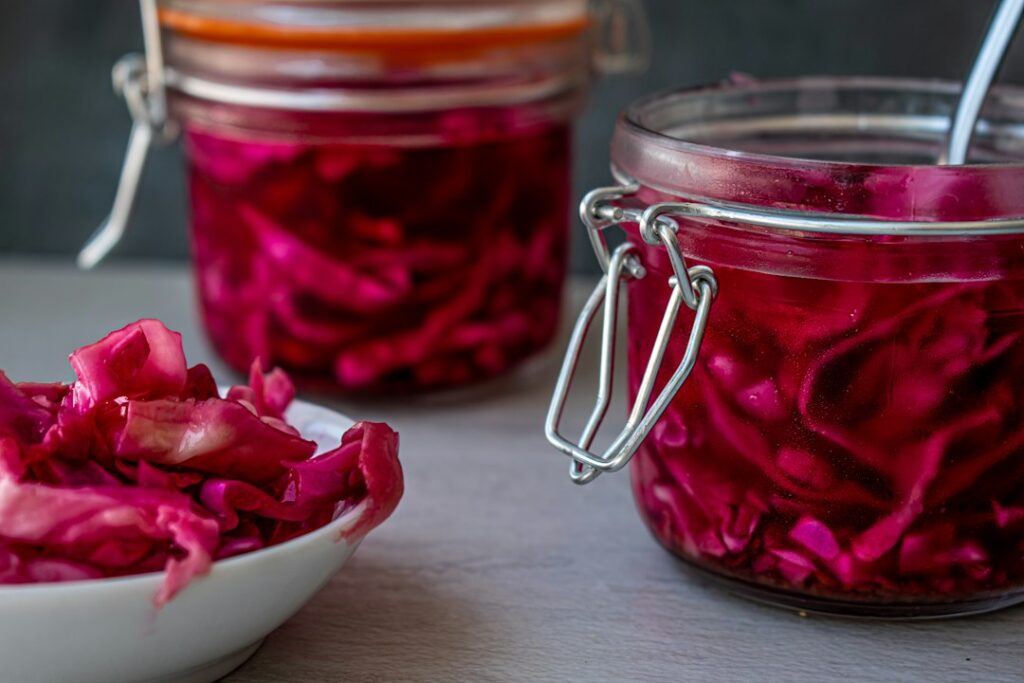
Fermented foods such as yogurt, kefir, sauerkraut and kimchi may support your gut. In a 2021 Stanford trial, a high fermented food diet raised gut bacteria diversity and lowered inflammation markers. Kefir and yogurt have the most research, while kombucha has little. Some fermented foods are high FODMAP, so start small if you have IBS.
In this article
- What are fermented foods?
- Are fermented foods the same as probiotics?
- What does the research say about fermented foods and gut health?
- Which fermented foods have the best evidence?
- Why do I believe fermented foods support your gut?
- Are fermented foods good for IBS?
- How do I add fermented foods to my diet?
- Are fermented foods safe for everyone?
- When should I see a doctor?
- Frequently asked questions
- What I want you to remember
In a 2021 Stanford trial, adults slowly built up to about 6 servings of fermented foods a day. Over 10 weeks, their gut bacteria grew steadily more diverse, and 19 markers of inflammation in their blood went down.
That study made these foods famous. Yet yogurt, kimchi, sauerkraut, kombucha and miso are not all equal, and some have almost no human research. In this guide I explain which fermented foods have real evidence for your gut, which ones suit IBS and how to start without bloating.
What are fermented foods?
Fermented foods are foods made when microbes such as bacteria or yeasts grow in them and change them. In 2021, an expert panel from ISAPP, a global science group, defined them as foods made through desired microbial growth and enzymatic changes.
Common examples include yogurt, kefir, cheese, sauerkraut, kimchi, pickles made with brine, miso, tempeh, natto, kombucha and sourdough bread. People around the world have eaten them for thousands of years.
Are fermented foods the same as probiotics?
No, they are not the same. A probiotic is a specific, tested microbe given in a set dose for a proven health effect. A fermented food may contain many unknown microbes, and the amounts vary from batch to batch.
Some contain no live microbes at all by the time you eat them. Baking kills the microbes in sourdough bread. Pasteurised sauerkraut and many shelf-stable pickles are heated too. They can still offer fibre and other compounds made during fermentation. If you want a targeted treatment, my guide to probiotics for IBS covers the strains with evidence.
What does the research say about fermented foods and gut health?
The research is promising but still young. The strongest human study is the Stanford trial, and many fermented foods have never been tested in a proper trial.
The Stanford fermented food trial
The 2021 Stanford trial compared a high-fermented-food diet with a high-fibre diet. Each group had 18 healthy adults. The fermented food group steadily gained more diverse gut bacteria and showed lower inflammation markers.
The high-fibre group did not see that rise in gut bacteria diversity during the trial. The study was small, and the people were healthy, so we cannot assume the same results in people with gut conditions.
Large population studies
A 2020 study looked at stool samples from 6,811 people in the American Gut Project. People who ate fermented foods had small but real differences in their gut bacteria compared with people who did not.
Their stool also had more conjugated linoleic acid, a fat that may be good for health. The authors called these differences modest. This type of study shows a link, not cause and effect.
What a 2019 review found
A 2019 review looked at 8 popular fermented foods. Only kefir, sauerkraut, natto and sourdough bread had been tested in at least 1 randomised trial for gut health. Kombucha, miso, kimchi and tempeh had none at that time.
The authors concluded that clinical evidence for most fermented foods is very limited. They called for better trials, because lab studies look encouraging.
Which fermented foods have the best evidence?
Kefir, yogurt and other fermented dairy foods have the most human research. Fermented vegetables have a few small trials. Kombucha has the least.
Kefir and yogurt
Fermented dairy has the largest body of research. A 2026 review of 37 reports on yogurt, kefir, fermented milk and cheese found no study showing harm to gut health. Ten studies found no benefit. Most studies that measured symptoms such as pain, wind or constipation did find improvements.
Not every trial is positive, though. In a 2026 crossover trial, 110 healthy adults ate 250 g (about 9 oz) of yogurt a day. One yogurt bacterium rose for a while, but there were no changes in stool fatty acids or blood health markers. The authors said a healthy gut is largely stable and resists short-term change.
Another 2026 trial gave 84 adults with mild gut symptoms a fermented milk powder for 8 weeks. It had limited effects. Plain milk powder actually did better on some comfort scores. My guide to kefir for gut health covers kefir in detail.
Sauerkraut and fermented vegetables
Fermented vegetables may help some people with IBS, but the trials are small. In a 2018 trial in Norway, 34 people with IBS ate sauerkraut every day for 6 weeks. One group had pasteurised sauerkraut, and the other had raw sauerkraut with live bacteria.
Both groups had fewer IBS symptoms, and there was no clear difference between them. The authors thought the benefit came more from the fibre and plant compounds in the cabbage than from live bacteria. They also said the study was too small to be sure.
A 2023 study compared 23 adults who regularly ate fermented vegetables with 24 who did not. Their gut bacteria were only slightly different. Yet the regular eaters had more butyrate and other helpful short-chain fatty acids in their stool.
Kimchi
Kimchi has one larger trial in IBS. In a 2022 Korean study, 90 adults with IBS ate 210 g (about 7.4 oz) of kimchi a day for 12 weeks. They were split into 3 groups, each eating a different type of kimchi.
All groups reported fewer IBS symptoms, such as pain and bloating, and their stool improved. Their fibre intake also rose. The big limit is that every group ate kimchi, so there was no kimchi-free group to compare with.
Kombucha
Kombucha has the weakest evidence for your gut. A 2019 systematic review searched 310 articles and found only 1 study that tested kombucha in humans.
Newer trials exist but do not look at gut health directly. A 2026 trial included 59 adults with extra weight on a calorie-cut diet. One group also drank 200 ml (about 7 fl oz) of green tea kombucha a day for 10 weeks. At the end, the kombucha group did not differ clearly from the diet-only group.
Why do I believe fermented foods support your gut?
I strongly believe your gut bacteria shape far more of your health than most people realise. Foods like yogurt, kefir and sauerkraut are one of the simplest ways I know to support them every day. They work best as part of a varied, plant-rich diet.
When clients come to me, I always ask about their gut health and their poop. I then suggest small, regular amounts of fermented foods they enjoy, rather than expensive supplements. Pair them with plenty of different plants, because your gut bacteria need fibre too. My guide to 30 plants a week shows how to add variety easily.
A 2023 expert perspective on IBS made a similar point. It suggested small amounts of several different fermented vegetables, alongside a healthy, stable diet. The author was clear that more clinical trials are needed. My guide to the gut-brain axis explains how gut bacteria also affect mood and stress.
Are fermented foods good for IBS?
Some fermented foods suit IBS, but many are high in FODMAPs. The Monash University FODMAP team tested fermented foods in 2017, and some results surprised even them.
Raw cabbage is low FODMAP in a 1 cup serving. Yet 1 cup of sauerkraut made from that cabbage was high in mannitol, a sugar alcohol that can trigger IBS symptoms. Soy beans are high FODMAP, but tempeh tested low.
- Low FODMAP in a standard serving. Goat’s milk yogurt, tempeh, spelt sourdough bread and pickled gherkins.
- Low only in small servings. Sauerkraut, red cabbage sauerkraut and some pickled vegetables. Check the Monash app for amounts.
- High FODMAP. Regular yogurt, regular kefir and pickled onions.
- Fermented drinks. Kombucha contains fructans, so a full serving may not suit people who react to them.
If lactose bothers you, try lactose-free yogurt or kefir. My guides to lactose and IBS and sourdough and IBS explain more. If you are on a low FODMAP diet, my low FODMAP diet phases guide shows when to test fermented foods again. You can also check your own triggers with my Trigger or Safe game.
How do I add fermented foods to my diet?
Start with a small amount of 1 food you enjoy, and build up slowly over 2 to 4 weeks. The Stanford volunteers built up gradually too.
Try this
- Start small. Begin with 1 tablespoon of sauerkraut or kimchi, or about 100 g (3.5 oz) of yogurt a day.
- Choose live versions. Look for “live cultures” on yogurt and kefir. Buy fermented vegetables from the fridge section, as shelf-stable jars are often heated.
- Go plain. Pick plain yogurt and kefir, and add your own fruit. Flavoured versions can carry a lot of added sugar.
- Use them as a side. Add a spoon of sauerkraut to a sandwich, kimchi to rice or eggs, and miso to soups and dressings.
- Try tempeh. It is low FODMAP and works well in stir-fries and salads.
- Mix it up. Over time, rotate a few different fermented foods for more variety.
Are fermented foods safe for everyone?
These foods are safe for most healthy people. The 2026 dairy review found no study showing harm to gut health. Still, a few groups should take care.
Ask your doctor first if you have a weak immune system or are having cancer treatment. Kimchi, miso, soy sauce and pickles can be salty, so check labels if you watch your salt. Monash notes that kombucha may contain a small amount of alcohol. So it is not suitable for children, during pregnancy or for anyone avoiding alcohol.
Be careful with home brews. Monash warns about the risks of home-made kombucha and advises using a starter from a clean, safe source. Use clean jars, and throw away anything that smells wrong or grows mould.
When should I see a doctor?
See a doctor if your gut symptoms are new, severe or getting worse, rather than relying on fermented foods. Get help quickly if you notice blood in your stool, diarrhoea that wakes you at night or weight loss without trying.
Losing 3 kg (about 7 lb) or more without trying is always worth a check. My guide to IBS vs IBD explains the warning signs. For a calmer gut day to day, try my free 30-Day Calm Gut Challenge.
Frequently asked questions
Which fermented food is best for gut health?
Kefir and yogurt have the most human research. Sauerkraut and kimchi have a few small trials in IBS. Kombucha has the least. The best choice is the one you enjoy and will eat regularly, in an amount your gut tolerates.
How much fermented food should I eat a day?
There is no official amount. The Stanford volunteers built up to about 6 servings a day, but they did it slowly. Most people do well starting with 1 small serving a day. Build up over a few weeks if your gut is happy.
Can fermented foods cause bloating?
Yes, especially at first or in large amounts. Sauerkraut and regular yogurt can also be high in FODMAPs. Start with a small portion, try low FODMAP options such as tempeh or goat’s milk yogurt and increase slowly.
Do pickles count as fermented foods?
Only some do. Pickles made by fermenting vegetables in salt brine are fermented foods. Most shop pickles are made with vinegar and heated, so they have no live microbes. Fermented pickles are usually sold chilled.
What I want you to remember
Fermented foods can support your gut, but the evidence is strongest for kefir and yogurt. Sauerkraut and kimchi look promising for IBS in small trials, and kombucha has little human research. None of them is a cure.
Start small with a fermented food you enjoy, choose live and plain versions and pick low FODMAP options if you have IBS. Pair them with plenty of different plants. For a full plan, start with my complete IBS diet guide.
Sources
- Marco ML, et al. The International Scientific Association for Probiotics and Prebiotics (ISAPP) consensus statement on fermented foods. Nature Reviews Gastroenterology and Hepatology, 2021
- Wastyk HC, et al. Gut-microbiota-targeted diets modulate human immune status. Cell, 2021
- Taylor BC, et al. Consumption of fermented foods is associated with systematic differences in the gut microbiome and metabolome. mSystems, 2020
- Dimidi E, et al. Fermented foods. Definitions and characteristics, impact on the gut microbiota and effects on gastrointestinal health and disease. Nutrients, 2019
- Bui G, Marco ML. Impact of fermented dairy on gastrointestinal health and associated biomarkers. Nutrition Reviews, 2026
- Thriene K, et al. Impact of yogurt and rolled oats consumption on the gut microbiome. A randomized crossover study. The Journal of Nutrition, 2026
- Rooney M, et al. A Lactobacillus delbrueckii subsp. bulgaricus fermented skimmed milk powder has limited effects on gastrointestinal health. Gut Microbiome, 2026
- Nielsen ES, et al. Lacto-fermented sauerkraut improves symptoms in IBS patients independent of product pasteurisation. A pilot study. Food and Function, 2018
- Guse K, et al. Regular consumption of lacto-fermented vegetables has greater effects on the gut metabolome compared with the microbiome. Gut Microbiome, 2023
- Kim HY, et al. Kimchi improves irritable bowel syndrome. Results of a randomized, double-blind placebo-controlled study. Food and Nutrition Research, 2022
- Kapp JM, Sumner W. Kombucha. A systematic review of the empirical evidence of human health benefit. Annals of Epidemiology, 2019
- Bonifácio DB, et al. Effect of green tea kombucha within an energy-restricted diet on cardiometabolic risk markers in individuals with excess body weight. Journal of Food Science, 2026
- Garnås E. Fermented vegetables as a potential treatment for irritable bowel syndrome. Current Developments in Nutrition, 2023
- Webber S. Fermented foods and FODMAPs. Monash University FODMAP blog, 2017
- Webber S. Fermented drinks and the low FODMAP diet. Monash University FODMAP blog, 2017
This article shares general information. It is not a diagnosis or a treatment plan. Please talk to your own doctor before you change your diet, medicines or supplements.

Dt. Hashika Vyas
Hashika is a dietitian who works with clients in 15+ countries on gut health, PCOS and weight. She healed her own IBS, and writes every guide on this site to be calm, clear and practical.