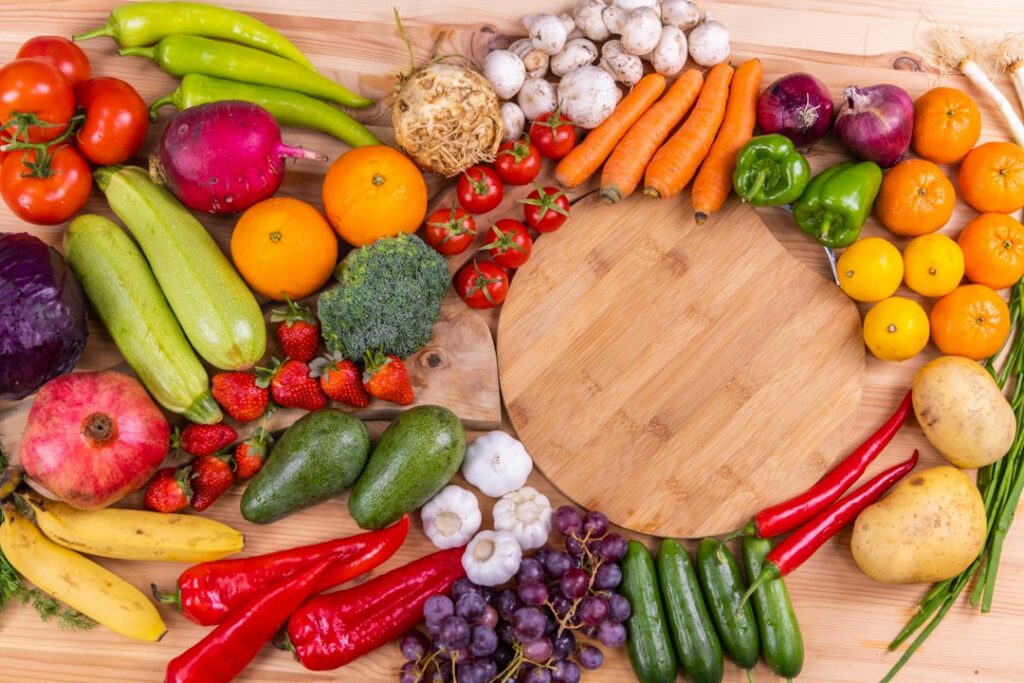
Eating 30 plants a week means eating 30 different plant foods over 7 days, including vegetables, fruit, whole grains, beans, nuts, seeds, herbs and spices. A large 2018 study linked this variety with more helpful gut bacteria. It shows a link, not proof. Start by counting what you eat now, then add 2 or 3 new plants each week.
In this article
- What does 30 plants a week mean?
- Where does the 30 plants idea come from?
- Why does plant variety matter for your gut?
- Why do I believe plant variety is one of the best gut habits?
- Is variety more important than the amount of fibre?
- What counts as a plant?
- How do I eat 30 plants a week the easy way?
- Can I eat 30 plants a week if I have IBS?
- Will eating more plants make me bloated?
- When should I see a doctor?
- Frequently asked questions
- What I want you to remember
In the American Gut Project, one simple question told researchers more about people’s gut bacteria than whether they were vegan. The question asked how many different plants they ate in an average week.
People who ate more than 30 types of plants a week had gut bacteria that looked different from people who ate 10 or fewer. That finding started the “30 plants a week” idea. In this guide I explain what the research really shows and what counts as a plant. I also show how to reach 30 plants a week without changing your whole life.
What does 30 plants a week mean?
Eating 30 plants a week means eating 30 different plant foods over 7 days. Each different plant counts once, however often you eat it. So an apple on Monday and another apple on Friday count as 1 plant, not 2.
The goal is variety, not volume. You do not need to eat huge amounts of food. You simply swap the same few foods for a wider mix.
Where does the 30 plants idea come from?
The idea comes from the American Gut Project, a large citizen science study published in 2018. Over 10,000 people, mostly from the United States, the United Kingdom and Australia, sent in stool samples and answered diet questions.
The researchers found that the number of different plants people ate was linked with their gut bacteria. This link was stronger than labels such as “vegan” or “omnivore”. Those diet labels explained very little.
When the team compared people eating more than 30 plants a week with people eating 10 or fewer, they saw clear differences. The high-plant group had more bacteria that make short-chain fatty acids, such as Faecalibacterium prausnitzii. These fatty acids help feed and protect the lining of your gut.
The high-plant group also carried fewer genes for resistance to some antibiotics. Their stool had more conjugated linoleic acid, a fat that gut bacteria make and that may be good for health.
The honest limits
This was an observational study, so it shows a link, not proof that plants caused the changes. The plant count came from one survey question that people answered themselves. The volunteers chose to take part, so they may not be typical.
Also, 30 is not a magic number. It was simply the top answer on the survey. Nobody has tested whether 30 beats 25 or 35. I see it as a helpful target, not a strict rule.
Why does plant variety matter for your gut?
Different gut bacteria like different foods, so a varied diet feeds a wider range of them. A 2016 review explained it simply. The more diverse your diet, the more diverse your gut bacteria, and the better they cope with change.
The same review pointed out that the variety in most diets has fallen over the past 50 years. Many of us eat the same 10 or 15 foods on repeat.
A 2019 study followed 34 healthy adults every day for 17 days. Their gut bacteria matched the foods they chose more closely than the nutrients in those foods. Two people who lived on meal replacement shakes did not have more stable gut bacteria. Overall dietary variety was linked with a more stable gut.
Raw fruits and vegetables also carry their own microbes. A 2025 review says each serving can carry thousands to billions of microorganisms. Scientists are now studying how these plant microbes link to the bacteria in your gut.
Why do I believe plant variety is one of the best gut habits?
I strongly believe your gut health shapes almost every part of your health. When clients come to me, I always ask about their gut health and their poop. A varied, plant-rich plate is one of the first changes I suggest, because it feeds the bacteria that support everything else.
Larger studies support this. A 2026 systematic review of 37 studies found that plant-based diets tend to boost bacteria that make short-chain fatty acids. They also linked plant-based diets with more diverse gut bacteria. The authors noted that not all studies agree on the size of the changes.
Quality matters too. A 2024 study of 705 older adults in the United States compared healthy and unhealthy plant-based diets. A healthy plant-based diet was linked with more diverse gut bacteria and more fibre-loving species. An unhealthy plant-based diet showed the opposite or no link. In my view, crisps and white bread come from plants too, but they are not what your gut bacteria need most.
My guide to the gut-brain axis explains how these bacteria also talk to your brain and mood.
Is variety more important than the amount of fibre?
You need both, and variety may matter more than many people think. In a 2021 Stanford trial, 18 adults raised their fibre intake for several weeks. Their gut bacteria made more fibre-digesting enzymes, but the variety of bacteria stayed about the same during the study.
Amount still counts for long-term health. A 2019 Lancet analysis pooled 185 long-term studies and 58 trials. People who ate the most fibre had a 15% to 30% lower risk of early death than those who ate the least. Heart disease, stroke, type 2 diabetes and bowel cancer were lower too.
The biggest benefits appeared at 25 to 29 g of fibre a day. Yet in the United States, the average adult eats only about 16 g a day, according to Monash University. My fibermaxxing guide explains how to raise your fibre slowly without bloating.
Fruit and vegetables add up as well. A 2017 review of 95 studies looked at fruit and vegetable intake. The risk of heart disease and early death kept falling up to 800 g (about 1.75 lb) a day.
What counts as a plant?
Any plant food counts, as long as it is a different type. That includes much more than fruit and vegetables.
- Vegetables. Carrots, spinach, peppers, courgette, broccoli, potatoes with skin and salad leaves.
- Fruit. Berries, oranges, kiwifruit, bananas and grapes. Frozen and canned fruit count too.
- Whole grains. Oats, brown rice, quinoa, buckwheat, barley and wholemeal bread.
- Beans and lentils. Chickpeas, black beans, kidney beans, lentils, tofu and tempeh.
- Nuts and seeds. Almonds, walnuts, peanuts, chia, flax, pumpkin and sunflower seeds.
- Herbs and spices. Basil, parsley, mint, turmeric, cumin and cinnamon.
Many people count herbs and spices as a smaller part of a point, because we eat so little. That is a popular tip, not a rule from research.
How do I eat 30 plants a week the easy way?
Start by counting what you already eat for one normal week. Then add 2 or 3 new plants each week until you reach 30.
Try this
- Swap single foods for mixes. Buy a bag of mixed salad leaves, frozen mixed vegetables or a mix of seeds. One bag can add 4 or 5 plants.
- Upgrade your breakfast. Top oats with 2 kinds of fruit, a spoon of chia and a few chopped nuts. That is 5 plants before 9 am. My low FODMAP breakfast ideas give more options.
- Use a 3-bean or mixed lentil tin. Add it to soups, stews and salads for several plants at once.
- Rotate your grains. Try rice one week, then quinoa, buckwheat or barley the next.
- Finish meals with herbs. Add fresh parsley, coriander or mint, and a pinch of a new spice.
- Snack on variety. Keep a jar of mixed nuts and seeds, or carrot and cucumber sticks with hummus. My low FODMAP snacks list has more ideas.
- Keep a simple tally. Write your plants on a note on the fridge, or try my Gut Garden game to make it fun.
A sample day might look like this. Oats with berries, banana, chia and walnuts for breakfast. A lunch salad with mixed leaves, tomato, cucumber, chickpeas and pumpkin seeds. Then a stir-fry with tofu, carrot, broccoli, peppers, ginger and brown rice for dinner. That single day gives you about 16 different plants.
Can I eat 30 plants a week if I have IBS?
Yes, you can, but go slowly and choose plants that suit your gut. Many high-fibre foods are also high in FODMAPs, which can trigger bloating and pain in IBS. Monash University says this can make fibre harder to get on a low FODMAP diet.
There are plenty of low FODMAP plants to mix and match. In set portions, Monash lists oats, quinoa, brown rice, carrots, spinach, kiwifruit, oranges, firm tofu, peanuts, walnuts, chia and canned lentils as low FODMAP. For example, 2 small green kiwifruit give about 6 g of fibre. Half a cup of rolled oats gives about 5 g.
A 2016 Monash blog suggests about 400 g (14 oz) of low FODMAP vegetables a day on a Mediterranean-style plan. It also suggests 2 legume meals a week using small servings of canned chickpeas or lentils. My guides to oats and lentils give the safe portions.
There is good news for plant-rich eating in IBS too. A 2026 report described a 6-week trial in 59 people with IBS and anxiety or low mood. A Mediterranean diet, rich in whole grains, vegetables, beans and fruit, eased gut and mood symptoms more than their usual diet.
If you are in the first phase of a low FODMAP diet, use small portions of many low FODMAP plants. Add more variety as you reintroduce foods. My guide to the low FODMAP diet phases shows how. You can also test your own triggers with my Trigger or Safe game.
Will eating more plants make me bloated?
It can at first, especially if you add a lot of fibre quickly. Your gut bacteria need time to adjust. Many people notice a little more wind at first, which usually settles as the gut adjusts.
Add 2 or 3 new plants a week, not 20. Drink enough water, because Monash suggests around 2 litres (about 68 fl oz) a day. Cook vegetables if raw ones bother you, and keep portions small. My guide to bloating causes explains other reasons you might feel swollen.
When should I see a doctor?
See a doctor if your gut symptoms are new, severe or getting worse, rather than just changing your diet. Get help quickly if you notice blood in your stool, diarrhoea that wakes you at night or weight loss without trying.
Losing 3 kg (about 7 lb) or more without trying is always worth a check. My guide to IBS vs IBD explains the warning signs. For a calmer gut day to day, try my free 30-Day Calm Gut Challenge.
Frequently asked questions
Do herbs and spices count towards 30 plants a week?
Yes, most people count them, because they are plants with their own plant compounds. As we eat only small amounts, many people count each herb or spice as a smaller part of a point. That is a popular tip rather than a research rule, so do whatever keeps you motivated.
Does coffee count as a plant?
Coffee and tea come from plants, so many people include them. They add only a little fibre, though. Focus first on whole plants such as vegetables, fruit, grains, beans, nuts and seeds, and treat coffee and tea as a small bonus.
Do frozen and canned plants count?
Yes. Frozen vegetables, frozen berries and canned beans or lentils all count. They are often cheaper and last longer, which makes variety easier. Rinse canned beans and lentils, and choose ones without added salt or sugar where you can.
How long does it take to see a change in gut health?
Your gut bacteria respond to food within days, but lasting change takes longer. A 2019 study showed gut bacteria depended on several days of eating history. Aim to keep the habit for a few months, and notice changes in your energy, bloating and bowel habits.
Is 30 plants a week better than 5 a day?
They work well together. Five a day is about how much fruit and vegetables you eat, while 30 plants a week is about variety. Thirty plants also includes grains, beans, nuts, seeds, herbs and spices, not just fruit and vegetables.
What I want you to remember
Eating 30 plants a week is a simple way to feed a wider range of gut bacteria. The idea comes from a large but observational study, so treat 30 as a helpful target, not a magic number. Variety and quality both matter.
Start by counting the plants you already eat, then add 2 or 3 new ones each week. If you have IBS, choose low FODMAP plants in small portions and build up slowly. For a full plan, start with my complete IBS diet guide, and pair your plants with fermented foods for your gut.
Sources
- McDonald D, et al. American Gut. An open platform for citizen science microbiome research. mSystems, 2018
- Heiman ML, Greenway FL. A healthy gastrointestinal microbiome is dependent on dietary diversity. Molecular Metabolism, 2016
- Johnson AJ, et al. Daily sampling reveals personalized diet-microbiome associations in humans. Cell Host and Microbe, 2019
- Berg G, et al. Linking the edible plant microbiome and human gut microbiome. Gut Microbes, 2025
- Kozłowska P, et al. How plants feed our microbes. Plant-based diets and gut microbiota modulation. A systematic review. Nutrition Reviews, 2026
- Shen X, et al. Plant-based diets and the gut microbiome. Findings from the Baltimore Longitudinal Study of Aging. American Journal of Clinical Nutrition, 2024
- Wastyk HC, et al. Gut-microbiota-targeted diets modulate human immune status. Cell, 2021
- Reynolds A, et al. Carbohydrate quality and human health. A series of systematic reviews and meta-analyses. The Lancet, 2019
- Aune D, et al. Fruit and vegetable intake and the risk of cardiovascular disease, total cancer and all-cause mortality. International Journal of Epidemiology, 2017
- Varney J. Getting enough fibre. Monash University FODMAP blog, 2021
- Varney J. A low FODMAP Mediterranean-style diet. Monash University FODMAP blog, 2016
- Staudacher HM, et al. Adherence to a Mediterranean diet predicts gastrointestinal and anxiety symptom response in irritable bowel syndrome. Clinical Gastroenterology and Hepatology, 2026
This article shares general information. It is not a diagnosis or a treatment plan. Please talk to your own doctor before you change your diet, medicines or supplements.

Dt. Hashika Vyas
Hashika is a dietitian who works with clients in 15+ countries on gut health, PCOS and weight. She healed her own IBS, and writes every guide on this site to be calm, clear and practical.