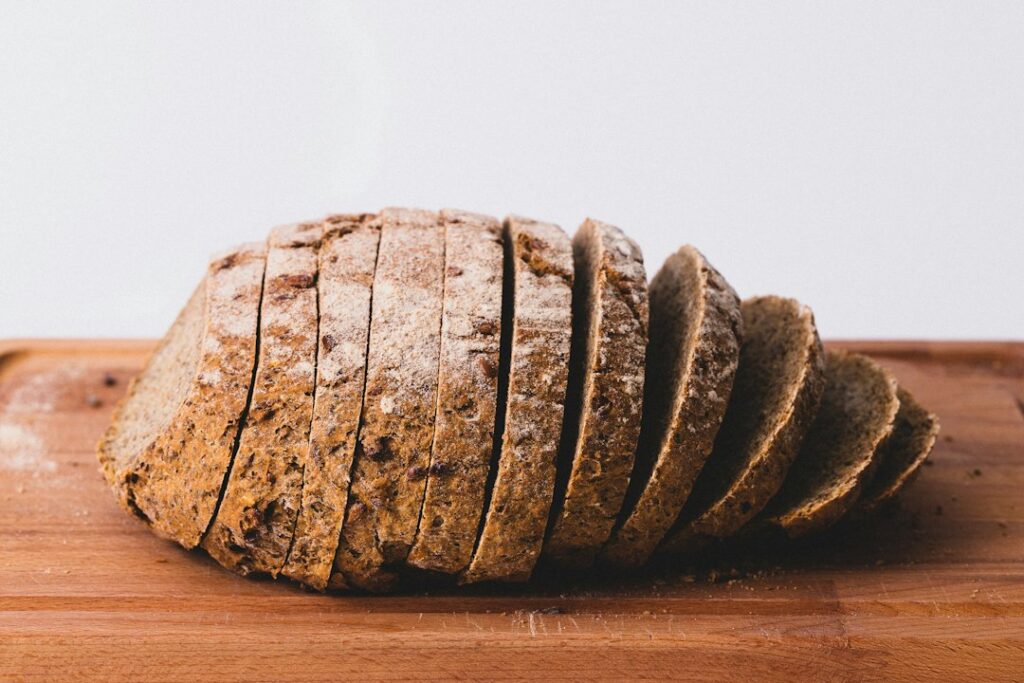
Traditional sourdough is often easier on IBS than regular bread. Its long rise, usually over 12 hours, lets yeast and bacteria break down part of the fructans in wheat. Monash University lists spelt sourdough as low FODMAP. Fast-made shop sourdough may still trigger symptoms, so read the label and test your own portion.
In this article
- Is sourdough bread good for IBS?
- Why does regular bread trigger IBS?
- What do trials on sourdough and IBS show?
- Should you go gluten-free for IBS?
- Which bread is best for IBS?
- Is wheat bread good for your gut?
- How can you test bread after the low FODMAP diet?
- Frequently asked questions
- What I want you to remember
In a 2018 Norwegian trial, 59 people who avoided gluten ate hidden gluten, hidden fructan or a placebo in muesli bars. Gluten caused no more symptoms than the placebo. Fructan, a carbohydrate in wheat, caused the most bloating.
That finding changes how we think about bread and IBS. Sourdough and IBS come up together because the long sourdough process breaks down some of those fructans. Here is which breads are kindest to your gut, and how to choose one in any shop.
Is sourdough bread good for IBS?
Traditional sourdough is often easier on IBS than regular bread. The long rise lets yeast and bacteria eat part of the FODMAPs in the flour.
Monash University found that spelt sourdough and some other traditional sourdough breads meet its low FODMAP criteria. Monash explains that the dough is usually left to prove for more than 12 hours.
Not every sourdough is low FODMAP, though. Monash says breads made without the long sourdough process tend to be high in FODMAPs. Some shop loaves called sourdough are made quickly with added yeast, so they may keep more fructans.
Why does regular bread trigger IBS?
Regular wheat bread is high in fructans, a type of FODMAP. Monash lists wheat, rye and barley breads as high FODMAP.
Your small intestine cannot digest fructans. They travel to the colon, where bacteria ferment them and make gas. In a sensitive IBS gut, that gas can mean bloating, pain and changes in your stools.
The Norwegian trial showed how strong this effect is. Bloating scores were highest after fructan, and 24 of the 59 people felt worst on fructan. Only 13 felt worst on gluten.
Fructans also hide in garlic and onion. My guides on garlic and onion show easy swaps.
What do trials on sourdough and IBS show?
Trials on sourdough and IBS show mixed results, and this is where the research gets honest. Lab tests show sourdough has fewer FODMAPs, but people do not always feel the difference.
A 2017 Finnish trial gave 26 people with IBS either long-fermented wheat sourdough or regular yeast bread for 7 days. The sourdough had fewer FODMAPs. Yet gut symptoms were the same on both breads.
Rye tells a more hopeful story. In a 2016 Finnish trial, 87 people with IBS ate low FODMAP rye bread or regular rye bread for 4 weeks each. On the low FODMAP bread, they had less wind, pain, cramps and stomach rumbling. Their breath also showed less gas.
Both trials were run with a bakery company that made the breads, and some authors work there. The overall IBS score did not change in the rye trial either. So sourdough helps some people, but it is not magic.
Yeast matters too. A 2020 Belgian lab study found that some bakery yeast strains broke down far more fructan than others. Bread with the best strains ended up with about half the fructan.
Should you go gluten-free for IBS?
Most people with IBS do not need a strict gluten-free diet. The fructan finding suggests it is the carbohydrate, not the gluten protein, that upsets many people.
Gluten-free bread is made without wheat, rye and barley, so it is often low in fructans too. That may be why some people feel better on it. But many gluten-free loaves are low in fibre.
Before you cut gluten, please ask your doctor about a blood test for coeliac disease. A 2018 review of 96 studies found that about 1 in 140 people worldwide had coeliac disease confirmed by biopsy. The test only works while you still eat gluten.
A 2026 Turkish trial compared four diets in people with IBS for 4 weeks. Low FODMAP, gluten-free and combined diets all cut symptoms. The low FODMAP diets beat standard diet advice. This was only the strict phase, so it does not tell us about the long term.
Which bread is best for IBS?
The best bread for IBS is one your gut handles well that still gives you fibre. These are good places to start.
- Traditional spelt sourdough. Monash lists sourdough spelt bread as low FODMAP.
- Traditional wheat sourdough. Monash says some traditional sourdough breads meet its low FODMAP criteria. Check the Monash app for tested loaves and serve sizes.
- Gluten-free bread. Choose one with added fibre, and skip loaves with inulin, chicory root or soy flour, which add FODMAPs.
- Certified low FODMAP bread. Look for the Monash or FODMAP Friendly logo.
Try this. Read the label before you buy sourdough. A traditional loaf lists only flour, water and salt, plus a starter. If you see baker’s yeast, vinegar or “sourdough flavour”, it was probably made fast.
Ask your local baker how long the dough proves. More than 12 hours is a good sign. Bread is not your only grain choice either. My guides on oats and rice cover two gentle staples.
Is wheat bread good for your gut?
Wheat fibre can be good for your gut, which is why I do not want you to fear bread forever. I strongly believe gut health plays a major role in nearly every health condition, and fibre feeds your gut bacteria.
Fructans are prebiotics, which means they feed helpful bacteria. A 2018 Danish trial put 60 healthy adults on a low-gluten diet for 8 weeks. Their gut bacteria changed in moderate ways, and they had less bloating. The authors linked most of these effects to the change in cereal fibre, not to gluten itself.
A 2019 Finnish trial in 50 people with IBS found that low FODMAP rye bread raised fibre intake a lot. It also showed a trend towards more bifidobacteria, a helpful type.
So the goal is not to remove grains for good. Use a short low FODMAP phase, then bring back the breads you tolerate. My guide to fibre and IBS shows how to add fibre without a flare.
How can you test bread after the low FODMAP diet?
Test bread once your symptoms have calmed on the strict phase. Pick a calm week and test one bread at a time. My IBS diet guide explains the full plan.
- Day 1. Eat 1 slice of regular wheat bread, about 30 g (1 oz), with a meal.
- Day 2. If you feel fine, try 2 slices.
- Day 3. If you are still fine, try 3 slices across the day.
- Stop when symptoms appear, and wait 2 to 3 days before your next test.
Many people find they can eat a slice or two, but not a large sandwich and a pasta dinner on the same day. Fructans add up across meals.
Frequently asked questions
Is sourdough bread low FODMAP?
Traditional spelt sourdough is low FODMAP, according to Monash University. Some other traditional sourdoughs also meet its low FODMAP criteria. Results vary by grain and by bakery, so check the Monash app for each type.
Is sourdough gluten-free?
No. Wheat and spelt sourdough still contain gluten. Sourdough is not safe for people with coeliac disease unless it is made from gluten-free grains.
Is rye bread good for IBS?
Regular rye bread is high in fructans and can trigger IBS. A 2016 trial found that specially made low FODMAP rye bread caused less wind, pain and cramps than regular rye bread.
Why does bread make me bloated?
Bread often causes bloating because wheat is rich in fructans. Gut bacteria ferment them and make gas. My guide to bloating causes covers other common triggers.
What I want you to remember
For sourdough and IBS, the long proving time is what counts. Choose traditional spelt or wheat sourdough, read the label, and keep portions modest. Then test regular bread so you keep as much fibre as your gut allows.
Dairy is the other big food fear. Read my guide on lactose and IBS next. Test your gut knowledge in the Daily Myth game, and join my free 30-Day Calm Gut Challenge.
Please see a doctor if you have blood in your stool or lose weight without trying, such as 3 kg (about 7 lb).
Sources
- Skodje GI, et al. Fructan, rather than gluten, induces symptoms in patients with self-reported non-celiac gluten sensitivity. Gastroenterology, 2018
- Monash University FODMAP. Sourdough processing and FODMAPs, 2017
- Monash University FODMAP. Where FODMAPs are found in foods
- Laatikainen R, et al. Pilot study. Comparison of sourdough wheat bread and yeast-fermented wheat bread in individuals with wheat sensitivity and irritable bowel syndrome. Nutrients, 2017
- Laatikainen R, et al. Randomised clinical trial. Low-FODMAP rye bread vs. regular rye bread to relieve the symptoms of irritable bowel syndrome. Alimentary Pharmacology and Therapeutics, 2016
- Laurent J, et al. Variability in yeast invertase activity determines the extent of fructan hydrolysis during wheat dough fermentation and final FODMAP levels in bread. International Journal of Food Microbiology, 2020
- Singh P, et al. Global prevalence of celiac disease. Systematic review and meta-analysis. Clinical Gastroenterology and Hepatology, 2018
- Otay Lule N, et al. Comparative effects of four dietary approaches on symptom severity and quality of life in irritable bowel syndrome. A randomized controlled trial. Digestive Diseases and Sciences, 2026
- Hansen LBS, et al. A low-gluten diet induces changes in the intestinal microbiome of healthy Danish adults. Nature Communications, 2018
- Laatikainen R, et al. Randomised clinical trial. Effect of low-FODMAP rye bread versus regular rye bread on the intestinal microbiota of irritable bowel syndrome patients. BMC Nutrition, 2019
- Loponen J, Gänzle MG. Use of sourdough in low FODMAP baking. Foods, 2018
This article shares general information. It is not a diagnosis or a treatment plan. Please talk to your own doctor before you change your diet, medicines or supplements.

Dt. Hashika Vyas
Hashika is a dietitian who works with clients in 15+ countries on gut health, PCOS and weight. She healed her own IBS, and writes every guide on this site to be calm, clear and practical.