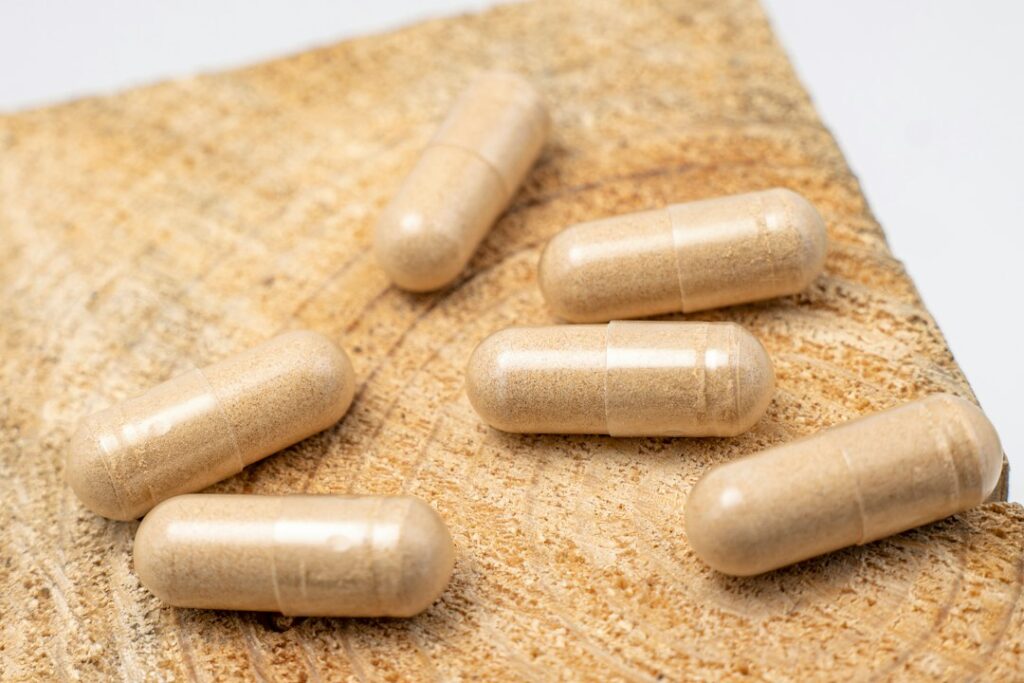
Probiotics for IBS help some people, but not everyone. A 2023 review of 82 trials found some strains eased overall symptoms, pain or bloating, though the evidence was low quality. US guidelines advise against them. UK advice says try one product for 4 to 12 weeks and stop if nothing changes.
In this article
- Do probiotics work for IBS?
- Which probiotic strains have evidence for IBS?
- Are multi-strain probiotics better for IBS?
- What are postbiotics, and do they help IBS?
- What do IBS guidelines say about probiotics?
- How do probiotics affect your gut bacteria?
- How do you choose and test a probiotic for IBS?
- Who should not take probiotics?
- Frequently asked questions
- What I want you to remember
More than 80 trials have tested probiotics for IBS. In 2023, a large review pooled 82 of them with 10,332 people. Only 24 trials were at low risk of bias.
That tells you a lot. Probiotics for IBS are not a myth, but they are not a sure thing either. Here is which strains have evidence, what guidelines say and how to test one without wasting months or money.
Do probiotics work for IBS?
Some probiotics help some people with IBS, but the evidence is weak. The benefit depends on the exact strain, not the brand or the number of bacteria on the label.
The 2023 review by a leading IBS research group in Leeds found small benefits for certain strains. Some eased overall symptoms, some eased belly pain and a few eased bloating. Yet the certainty of the evidence was low or very low for almost every result.
A 2018 European consensus looked at 34 IBS trials. Of 15 trials that measured overall symptoms as their main goal, 8 found a benefit. The other 7 did not.
The good news is safety. In 55 trials with more than 7,000 people, side effects were no more common with probiotics than with a dummy pill.
Which probiotic strains have evidence for IBS?
A strain is the full name of a probiotic, such as Lactobacillus rhamnosus GG. The letters and numbers at the end matter, because two strains of the same species can act very differently.
A 2026 review looked only at single-strain probiotics tested against placebo. It included 32 papers on 10 strains. These strains improved key IBS symptoms in pooled results.
- Bifidobacterium longum 35624, once called Bifidobacterium infantis 35624.
- Lactobacillus rhamnosus GG.
- Lactiplantibacillus plantarum 299v, often sold as Lactobacillus plantarum 299v.
- Saccharomyces cerevisiae CNCM I-3856, a yeast.
- Bacillus coagulans Unique IS2.
The same review found no benefit for Escherichia coli Nissle 1917, Lactobacillus gasseri BNR17 or Lactobacillus casei Shirota. Results for Saccharomyces boulardii were mixed.
Even a strain on the list can fail. In a 2022 trial in Pakistan, 120 adults with IBS took Lactobacillus plantarum 299v or a placebo. Pain, bloating and emptying did not differ between the groups.
Reviews also disagree with each other. The 2023 Leeds review rated Escherichia strains as having the strongest evidence for overall symptoms. The 2026 review found no benefit for one Escherichia coli strain. So treat any list as a starting point, not a promise.
Are multi-strain probiotics better for IBS?
Not clearly. The 2023 review rated the evidence for combination probiotics as very low quality, both for overall symptoms and for bloating.
Some single trials look strong. In a 2024 Polish trial, 202 adults took a nine-strain product with a prebiotic or a placebo for 12 weeks. By the end, 70% on the product reported adequate relief. One author had consulting fees from a company, though the paper says this was outside the study.
A 2024 network review of 54 probiotic trials found probiotics helped overall, mainly Bifidobacterium and Lactobacillus strains. Prebiotics and synbiotics, which add fibre for the bacteria to eat, did not show a clear benefit.
What are postbiotics, and do they help IBS?
Postbiotics are bacteria that have been killed, often by heat, or parts of them. They cannot grow in your gut, yet early trials suggest they can still ease IBS.
The best known trial came from Germany in 2020. It gave 443 adults heat-killed Bifidobacterium bifidum MIMBb75 or a placebo for 8 weeks. The main goal was reached by 34% on the product and 19% on placebo. The maker funded the trial.
A 2026 review pooled 4 postbiotic trials with 1,062 adults. Postbiotics lowered symptom scores and helped more people reach a meaningful drop in pain. The authors rated the certainty as low and asked for larger trials.
What do IBS guidelines say about probiotics?
Guidelines do not agree, and that is a sign of how uncertain the evidence still is.
- The American College of Gastroenterology (2021) suggests against probiotics for overall IBS symptoms because the research is not strong enough.
- The American Gastroenterological Association (2020) recommends probiotics for IBS only in the setting of a clinical trial.
- The British Society of Gastroenterology (2021) says you can try one for up to 12 weeks. Stop if nothing improves.
- The NHS IBS page, reviewed in March 2025, suggests you try probiotics for a month.
A 2026 review put it well. Evidence for each probiotic is tied to one product and is rarely repeated by independent teams.
How do probiotics affect your gut bacteria?
I strongly believe gut health plays a major role in nearly every health condition, and IBS is a clear example. Yet adding bacteria in a capsule is not the same as building a healthy gut.
A 2018 study in Israel gave people a multi-strain probiotic after a course of antibiotics. Their own gut bacteria took longer to recover than in people who took nothing. It was a small study, but it shows that more bacteria is not always better.
Food may matter more. In a 2021 Stanford trial, 36 healthy adults ate either more fibre or more fermented foods for 17 weeks. The fermented food group gained gut bacteria diversity and had lower markers of inflammation. These people did not have IBS, so it is a hint, not proof.
Fermented foods such as yoghurt, kefir and sauerkraut are worth a try if they suit you. Some contain lactose or other FODMAPs, so start small. My guide to lactose and IBS explains how to test dairy.
How do you choose and test a probiotic for IBS?
Choose one product with a strain that has been tested in IBS, and give it a fair, timed trial. In my clinic, I always ask clients about their poop, and a simple diary makes this test clear.
Try this.
- Read the label for the full strain name. Look for the letters and numbers, such as 299v or 35624. If the label only says “Lactobacillus”, you cannot match it to a trial.
- Change one thing at a time. Do not start a probiotic in the same week as a new diet or medicine, or you will not know what helped.
- Give it 4 weeks, and stop by 12. If nothing has changed by then, stop and save your money.
- Keep a diary. Score pain, bloating and stool type from 0 to 10 each day, starting a week before you begin.
- Keep your diet plan going. A probiotic works best alongside good food choices. My IBS diet guide shows how to find your triggers.
- Look after stress too. Try my Breathe With Me exercise for 5 minutes a day.
Who should not take probiotics?
Most healthy adults can take probiotics safely. Talk to your doctor first if you have a weak immune system, are very unwell in hospital, have a central line or are pregnant.
Also see a doctor before you try any supplement if you have warning signs. These include blood in your stool, or losing weight without trying, such as 3 kg (about 7 lb) or more. Probiotics should never delay a check-up.
If you have been told you might have bacterial overgrowth, read my guide to SIBO vs IBS first. The advice there is different.
Frequently asked questions
How long should I take a probiotic for IBS before I know if it works?
Give it at least 4 weeks, as the NHS suggests. UK guidelines say you can continue for up to 12 weeks, then stop if your symptoms have not improved. Keep a daily diary so you can judge it fairly.
Which probiotic is best for IBS with bloating?
No strain has strong evidence for bloating. The 2023 review found only very low quality evidence for combination products and Bacillus strains. If bloating is your main problem, my guide to bloating causes may help you find the real reason.
Can probiotics make IBS worse?
Some people feel more gassy or bloated for the first few days. Across 55 trials, side effects were no more common than with placebo. If symptoms get worse and stay worse after a week or two, stop it.
Is yoghurt or kefir as good as a probiotic supplement for IBS?
We do not know, because few trials compare them in IBS. Fermented foods raised gut bacteria diversity in healthy adults in a 2021 trial. They also contain lactose, so start with a small amount if dairy bothers you.
Can probiotics cure IBS?
No. They can ease symptoms for some people, but IBS has many causes. I explain what recovery really looks like in can IBS be cured.
What I want you to remember
Probiotics for IBS help some people, but the evidence is weak and depends on the exact strain. Pick one tested strain, keep a diary and give it 4 to 12 weeks. If nothing changes, stop and put your money into food, sleep and stress care instead.
Your gut bacteria are shaped every day by what you eat and how you live. Test what you know in the Trigger or Safe game, and join my free 30-Day Calm Gut Challenge.
Sources
- Goodoory VC, et al. Efficacy of probiotics in irritable bowel syndrome. Systematic review and meta-analysis. Gastroenterology, 2023
- Maslennikov R, et al. Strain-specific systematic review with meta-analysis of probiotics efficacy in the treatment of irritable bowel syndrome. Journal of Clinical Medicine, 2026
- Hungin APS, et al. Systematic review. Probiotics in the management of lower gastrointestinal symptoms. An updated evidence-based international consensus. Alimentary Pharmacology and Therapeutics, 2018
- Moeen-Ul-Haq, et al. Role of Lactobacillus plantarum 299v versus placebo in symptomatic improvement of irritable bowel syndrome patients. Journal of the Pakistan Medical Association, 2022
- Wu Y, et al. The efficacy of probiotics, prebiotics, synbiotics, and fecal microbiota transplantation in irritable bowel syndrome. A systematic review and network meta-analysis. Nutrients, 2024
- Sommermeyer H, et al. Effectiveness of a balanced nine-strain synbiotic in primary-care irritable bowel syndrome patients. A multi-center, randomized, double-blind, placebo-controlled trial. Nutrients, 2024
- Andresen V, Gschossmann J, Layer P. Heat-inactivated Bifidobacterium bifidum MIMBb75 (SYN-HI-001) in the treatment of irritable bowel syndrome. A multicentre, randomised, double-blind, placebo-controlled clinical trial. Lancet Gastroenterology and Hepatology, 2020
- Ayad ME, et al. Efficacy and safety of postbiotics in irritable bowel syndrome. A systematic review and meta-analysis. Journal of Gastroenterology and Hepatology, 2026
- Lacy BE, et al. ACG clinical guideline. Management of irritable bowel syndrome. American Journal of Gastroenterology, 2021
- Su GL, et al. AGA clinical practice guidelines on the role of probiotics in the management of gastrointestinal disorders. Gastroenterology, 2020
- Vasant DH, et al. British Society of Gastroenterology guidelines on the management of irritable bowel syndrome. Gut, 2021
- NHS. Irritable bowel syndrome (IBS). Diet, lifestyle and medicines, reviewed 2025
- Sallem OK. Phenotype-informed selection of microbiota-directed interventions in irritable bowel syndrome. Current evidence and limitations. Frontiers in Pharmacology, 2026
- Suez J, et al. Post-antibiotic gut mucosal microbiome reconstitution is impaired by probiotics and improved by autologous FMT. Cell, 2018
- Wastyk HC, et al. Gut-microbiota-targeted diets modulate human immune status. Cell, 2021
This article shares general information. It is not a diagnosis or a treatment plan. Please talk to your own doctor before you change your diet, medicines or supplements.

Dt. Hashika Vyas
Hashika is a dietitian who works with clients in 15+ countries on gut health, PCOS and weight. She healed her own IBS, and writes every guide on this site to be calm, clear and practical.