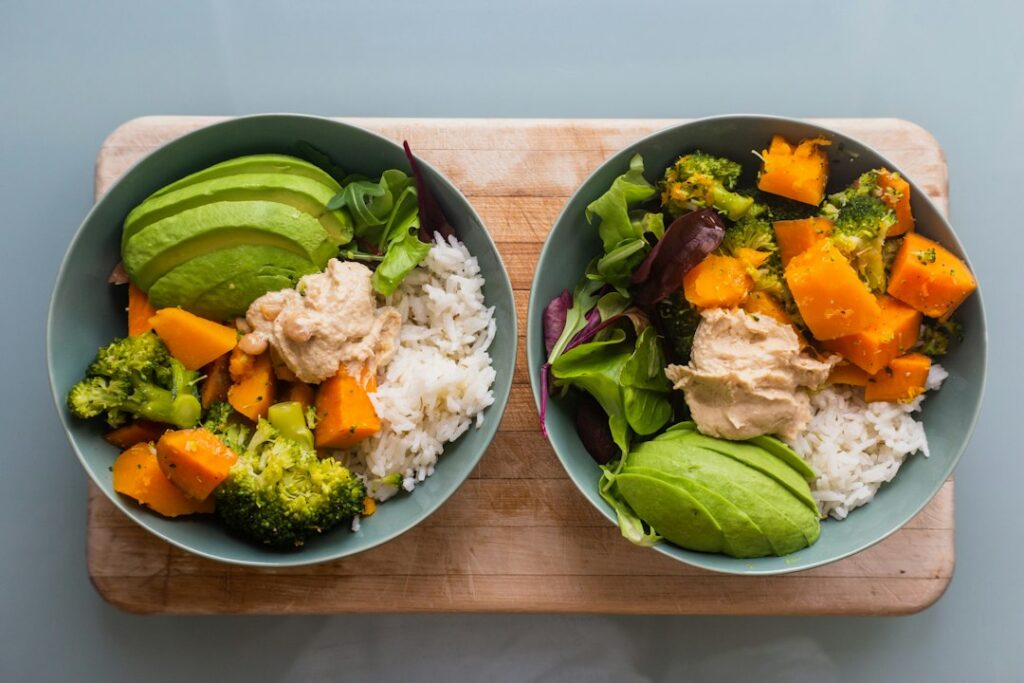
The low FODMAP diet is a 3-phase plan for IBS, not a diet for life. First, swap high FODMAP foods for low FODMAP ones for 2 to 6 weeks. Then reintroduce one FODMAP group at a time over about 6 to 8 weeks. Finally, eat every food you tolerate and limit only your true triggers.
In this article
- What is the low FODMAP diet?
- Does the low FODMAP diet really work?
- What are the 3 phases of the low FODMAP diet?
- How do you do phase 1 of the low FODMAP diet?
- How do you reintroduce FODMAPs in phase 2?
- What happens in phase 3?
- Why should you not stay on phase 1 for long?
- Who should not try the low FODMAP diet?
- Are there gentler options than the full low FODMAP diet?
- When should you see a doctor?
- Frequently asked questions
- What I want you to remember
Most people think the low FODMAP diet means cutting out onion, garlic, wheat and beans for good. That is not how it was designed. The team at Monash University, who created it, calls the strict part a short test that lasts only 2 to 6 weeks.
A 7-year follow-up study found that only 12% of people were still eating strictly low FODMAP years later. Most had moved on to a wider, personal diet and still had good control of their symptoms. This guide walks you through all 3 phases of the low FODMAP diet, so you get the relief without a shrinking plate.
What is the low FODMAP diet?
The low FODMAP diet is a 3-phase eating plan. It lowers certain short-chain carbs for a few weeks, then brings them back one group at a time. Its goal is to find your personal triggers, not to cut foods forever.
FODMAP stands for fermentable oligosaccharides, disaccharides, monosaccharides and polyols. These carbs are poorly absorbed in the small intestine. They draw water into the gut and are then fermented by bacteria in the large bowel, which makes gas.
That is normal for everyone. In IBS, the gut is often extra sensitive, so the same stretch and gas can feel like pain, bloating or urgency. The main FODMAP groups are these.
- Fructans. Found in wheat, rye, onion and garlic. My guides to garlic and onion explain easy swaps.
- GOS (galacto-oligosaccharides). Found in beans, chickpeas and lentils.
- Lactose. Found in milk, soft cheese and some yogurts.
- Excess fructose. Found in honey, mango and apples.
- Polyols. Found in some stone fruits, mushrooms and sugar-free sweeteners such as sorbitol.
Does the low FODMAP diet really work?
Yes, for many people with IBS. It is the most studied diet for IBS, though it does not help everyone.
In a 2014 Monash trial, 30 people with IBS ate a low FODMAP diet and a typical Australian diet for 21 days each. On the low FODMAP diet, their overall symptom score was about half as high, at 22.8 against 44.9 on a 100-point scale. Bloating, pain and wind all eased.
A 2017 London trial of 104 people compared it with a sham diet that cut a similar number of foods. After 4 weeks, 57% on the low FODMAP diet felt adequate relief, against 38% on the sham diet. That gap was just short of statistical significance in the main analysis. It is an honest reminder that a strict diet also has a placebo effect.
A 2025 review in The Lancet Gastroenterology and Hepatology pooled 28 trials with 2,338 people. The low FODMAP diet had by far the most evidence, with 24 trials. It was the only diet tested in more than one trial that clearly beat usual eating for bloating. Most comparisons in that review were rated low or very low confidence, so the science is still growing.
In the Swedish CARIBS trial of 294 adults, 76% improved after 4 weeks on a low FODMAP diet with traditional IBS advice. That compared with 58% on medicines chosen for their main symptom.
What are the 3 phases of the low FODMAP diet?
The 3 phases are restriction, reintroduction and personalisation. Monash calls them Low FODMAP, Reintroduction and Personalisation.
- Phase 1. Restriction, 2 to 6 weeks. You swap high FODMAP foods for low FODMAP ones to see if your symptoms settle.
- Phase 2. Reintroduction, about 6 to 8 weeks. You test one FODMAP group at a time to learn which ones bother you and how much you can handle.
- Phase 3. Personalisation, for the long term. You bring back every food you tolerate and limit only your true triggers.
In my IBS diet guide, I describe how I fit these steps into my own 3 phases with clients, Identify, Stabilise and Sustain. The low FODMAP diet sits inside that bigger plan.
How do you do phase 1 of the low FODMAP diet?
You swap foods rather than cut them. Monash describes phase 1 as a substitution diet, such as using chives in place of onion.
Try this.
- Swap your grains. Choose oats, rice, quinoa, potatoes and sourdough spelt bread.
- Keep your protein simple. Eggs, fish, chicken, firm tofu and tempeh are naturally low in FODMAPs.
- Use small serves of pulses. Canned and rinsed lentils or chickpeas can still fit in small amounts.
- Choose lactose-free dairy. Lactose-free milk and yogurt and hard cheeses work for most people.
- Pick low FODMAP fruit and vegetables. Try kiwi, oranges, firm bananas, carrots, spinach, cucumber and zucchini.
- Flavour without onion and garlic. Use garlic-infused oil, chives, the green part of spring onion, ginger and herbs.
- Keep a diary. Write down what you eat and rate your pain, bloating and stools each day.
- Set a stop date. Mark 2 to 6 weeks on your calendar, so phase 1 never drifts into a lifestyle.
Serve size matters. Many foods are low FODMAP in a small portion and high in a large one. The Monash FODMAP app lists tested serves, and a dietitian can check your plan.
How do you reintroduce FODMAPs in phase 2?
You test one FODMAP group at a time while the rest of your diet stays low FODMAP. Start only when your symptoms have settled.
Monash dietitians suggest a simple 3-day challenge for each group.
- Day 1. Eat a moderate serve of one test food, such as a small serve of mango to test fructose.
- Day 2. Eat a larger serve of the same food at about the same time of day.
- Day 3. Eat a larger serve again, or your usual portion.
- Rest for 2 to 3 days. Go back to your phase 1 diet until any symptoms settle, then test the next group.
If a food causes clear symptoms, stop that challenge, let your gut settle and move on. A reaction to one FODMAP does not mean you react to all of them.
Which groups cause trouble most often? A 2025 US trial gave 21 people with IBS each FODMAP group for 7 days, without telling them which one it was. Fructans and GOS were the groups linked to more belly pain, and GOS was also linked to more bloating. Other groups caused fewer problems. The trial was small, so treat it as a useful hint rather than a rule.
What happens in phase 3?
Phase 3 is your personal long-term diet. You eat every food you tolerate and limit only the groups and amounts that bother you.
Long-term studies are encouraging. A London study followed 103 people after they finished their reintroduction. Satisfactory relief was reported by 12% at the start, 61% after restriction and 57% later on. Their diets stayed nutritionally adequate, though 82% still limited some FODMAPs.
In the 7-year Australian study of 74 people, 62% followed a personal diet and 26% had gone back to normal eating. Only 12% stayed strict, and that group had the lowest food-related quality of life. Overall, 64% still had satisfactory relief.
Tolerance can change over time. Monash suggests retesting foods that bothered you every few months. Stress, sleep, your cycle and how fast your gut moves can all shift how much you handle.
Why should you not stay on phase 1 for long?
Because many FODMAPs feed your good gut bacteria. Staying strict for months can starve some of them.
I strongly believe gut health plays a major role in nearly every health condition. That is why this part matters so much to me. FODMAPs such as fructans and GOS are prebiotics, food for helpful bacteria.
In the 2017 London trial, 4 weeks of the low FODMAP diet lowered Bifidobacterium, a helpful bacteria group, compared with the sham diet. A 2026 review of 12 trials found the same drop in 9 of the 11 trials that measured Bifidobacterium. The overall variety of gut bacteria did not change in the London trial. We still do not know if a short drop causes any lasting harm, which is another reason to keep phase 1 short.
In the London trial, a multistrain probiotic raised Bifidobacterium again, though it did not improve symptoms further. My guide to probiotics for IBS covers which strains have evidence.
Who should not try the low FODMAP diet?
It is not right for everyone. Talk to your doctor or a dietitian before you start if any of these apply to you.
- A past or current eating disorder. A strict diet can bring back old patterns.
- Fear of food. A 2026 French study of 326 people with IBS found 33.4% met criteria compatible with ARFID, a food avoidance disorder.
- Low weight or unplanned weight loss. Cutting foods can make this worse.
- Pregnancy, children or older age. Extra care is needed with any restrictive diet.
- Symptoms not yet checked by a doctor. Coeliac disease and inflammatory bowel disease need ruling out first.
In children, the evidence is growing. A 2026 Italian trial tested 66 children with an average age of 10. On a 2-week low FODMAP diet, 57.6% had a big drop in belly pain. That compared with 30.3% on their usual diet with dietitian guidance. Children should only try it with a doctor and dietitian.
Are there gentler options than the full low FODMAP diet?
Yes. A gentler first step works well for many people, and newer trials support it.
A 2022 UK trial tested 3 diets in 99 people with non-constipated IBS. Relief came for 42% on traditional advice, 55% on the low FODMAP diet and 58% gluten-free. These differences could be chance. Traditional advice, such as regular meals and less caffeine, alcohol and fat, was cheaper and easier.
A 2026 Mexican trial of 69 adults tested a personal approach. People cut their own high FODMAP foods, found through a diary, by half. Relief came for 54.5%, against 41.2% with traditional advice, a difference that could also be chance.
My view is simple. Start with regular meals, calm eating and soluble fibre. If that is not enough, the full 3-phase diet with a trained dietitian is a strong next step. UK and US guidelines both support a short, guided trial. Brain-gut therapies such as hypnotherapy for IBS are another option if diet feels stressful. My guide to TCM for IBS looks at acupuncture and Chinese herbs.
When should you see a doctor?
See a doctor before you start any IBS diet, so other conditions can be ruled out. Get tested for coeliac disease before you cut wheat, because the test needs gluten in your diet to work.
See a doctor quickly if you notice blood in your stool or lose weight without trying, such as 3 kg (about 7 lb) or more. Symptoms that wake you at night or start after age 50 need a check too.
Frequently asked questions
How long should I stay on the low FODMAP diet?
Keep the strict phase to 2 to 6 weeks. If your symptoms improve, move on to reintroduction, which takes about 6 to 8 weeks. If nothing improves after 6 weeks, stop and talk to your doctor or dietitian about other options.
What if the low FODMAP diet does not help me?
About 1 in 4 to nearly 1 in 2 people do not improve, depending on the trial. Go back to your usual diet and look at other options. These include soluble fibre, peppermint oil, gut-directed hypnotherapy, regular movement and medicines from your doctor.
Can I do the low FODMAP diet without a dietitian?
You can, but guidelines recommend a trained dietitian. A dietitian helps you avoid cutting more foods than needed and keeps your diet balanced. In the 7-year Australian study, only 23% had dietitian-guided reintroduction, and the authors called that suboptimal.
Is the low FODMAP diet good for weight loss?
It is not designed for weight loss. It is a short test to find gut triggers. If you lose weight without trying while on it, tell your doctor, because your diet may be too limited.
Is the low FODMAP diet gluten-free?
No. It limits wheat because of fructans, not gluten. Small amounts of wheat and sourdough spelt bread often fit, and many people tolerate more wheat after reintroduction.
What I want you to remember
The low FODMAP diet is a 3-phase test, not a diet for life. Keep phase 1 to 2 to 6 weeks. Reintroduce one group at a time, then build the widest diet your gut allows. That protects your good gut bacteria and your joy in food.
Practise spotting high and low FODMAP foods in my Trigger or Safe game. Then join my free 30-Day Calm Gut Challenge for daily habits that support your gut through every phase.
Sources
- Halmos EP, et al. A diet low in FODMAPs reduces symptoms of irritable bowel syndrome. Gastroenterology, 2014
- Staudacher HM, et al. A diet low in FODMAPs reduces symptoms in patients with irritable bowel syndrome and a probiotic restores Bifidobacterium species. A randomized controlled trial. Gastroenterology, 2017
- Black CJ, et al. Efficacy of a low FODMAP diet in irritable bowel syndrome. Systematic review and network meta-analysis. Gut, 2022
- Cuffe MS, et al. Efficacy of dietary interventions in irritable bowel syndrome. A systematic review and network meta-analysis. Lancet Gastroenterology and Hepatology, 2025
- Nybacka S, et al. A low FODMAP diet plus traditional dietary advice versus a low-carbohydrate diet versus pharmacological treatment in irritable bowel syndrome (CARIBS). Lancet Gastroenterology and Hepatology, 2024
- Rej A, et al. Efficacy and acceptability of dietary therapies in non-constipated irritable bowel syndrome. A randomized trial of traditional dietary advice, the low FODMAP diet, and the gluten-free diet. Clinical Gastroenterology and Hepatology, 2022
- O'Keeffe M, et al. Long-term impact of the low-FODMAP diet on gastrointestinal symptoms, dietary intake, patient acceptability, and healthcare utilization in irritable bowel syndrome. Neurogastroenterology and Motility, 2018
- Silva H, et al. Dietary intake, symptom control and quality of life after dietitian-delivered education on a FODMAP diet for irritable bowel syndrome. A 7-year follow up. Neurogastroenterology and Motility, 2025
- Eswaran S, et al. All FODMAPs aren't created equal. Results of a randomized reintroduction trial in patients with irritable bowel syndrome. Clinical Gastroenterology and Hepatology, 2025
- Garcia-Cedillo MF, et al. Effects of a personalised FODMAP diet versus NICE dietary advice on symptom control in patients with irritable bowel syndrome. Randomised clinical trial. Alimentary Pharmacology and Therapeutics, 2026
- Cao B, et al. Evidence consistency analysis of the effect of a low-FODMAP diet on the abundance of Bifidobacterium and Faecalibacterium prausnitzii in patients with irritable bowel syndrome. Frontiers in Microbiology, 2026
- Mikhael-Moussa H, et al. When food avoidance meets compatible diagnostic criteria. Avoidant/restrictive food intake disorder features in irritable bowel syndrome. Neurogastroenterology and Motility, 2026
- Cristofori F, et al. Clinical trial. Efficacy of a low FODMAP diet in paediatric irritable bowel syndrome. A randomised crossover trial. Alimentary Pharmacology and Therapeutics, 2026
- Dwyer E. The 3 steps of the FODMAP diet. Monash University FODMAP blog, 2018
- Varney J. Practical tips for Step 2, FODMAP reintroduction. Monash University FODMAP blog, 2020
- Lacy BE, et al. ACG clinical guideline. Management of irritable bowel syndrome. American Journal of Gastroenterology, 2021
- Vasant DH, et al. British Society of Gastroenterology guidelines on the management of irritable bowel syndrome. Gut, 2021
This article shares general information. It is not a diagnosis or a treatment plan. Please talk to your own doctor before you change your diet, medicines or supplements.

Dt. Hashika Vyas
Hashika is a dietitian who works with clients in 15+ countries on gut health, PCOS and weight. She healed her own IBS, and writes every guide on this site to be calm, clear and practical.