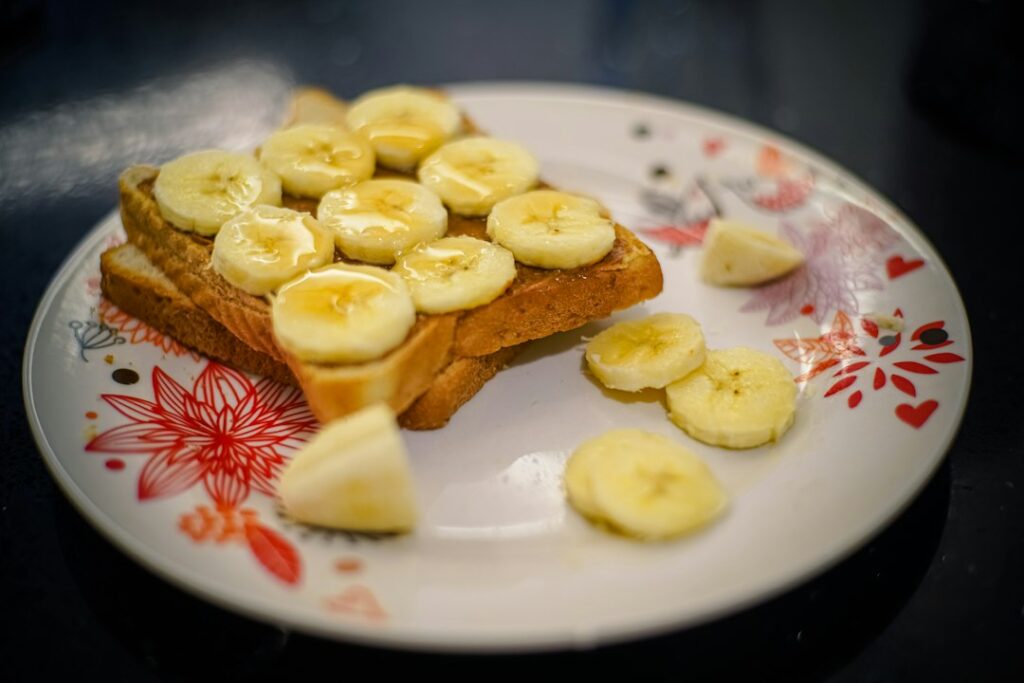
No, the BRAT diet of bananas, rice, applesauce and toast is no longer recommended on its own. Health bodies such as the American Academy of Pediatrics and the CDC advise fluids first, then a normal, balanced diet in small portions as soon as you can eat. Bland foods are fine for the first day only.
In this article
- What is the BRAT diet?
- Is the BRAT diet still recommended?
- Why did doctors move away from the BRAT diet?
- Is anything in the BRAT diet actually helpful?
- What should you eat after a stomach bug instead?
- What should you drink with diarrhoea and vomiting?
- Do probiotics help after a stomach bug?
- What does a stomach bug do to your gut bacteria?
- Is the BRAT diet good for IBS?
- When should you see a doctor?
- Frequently asked questions
- What I want you to remember
The American Academy of Pediatrics now says the BRAT diet is “no longer considered useful”. Back in 2003, the US Centers for Disease Control and Prevention (CDC) called it unnecessarily restrictive. Yet bananas, rice, applesauce and toast are still the first thing many of us reach for after a stomach bug.
So is the BRAT diet still the best thing to eat when your tummy is upset? The short answer is no, but parts of it are still useful. In this guide I explain what the research says, what to eat instead and how to look after your gut while it heals.
What is the BRAT diet?
The BRAT diet is a short list of bland foods given after vomiting or diarrhoea. BRAT stands for bananas, rice, applesauce and toast. Some versions add tea, plain crackers or yogurt.
The idea made sense on paper. These foods are low in fat and fibre, easy to chew and unlikely to upset a sore stomach. For decades, doctors and parents used them as a gentle bridge back to normal meals.
The problem is what the list leaves out. It has very little protein, little fat and few vitamins and minerals. Your body needs all of these to repair itself after an infection.
Is the BRAT diet still recommended?
No, major health bodies no longer recommend the BRAT diet on its own. The American Academy of Pediatrics says children can ideally return to a normal, balanced diet for their age within 24 hours of getting sick.
The 2003 CDC guideline on gastroenteritis in children went further. It said the BRAT diet can give poor nutrition for the patient and for the recovering gut. It recommended a normal diet with complex carbohydrates, meats, yogurt, fruits and vegetables.
European experts agree. The 2014 guideline from the European Society for Paediatric Gastroenterology, Hepatology and Nutrition (ESPGHAN) says regular feeding should continue with no dietary changes, including milk.
A 2016 review compared 15 clinical guidelines on stomach bugs in children from around the world. All of them discouraged changing the diet or withholding food. Thirteen of the 15 strongly recommended early refeeding.
Advice for adults is similar. The NHS in the UK simply says to eat when you feel able to. It adds that avoiding fatty or spicy food may help.
Why did doctors move away from the BRAT diet?
Doctors moved away from it because early, normal eating helps recovery more than a strict bland diet. The CDC guideline says early feeding reduces the gut changes caused by infection, shortens the illness and improves nutrition.
The same guideline says gut rest is not needed. It calls withholding food for more than 24 hours inappropriate. It also warns that long periods on clear fluids or gut rest can lead to serious malnutrition after a stomach bug.
Here is a myth worth correcting. Many people think all fat must be avoided after diarrhoea. The CDC guideline notes that it is hard to get enough energy without fat. It adds that fat may even slow the gut down a little, which can help.
Is anything in the BRAT diet actually helpful?
Yes, some BRAT foods have real evidence behind them, especially green banana. The trick is to use them as part of a fuller diet, not instead of one.
Green banana
Cooked green banana has helped diarrhoea in trials in young children. In a 2001 trial in Bangladesh, 62 baby boys with long-lasting diarrhoea ate a rice diet with cooked green banana, pectin or rice alone.
By day 3, 55% of the banana group and 59% of the pectin group had recovered. Only 15% of the rice-only group had. The pectin dose was 4 g per kg of body weight, about 1.8 g per lb.
A larger 2010 community trial in rural Bangladesh included 2,968 children aged 6 to 36 months. By day 3, 79.9% of children with acute diarrhoea who ate green banana had recovered, compared with 53.3% without it.
These trials were in young children in a low-income setting, not adults in rich countries. Still, the CDC guideline accepts that green bananas and pectin may help in long-lasting diarrhoea. Green banana starch also feeds friendly gut bacteria, which I explain in my guide on whether banana is low FODMAP.
Rice and toast
Plain rice and toast are gentle starches that most people keep down well. They are fine as a first meal. They just are not enough on their own for more than a day or so. My guide to whether rice is low FODMAP covers why rice suits a sore gut.
Apple juice, a surprising finding
One of the most surprising studies on stomach bugs looked at apple juice. A 2016 trial in JAMA included 647 Canadian children aged 6 to 60 months with mild gastroenteritis. They got either half-strength apple juice or an electrolyte drink.
Children given diluted apple juice, then their preferred drinks, had fewer treatment failures. The rate was 16.7% versus 25.0%. Only 2.5% needed a drip, compared with 9.0% of the electrolyte group.
This applies to children with only mild illness and little or no dehydration. Children who are more dehydrated still need a proper oral rehydration solution. The NHS and the American Academy of Pediatrics both warn that full-strength juice and fizzy drinks can make diarrhoea worse.
What should you eat after a stomach bug instead?
Eat a normal, balanced diet in small portions as soon as you feel able. Start with gentle foods, then add protein and other foods over a day or two. When I had IBS with diarrhoea, I learned that a slow, simple start helps a sore gut settle.
Try this, step by step
- While you are vomiting. Small sips of fluid only, every few minutes.
- First meals. Plain rice, toast, crackers, porridge made with water, boiled potato or a firm banana.
- Add protein early. Eggs, plain chicken or fish, firm tofu, clear soup with noodles or plain yogurt.
- Add cooked vegetables. Carrots, courgette (zucchini), spinach and green beans, cooked until soft.
- Back to normal. Your usual meals with fruit, whole grains, beans and lentils over the next few days.
You do not need special products. A 2013 review of 29 trials in low and middle income countries found that ordinary home foods worked as well as commercial or specialised ones.
Small, frequent meals often sit better than three large ones. Go easy on fried food, rich sauces, alcohol, strong coffee and sugary drinks for a few days. The CDC guideline warns that foods high in simple sugars can make diarrhoea worse.
Should you avoid milk after a stomach bug?
Most people do not need to avoid milk. The 2014 ESPGHAN guideline says children should keep feeding with no dietary changes, including milk. Breastfeeding should always continue.
For young children who are not breastfed, a 2013 Cochrane review found some benefit from lactose-free feeds. It pooled 33 trials with 2,973 children. Lactose-free products shortened diarrhoea by about 18 hours on average, though the evidence was low quality.
Some adults also find milk harder to digest for a short time after a stomach bug. If milk upsets you, try lactose-free milk or yogurt for a week or two. My guide to lactose and IBS explains why.
What should you drink with diarrhoea and vomiting?
Fluids matter more than food in the first day. Diarrhoea and vomiting drain water and salts from your body. Dehydration is the main danger, especially for babies, young children and older adults.
- Sip often. The NHS advises small sips if you feel sick.
- Use an oral rehydration solution if you are losing a lot of fluid. A pharmacist can recommend one.
- Water and squash are fine for mild cases in adults.
- Skip full-strength fruit juice and fizzy drinks. They can make diarrhoea worse.
- Keep breastfeeding, and do not water down formula. The CDC says diluting formula is unnecessary and linked to longer symptoms.
Check your pee. Pale yellow means you are keeping up. Dark pee, peeing very little or feeling dizzy when you stand are signs of dehydration.
Do probiotics help after a stomach bug?
The evidence is mixed, and the best recent trials were disappointing. In 2018, two large trials in the New England Journal of Medicine tested probiotics in young children with gastroenteritis.
The US trial gave 971 children Lactobacillus rhamnosus GG or a placebo. The Canadian trial gave 886 children a 2-strain probiotic or a placebo. Neither probiotic made a clear difference.
Guidelines do not fully agree. The 2014 ESPGHAN guideline listed some probiotics as possibly useful, but it came before those trials. The American Academy of Pediatrics says more studies are needed. I would not spend money on a probiotic just for a stomach bug. My guide to probiotics for IBS covers where they have better evidence.
What does a stomach bug do to your gut bacteria?
A bad bout of diarrhoea upsets your gut bacteria, and they recover in stages. I strongly believe that what you eat in the weeks after a bug shapes how well your gut recovers.
A 2015 study in mBio followed people as they recovered from cholera, a severe form of infectious diarrhoea. Their gut bacteria came back in an orderly sequence that repeated from person to person. A similar pattern showed up after another gut infection. The authors suggested this recovery may one day be guided by diet or treatment.
For some people, a stomach bug is also where IBS begins. A 2017 review in Gastroenterology pooled 45 studies with 21,421 people who had a gut infection. About 10% had IBS a year later.
This is one more reason I do not like long, strict bland diets. Your gut bacteria need a variety of plant foods and fibre to rebuild. Once you feel better, bring back fruit, vegetables, oats, beans and whole grains bit by bit. My guide to whether IBS can be cured explains what helps if symptoms linger.
Is the BRAT diet good for IBS?
A BRAT-style day can calm an IBS flare, but applesauce is a problem for many people with IBS. Apples are a high FODMAP fruit, as I explain in my guide to whether apple is low FODMAP. A firm banana, rice and plain toast are usually gentler choices.
If you have IBS with diarrhoea, a short gentle start and then a planned return to normal meals works well. My guide on how to calm an IBS flare-up has a full plan, and my IBS diarrhoea diet covers the longer term. If your bug came from a winter virus, my norovirus symptoms guide explains what to expect.
When should you see a doctor?
Most stomach bugs get better at home, but some signs need a doctor quickly. The NHS says diarrhoea usually stops within 5 to 7 days and vomiting within 1 or 2 days.
Get help if you cannot keep fluids down, see blood in your diarrhoea or have signs of dehydration that do not improve. Babies under 12 months and children with fewer wet nappies need a lower threshold. The doctor box on this page lists every warning sign.
Not sure if your symptoms are normal? My quick Gut Check game can help you think it through, though it never replaces a doctor.
Frequently asked questions
What does BRAT stand for?
BRAT stands for bananas, rice, applesauce and toast. It is a list of bland, low fibre foods that was once widely advised after vomiting or diarrhoea. Health bodies such as the American Academy of Pediatrics no longer recommend it as a diet on its own.
How long should you stay on the BRAT diet?
If you use BRAT foods at all, keep it to the first day or so. The American Academy of Pediatrics says children can ideally go back to a normal diet within 24 hours. A strict bland diet for longer gives your body too little protein and nutrition to heal.
Is the BRAT diet good for adults?
Adults can use bland foods like rice, toast and banana as a first meal, but they do not need to stick to them. The NHS advises eating when you feel able and going easy on fatty or spicy food. Add protein and other foods as soon as you feel ready.
Is applesauce good for diarrhoea?
Applesauce is gentle for many people, but apples are high in FODMAPs, so it can worsen symptoms in people with IBS. Full-strength apple juice can also make diarrhoea worse. A firm banana or plain rice is often a safer first choice.
What is better than the BRAT diet?
A normal, balanced diet in small portions is better, started as soon as you can eat. Begin with gentle starches, then add eggs, chicken, fish, tofu, yogurt and soft cooked vegetables. Keep sipping fluids, and use an oral rehydration solution if you are losing a lot of fluid.
What I want you to remember
The BRAT diet is not dangerous for a day, but it is no longer the best advice. Fluids come first. Then return to normal, balanced meals in small portions as soon as you can.
Keep the useful bits, like a firm banana and plain rice, and add protein early. Then rebuild your gut with a variety of plant foods. If your gut still feels unsettled weeks later, my free 30-Day Calm Gut Challenge is a gentle place to start.
Sources
- American Academy of Pediatrics. Diarrhea in children. What parents need to know. HealthyChildren.org, 2021
- King CK, et al. Managing acute gastroenteritis among children. Oral rehydration, maintenance, and nutritional therapy. CDC MMWR Recommendations and Reports, 2003
- NHS. Diarrhoea and vomiting. Reviewed 2023
- Guarino A, et al. ESPGHAN/ESPID evidence-based guidelines for the management of acute gastroenteritis in children in Europe. Update 2014. Journal of Pediatric Gastroenterology and Nutrition, 2014
- Lo Vecchio A, et al. Comparison of recommendations in clinical practice guidelines for acute gastroenteritis in children. Journal of Pediatric Gastroenterology and Nutrition, 2016
- Freedman SB, et al. Effect of dilute apple juice and preferred fluids vs electrolyte maintenance solution on treatment failure among children with mild gastroenteritis. A randomized clinical trial. JAMA, 2016
- Rabbani GH, et al. Clinical studies in persistent diarrhea. Dietary management with green banana or pectin in Bangladeshi children. Gastroenterology, 2001
- Rabbani GH, et al. Green banana-supplemented diet in the home management of acute and prolonged diarrhoea in children. A community-based trial in rural Bangladesh. Tropical Medicine and International Health, 2010
- MacGillivray S, et al. Lactose avoidance for young children with acute diarrhoea. Cochrane Database of Systematic Reviews, 2013
- Gaffey MF, et al. Dietary management of childhood diarrhea in low- and middle-income countries. A systematic review. BMC Public Health, 2013
- Schnadower D, et al. Lactobacillus rhamnosus GG versus placebo for acute gastroenteritis in children. New England Journal of Medicine, 2018
- Freedman SB, et al. Multicenter trial of a combination probiotic for children with gastroenteritis. New England Journal of Medicine, 2018
- David LA, et al. Gut microbial succession follows acute secretory diarrhea in humans. mBio, 2015
- Klem F, et al. Prevalence, risk factors, and outcomes of irritable bowel syndrome after infectious enteritis. A systematic review and meta-analysis. Gastroenterology, 2017
- Monash University. High and low FODMAP foods. Monash FODMAP, accessed 2026
This article shares general information. It is not a diagnosis or a treatment plan. Please talk to your own doctor before you change your diet, medicines or supplements.

Dt. Hashika Vyas
Hashika is a dietitian who works with clients in 15+ countries on gut health, PCOS and weight. She healed her own IBS, and writes every guide on this site to be calm, clear and practical.