Psyllium is the fibre supplement with the best evidence for IBS. A 2026 review of 30 trials found psyllium improved symptoms more than a placebo. It forms a gel, makes little gas and can help both hard and loose stools. Start with 1 teaspoon in a full glass of water and build up slowly.
In this article
- Is psyllium good for IBS?
- Why is psyllium better than bran for IBS?
- Does psyllium cause gas and bloating?
- Is psyllium good for IBS with diarrhoea?
- Is psyllium good for IBS with constipation?
- How does psyllium affect your gut bacteria?
- What else can psyllium do for your health?
- How do you take psyllium for IBS without bloating?
- Who should be careful with psyllium?
- Frequently asked questions
- What I want you to remember
Not all fibre is equal for IBS. In a 2009 trial, people who added bran were the most likely to quit early, mostly because their IBS got worse. People who added psyllium husk were the ones who felt better.
A huge 2026 review has now backed psyllium for IBS again. So here is how psyllium works, why it causes less gas than most fibres, how to take it without bloating and who should be careful.
Is psyllium good for IBS?
Yes. Psyllium is the fibre supplement with the best evidence in IBS. It can ease overall symptoms, and it can help both hard and loose stools.
A 2026 review in the journal Gastroenterology pooled 30 trials with 1,904 people with IBS. Across 16 trials, 52% of people responded to a fibre supplement, compared with 44% on a control. Psyllium was the type that clearly helped.
The review could not tell which IBS type benefits most, because most trials mixed everyone together. Fibre also did not lower overall symptom scores in a smaller set of trials. So it helps many people, but not everyone.
The American Gastroenterological Association said in 2022 that soluble fibre works for overall IBS symptoms. Psyllium husk is the best-known example.
Why is psyllium better than bran for IBS?
Psyllium forms a soft gel and is barely fermented by gut bacteria, so it makes little gas. Bran is rough and can irritate a sensitive gut.
The 2009 Dutch trial included 275 adults with IBS. For 12 weeks they took 10 g of psyllium, 10 g of bran or a rice flour placebo. In the first month, 57% improved on psyllium compared with 35% on placebo. In the second month it was 59% against 41%.
After 3 months, IBS symptom scores fell by 90 points with psyllium and by 49 points with placebo. Bran only helped in the third month, and early drop-out was highest with bran because symptoms got worse.
One limit is worth knowing. Only 64% of the psyllium group finished all 12 weeks. That is common in IBS trials, but it means the results are less certain.
Does psyllium cause gas and bloating?
It makes much less gas than most fibres, and it may even reduce gas from other foods. Any bloating usually comes from starting with too much too fast.
In a 2020 lab and MRI study, gut bacteria took about 14 hours to start making gas from psyllium. With wheat bran it took about 6 hours. Breath hydrogen, a sign of fermentation, rose after bran but not after psyllium.
A 2022 MRI study tested 19 people with IBS. A drink with 20 g of inulin, a gassy prebiotic fibre, caused a big rise in gas in the colon. Adding 20 g of psyllium cut that gas by about four fifths. A 2026 trial in 22 healthy adults found a similar effect once the gel reached the colon.
Monash University, the team behind the low FODMAP diet, says fibres that are less gas forming may suit people with IBS better. It describes psyllium as well tolerated by many people with IBS and inulin as highly fermentable.
Is psyllium good for IBS with diarrhoea?
It can be. It holds water as a gel, so it can soften hard stools and firm up loose ones. A 2017 review describes this as normalising stool form in both constipation and diarrhoea.
A 2022 pilot trial included 43 adults with loose stools and bowel leakage. For 4 weeks they took 6 g of psyllium a day or tried a low FODMAP diet. Both worked about equally well. The psyllium group had a bigger drop in leakage episodes.
Those people did not all have IBS, and the trial was small. Still, it shows this fibre is worth trying for loose stools with your doctor’s advice. My IBS diarrhoea diet guide has more steps.
Is psyllium good for IBS with constipation?
Yes. This is where psyllium is used most. It traps water in the gut so stools become softer and easier to pass.
In a 2018 MRI study, 20 adults with constipation took 7 g of psyllium 3 times a day for 6 days. Their colons held more water and their stool became softer on the scans.
Kiwifruit is a strong partner here. A 2021 trial in 79 adults with chronic constipation found that kiwifruit, prunes and psyllium all increased complete bowel movements. My guide to IBS constipation compares them in detail.
How does psyllium affect your gut bacteria?
It seems to feed some helpful bacteria, even though it ferments slowly. I strongly believe gut health plays a major role in nearly every health condition, so this matters to me.
In a 2019 study, 16 adults with constipation took psyllium or a placebo for 7 days. Psyllium raised Faecalibacterium, Lachnospira and Roseburia. These bacteria make butyrate, a fatty acid that feeds the cells lining your colon. The rise was linked with more water in the stool.
That study was small and short, and the people did not have IBS. So we cannot say it will change your symptoms through your bacteria. It is a good reason for more research.
What else can psyllium do for your health?
It may help your heart and blood sugar too. These benefits come from the same thick gel that slows digestion in the small intestine.
- Cholesterol. A 2024 review of 29 trials with 2,769 adults found this group of fibres lowered LDL cholesterol by 0.35 mmol/L, about 13.5 mg/dL.
- Blood sugar. A 2015 review pooled 35 trials. Taken before meals, it lowered fasting blood sugar by 37 mg/dL, about 2 mmol/L, in people treated for type 2 diabetes. It made little difference in people with normal blood sugar.
- Weight. A 2023 review pooled 6 trials with 354 adults. Taking about 10.8 g a day before meals led to about 2.1 kg (4.6 lb) more weight loss. Waists shrank by about 2.2 cm (0.9 in).
The blood sugar review used data held by the company that makes a well-known psyllium brand, and its staff wrote the weight review. Keep that in mind, and see these as helpful extras, not the main reason to take it.
How do you take psyllium for IBS without bloating?
Start low, go slow and always mix it with plenty of water. Monash suggests starting with a small dose and building up over several days.
Try this.
- Start with 1 teaspoon a day. Stir psyllium husk into a full glass of water, juice or a smoothie and drink it straight away, before it thickens.
- Build up slowly. Add a little more every few days if your gut is happy. Many trials used about 6 to 10 g a day.
- Drink enough water. It works by holding water, so sip fluids through the day. Never take it dry.
- Give it time. Most trials ran for 4 to 12 weeks. Keep a short diary of your stools and bloating.
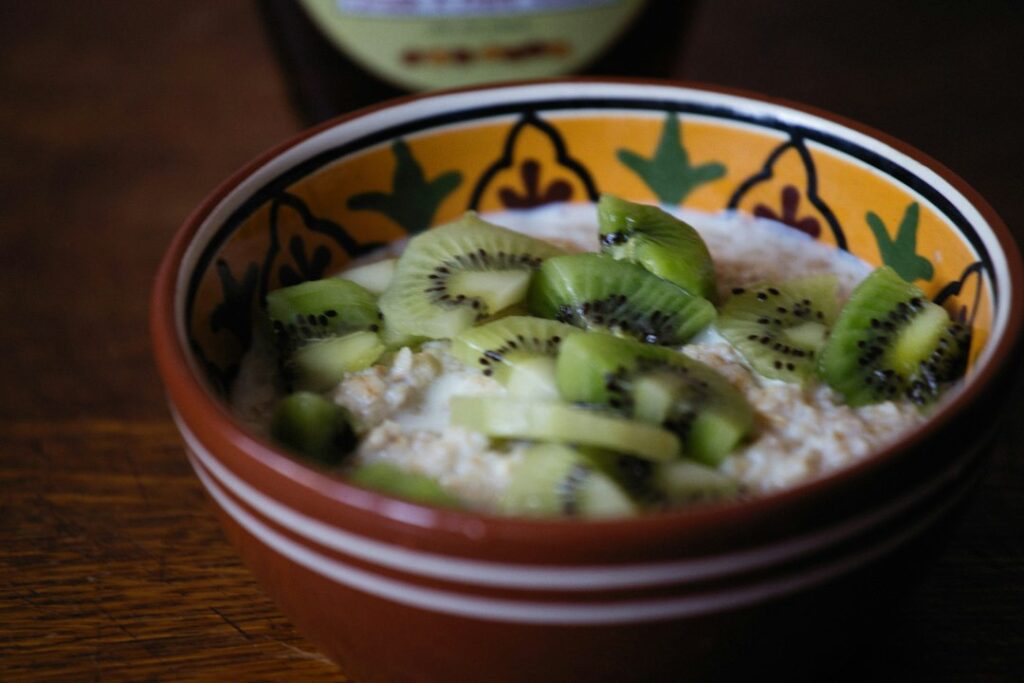
- Add fibre from food too. Monash lists these as low FODMAP serves. Try 1/2 cup (52 g) of rolled oats, 2 tablespoons (24 g) of chia seeds or 2 small green kiwifruit (150 g). Read more in my guide to oats and FODMAPs.
The NHS also suggests oats and up to 1 tablespoon of linseeds a day for bloating and wind. Go easy on very high fibre trends, which I explain in my guide to fibermaxxing.
Who should be careful with psyllium?
It is safe for most adults, but a few groups need a chat with a doctor or pharmacist first.
- If you take regular medicines, ask your pharmacist how far apart to take them and psyllium.
- If you take diabetes medicine, talk to your doctor, because it can lower blood sugar.
- If you have trouble swallowing, or have had a narrowing of the food pipe or bowel, check with your doctor first.
- For children, a 2026 trial in 109 children aged 5 to 18 with belly pain found 86% improved on psyllium, compared with 60% on placebo. Ask your child’s doctor about the right dose.
See a doctor before you start if you have blood in your stool. The same goes for weight loss without trying, such as 3 kg (about 7 lb).
Frequently asked questions
Is psyllium low FODMAP?
Psyllium is barely fermented, so it makes little gas, and Monash says many people with IBS tolerate it well. Many people use it during the low FODMAP diet to keep their fibre up. Check the label for added sweeteners such as sorbitol or inulin.
When is the best time to take psyllium for IBS?
Any time that suits you and fits around your medicines works. The weight and blood sugar trials gave it just before meals. Some people take it in the morning with breakfast so it becomes a daily habit.
How long does psyllium take to work for IBS?
Some people notice softer or firmer stools within a few days. In the 2009 trial, the benefit showed up in the first month. Give it at least 4 weeks at a steady dose before you judge it.
Can I take psyllium and peppermint oil together?
Many people do, because they work in different ways. The fibre helps stools, and peppermint oil eases cramps and pain. Read my guide to peppermint oil for IBS, and ask your pharmacist if you take other medicines.
What I want you to remember
Psyllium is the fibre with the best evidence for IBS. It makes little gas, can help both hard and loose stools and may feed helpful gut bacteria. Start with 1 teaspoon, build up slowly and always mix it with plenty of water.
For the full plan, read my IBS diet guide. Grow your fibre the fun way in the Gut Garden game, and join my free 30-Day Calm Gut Challenge.
Sources
- Staudacher HM, et al. Fiber supplementation in irritable bowel syndrome. A systematic review and meta-analysis of randomized controlled trials. Gastroenterology, 2026
- Bijkerk CJ, et al. Soluble or insoluble fibre in irritable bowel syndrome in primary care? Randomised placebo controlled trial. BMJ, 2009
- Chey WD, et al. AGA clinical practice update on the role of diet in irritable bowel syndrome. Expert review. Gastroenterology, 2022
- Gunn D, et al. Contrasting effects of viscous and particulate fibers on colonic fermentation in vitro and in vivo, and their impact on intestinal water studied by MRI. American Journal of Clinical Nutrition, 2020
- Gunn D, et al. Psyllium reduces inulin-induced colonic gas production in IBS. MRI and in vitro fermentation studies. Gut, 2022
- Dellschaft N, et al. Randomised placebo-controlled trial of methylcellulose and psyllium gels on inulin-induced colonic gas. Alimentary Pharmacology and Therapeutics, 2026
- Monash University FODMAP. Fibre supplements and IBS, 2017
- McRorie JW, McKeown NM. Understanding the physics of functional fibers in the gastrointestinal tract. Journal of the Academy of Nutrition and Dietetics, 2017
- Menees SB, et al. A randomized pilot study to compare the effectiveness of a low FODMAP diet vs psyllium in patients with fecal incontinence and loose stools. Clinical and Translational Gastroenterology, 2022
- Major G, et al. Demonstration of differences in colonic volumes, transit, chyme consistency, and response to psyllium between healthy and constipated subjects using MRI. Neurogastroenterology and Motility, 2018
- Chey SW, et al. Exploratory comparative effectiveness trial of green kiwifruit, psyllium, or prunes in US patients with chronic constipation. American Journal of Gastroenterology, 2021
- Jalanka J, et al. The effect of psyllium husk on intestinal microbiota in constipated patients and healthy controls. International Journal of Molecular Sciences, 2019
- Zhu R, et al. Plantago consumption significantly reduces total cholesterol and low-density lipoprotein cholesterol in adults. Nutrition Research, 2024
- Gibb RD, et al. Psyllium fiber improves glycemic control proportional to loss of glycemic control. A meta-analysis. American Journal of Clinical Nutrition, 2015
- Gibb RD, Sloan KJ, McRorie JW. Psyllium is a natural nonfermented gel-forming fiber that is effective for weight loss. A comprehensive review and meta-analysis. Journal of the American Association of Nurse Practitioners, 2023
- Kaur M, et al. Randomized placebo-controlled trial of psyllium fiber in functional abdominal pain disorders in children. Digestive Diseases and Sciences, 2026
- Monash University FODMAP. Getting enough fibre on a low FODMAP diet, 2021
- NHS. Irritable bowel syndrome (IBS). Diet, lifestyle and medicines, reviewed 2025
This article shares general information. It is not a diagnosis or a treatment plan. Please talk to your own doctor before you change your diet, medicines or supplements.

Dt. Hashika Vyas
Hashika is a dietitian who works with clients in 15+ countries on gut health, PCOS and weight. She healed her own IBS, and writes every guide on this site to be calm, clear and practical.