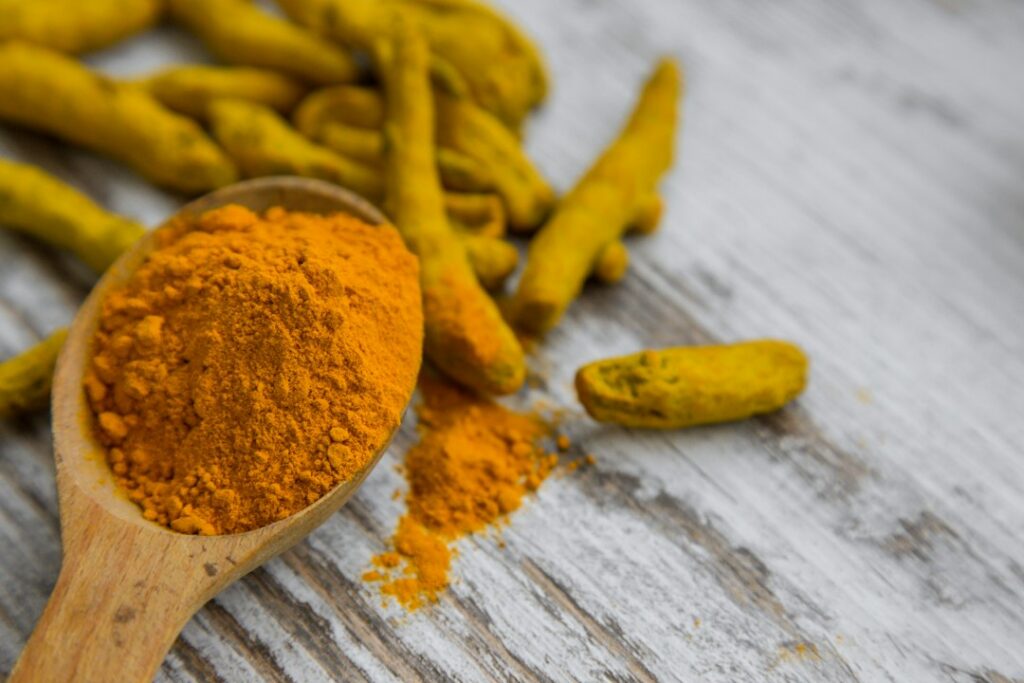
Turmeric for gut health shows the most promise in ulcerative colitis, where curcumin taken with standard medicine helped more people reach and stay in remission. Evidence for IBS is weak and for indigestion early. Cooking with turmeric is safe for most people, but strong supplements, especially with black pepper extract, have caused liver injury.
In this article
- What is turmeric, and what is curcumin?
- Does your body absorb curcumin?
- Is turmeric good for IBS?
- Can turmeric help ulcerative colitis?
- Does turmeric help indigestion?
- Does turmeric change your gut bacteria?
- Is turmeric safe for your liver?
- Who should avoid turmeric supplements?
- How can you use turmeric for gut health safely?
- Frequently asked questions
- What I want you to remember
To match the curcumin dose used in the best-known gut trials, you would need to eat about 95 g of turmeric powder a day. That is more than 3 ounces of a spice most of us use by the pinch. So when people ask me about turmeric for gut health, my first answer is that the spice and the supplement are two very different things.
In this guide I explain what the research says about turmeric for IBS, bowel inflammation, indigestion and your gut bacteria. I also cover the liver injury cases that every turmeric user should know about. You will learn who might benefit, who should avoid it and how to use it safely.
What is turmeric, and what is curcumin?
Turmeric is a yellow spice made from the root of a plant in the ginger family. Curcumin is its main active compound and gives turmeric its colour. Most turmeric research uses curcumin extracts, not the kitchen spice.
Turmeric has a long history in traditional medicine. The US National Center for Complementary and Integrative Health (NCCIH) says it has been used in Chinese, Ayurvedic, Islamic and Thai traditional medicine. It was used for indigestion, belly pain and liver problems, among other things.
A 2006 lab study tested 28 turmeric and curry powders. Pure turmeric powder held about 3.14% curcumin by weight. That means 1 g of turmeric gives you only about 30 mg of curcumin. Most curry powders held very little, and the amounts varied a lot.
Does your body absorb curcumin?
Very little curcumin reaches your blood when you swallow it on its own. In a 1998 study, healthy volunteers took 2 g of pure curcumin. Blood levels were either too low to measure or very low. Your gut wall and liver break it down quickly.
When the same volunteers took 20 mg of piperine with it, absorption rose by about 2000%. Piperine is the compound that gives black pepper its bite. This is why many supplements add black pepper extract, and why many recipes pair turmeric with pepper.
Here is the gut angle that I find most important. Because so little curcumin is absorbed, much of it stays inside your gut. That is exactly where it meets your gut bacteria and your bowel lining. I strongly believe this is why the strongest turmeric results so far come from bowel conditions.
Stronger absorption has a downside too, which I cover in the safety section below. Higher blood levels may mean more benefit, but they may also mean more risk to the liver.
Is turmeric good for IBS?
Turmeric might help some people with IBS, but the evidence is weak so far. A 2018 review pooled 3 trials with 326 people with IBS. Curcumin showed a small benefit, but it was not statistically clear. The authors said the trials were few and very different from each other.
Some single trials look more hopeful.
- Curcumin with fennel oil. A 2016 trial gave 121 people with IBS a curcumin and fennel oil capsule or a dummy pill for 30 days. Symptom scores fell by about 50% with the capsule and about 26% with the dummy pill. About 26% became symptom free, compared with about 7%. Because it was a mix, we cannot tell how much came from curcumin.
- Curcumin alone. A 2021 Australian trial gave 79 adults with gut complaints 500 mg of a curcumin extract or a dummy pill for 8 weeks. Gut symptoms and anxiety improved more with curcumin. These people had self-reported gut problems, not a confirmed IBS diagnosis.
A 2024 review of 26 studies on turmeric for gut conditions found that most had a high risk of bias. It said turmeric may help IBS and bowel inflammation, but that the evidence is unclear. I agree with that honest summary. Turmeric is not a proven IBS treatment yet.
For IBS, the treatments with much stronger evidence are diet changes, soluble fibre, peppermint oil and gut-directed therapies. My guides to peppermint oil for IBS and the complete IBS diet explain these.
Can turmeric help ulcerative colitis?
Curcumin has its best evidence in ulcerative colitis, but only alongside standard medicine. Ulcerative colitis is a type of inflammatory bowel disease (IBD). It is a different condition from IBS, and my guide to IBS vs IBD explains how.
- Keeping remission. A 2006 trial gave 89 people with calm ulcerative colitis 2 g of curcumin a day or a dummy pill. Everyone stayed on their usual medicine. Over 6 months, about 5% relapsed on curcumin, compared with about 21% on the dummy pill.
- Calming a flare. A 2015 trial gave 50 people with an active flare 3 g of curcumin a day or a dummy pill, on top of mesalamine. After 4 weeks, about 54% on curcumin were in remission. None on the dummy pill were.
A 2025 review of 8 trials with 482 people found that curcumin more than doubled the chance of remission in ulcerative colitis. The results varied a lot between trials, though. A 2026 review of plant compounds for IBD agreed that curcumin has the most evidence in ulcerative colitis. It found that the evidence in Crohn’s disease is still lacking.
These trials used 2 to 3 g of curcumin a day. At about 3.14% curcumin, that would mean about 64 to 95 g of turmeric powder. So cooking with turmeric is not a substitute for these doses. Please never stop or change IBD medicine without your gastroenterologist.
Does turmeric help indigestion?
Two trials suggest curcumin may ease indigestion about as well as a standard acid medicine. Doctors call ongoing indigestion with no clear cause functional dyspepsia.
A 2022 trial of 132 people compared curcumin, omeprazole and a dummy pill for 4 weeks. Curcumin eased pain and other symptoms more than the dummy pill and about as well as omeprazole. A larger 2023 trial of 206 people in Thailand found curcumin and omeprazole worked about the same. Taking both together gave no extra benefit.
These are encouraging results, but both trials were short and need repeating in other groups of people. Turmeric can also cause acid reflux in some people, according to NCCIH.
Does turmeric change your gut bacteria?
It might, but the human studies are very small. A 2018 pilot study gave 14 healthy people turmeric, curcumin or a dummy pill. The number of bacterial species rose by about 69% with curcumin and 7% with turmeric. It fell by about 15% with the dummy pill. Each person responded differently, and some did not respond at all.
The 2021 Australian trial found no clear change in gut bacteria after 8 weeks of curcumin. It found no change in SIBO breath tests either. So we cannot yet say that turmeric reliably improves your microbiome.
The best proven way to feed your gut bacteria is still fibre from many plants. My guide to soluble vs insoluble fibre explains which fibres help most. Herbs and spices like turmeric add plant variety too, which my guide to 30 plants a week explains.
Is turmeric safe for your liver?
Turmeric as a spice in food is very likely safe, but strong supplements have caused liver injury. NCCIH says normal turmeric or curcumin products are likely safe in recommended amounts for up to 2 or 3 months. It warns that some high-absorption products may harm the liver.
A 2023 report from the US Drug-Induced Liver Injury Network described 10 cases linked to turmeric. All 10 happened since 2011, and 6 since 2017. Five people needed hospital care, and 1 person died of liver failure. Three of the products tested also contained black pepper extract. Injury usually began 1 to 4 months after starting.
Seven of those 10 people carried a gene type called HLA-B*35:01. This may explain why only some people react. You cannot know your gene type without a special test, so caution makes sense for everyone.
Other reports agree. A 2021 Italian study described 7 cases in one region, all linked to high-dose, high-absorption products. A 2025 series of 11 cases found that liver tests returned to normal after people stopped the supplement. A 2026 case report described a woman whose liver injury came back, and was worse, when she restarted the same turmeric supplement with black pepper.
Stop turmeric supplements and see a doctor if you notice tiredness, nausea, poor appetite, dark urine or yellow skin or eyes. These are the liver warning signs NCCIH lists.
Who should avoid turmeric supplements?
Some people should skip turmeric supplements or speak to a doctor first. Cooking with normal amounts of turmeric is a different matter and is fine for most people.
- Pregnant women. NCCIH says turmeric supplements in pregnancy may be unsafe. Little is known about high doses while breastfeeding.
- People with liver disease or a past reaction to turmeric.
- People who take regular medicine. NCCIH warns that some herbs and medicines interact in harmful ways. Ask your doctor or pharmacist first, especially if you take blood thinners or diabetes medicines.
- People with IBD. Curcumin may help, but only as an extra to your prescribed treatment and with your specialist’s agreement.
How can you use turmeric for gut health safely?
Use turmeric as a food first and treat supplements as medicine. Here are the steps I suggest.
- Cook with it often. Add a pinch to soups, lentils, eggs, rice or roast vegetables. It adds colour, flavour and plant variety.
- Add black pepper. Piperine helped absorption in the 1998 study, though a pinch of pepper in food gives far less than a supplement.
- Buy pure turmeric. Curry powders contain much less curcumin than pure turmeric.
- Think twice about strong supplements. High-absorption products and added black pepper extract show up in many of the reported liver cases.
- Set a time limit. If you try a supplement, keep to the label dose and stop after 2 to 3 months unless your doctor advises otherwise.
- Get a liver test if you take it long term. Ask your doctor about a simple blood test.
- Do not skip proven care. For IBS, start with diet, fibre and stress care. My free 30-Day Calm Gut Challenge gives you one small habit a day.
Want to test what you know about gut health claims? Try my Daily Myth game.
Frequently asked questions
Is turmeric for gut health worth trying?
As a spice, yes. It is safe for most people and adds flavour and plant variety. As a supplement, the evidence is strongest for ulcerative colitis alongside medicine. It is weaker for IBS and indigestion. Talk to your doctor before you start a curcumin supplement.
Can turmeric make IBS worse?
It can for some people. NCCIH lists nausea, acid reflux, stomach upset, diarrhoea and constipation as possible side effects of turmeric taken by mouth. Normal cooking amounts rarely cause problems. If a supplement upsets your gut, stop taking it.
How much turmeric should I take a day?
There is no proven daily dose for gut health. Gut trials used about 500 mg to 3 g of curcumin a day, which is far more than food gives. Cooking with a pinch to a teaspoon is fine for most people. For supplements, follow the label and ask your doctor first.
Is turmeric with black pepper safe?
In food, yes. In supplements, black pepper extract greatly raises how much curcumin you absorb. That may raise the risk of liver injury too. Several reported liver cases involved products with added piperine. Be extra careful with these products.
Does turmeric reduce gut inflammation?
Curcumin may lower bowel inflammation in ulcerative colitis. Trials found more people stayed in or reached remission when they took curcumin with their usual medicine. It is not proven for Crohn’s disease, and it should never replace prescribed treatment.
What I want you to remember
Turmeric the spice and curcumin the supplement are not the same. The spice is a safe and tasty way to add plant variety to your meals. The supplement has real promise for ulcerative colitis, some promise for indigestion and weak evidence for IBS.
Most curcumin stays in your gut, which may be why bowel conditions show the best results. But strong, high-absorption supplements have caused liver injury. Use turmeric in food freely. Treat supplements like medicine, keep them short and tell your doctor.
Sources
- Tayyem RF, et al. Curcumin content of turmeric and curry powders. Nutrition and Cancer, 2006
- Shoba G, et al. Influence of piperine on the pharmacokinetics of curcumin in animals and human volunteers. Planta Medica, 1998
- Ng QX, et al. A meta-analysis of the clinical use of curcumin for irritable bowel syndrome (IBS). Journal of Clinical Medicine, 2018
- Portincasa P, et al. Curcumin and fennel essential oil improve symptoms and quality of life in patients with irritable bowel syndrome. Journal of Gastrointestinal and Liver Diseases, 2016
- Lopresti AL, et al. Efficacy of a curcumin extract (Curcugen) on gastrointestinal symptoms and intestinal microbiota in adults with self-reported digestive complaints. A randomised, double-blind, placebo-controlled study. BMC Complementary Medicine and Therapies, 2021
- Thavorn K, et al. A systematic review of the efficacy and safety of turmeric in the treatment of digestive disorders. Phytotherapy Research, 2024
- Hanai H, et al. Curcumin maintenance therapy for ulcerative colitis. Randomized, multicenter, double-blind, placebo-controlled trial. Clinical Gastroenterology and Hepatology, 2006
- Lang A, et al. Curcumin in combination with mesalamine induces remission in patients with mild-to-moderate ulcerative colitis in a randomized controlled trial. Clinical Gastroenterology and Hepatology, 2015
- Peng Z, et al. Safety and efficacy of curcumin in the treatment of ulcerative colitis. An updated systematic review and meta-analysis of randomized controlled trials. Explore, 2025
- Dong Y, et al. Dietary polyphenols as adjunctive therapy for inflammatory bowel disease. A systematic review and meta-analysis of randomized controlled trials. Nutrients, 2026
- Yongwatana K, et al. Curcuma longa Linn versus omeprazole in treatment of functional dyspepsia. A randomized, double-blind, placebo-controlled trial. Journal of Gastroenterology and Hepatology, 2022
- Kongkam P, et al. Curcumin and proton pump inhibitors for functional dyspepsia. A randomised, double blind controlled trial. BMJ Evidence-Based Medicine, 2023
- Peterson CT, et al. Effects of turmeric and curcumin dietary supplementation on human gut microbiota. A double-blind, randomized, placebo-controlled pilot study. Journal of Evidence-Based Integrative Medicine, 2018
- Halegoua-DeMarzio D, et al. Liver injury associated with turmeric, a growing problem. Ten cases from the Drug-Induced Liver Injury Network (DILIN). American Journal of Medicine, 2023
- Lombardi N, et al. Acute liver injury following turmeric use in Tuscany. An analysis of the Italian Phytovigilance database and systematic review of case reports. British Journal of Clinical Pharmacology, 2021
- Papke DJ, et al. Turmeric supplement-associated hepatitis. A clinicopathological series of 11 cases. Histopathology, 2025
- Patel AA, et al. Recurrent drug-induced autoimmune-like hepatitis due to turmeric supplementation. Journal of Investigative Medicine High Impact Case Reports, 2026
- NCCIH. Turmeric, usefulness and safety
This article shares general information. It is not a diagnosis or a treatment plan. Please talk to your own doctor before you change your diet, medicines or supplements.

Dt. Hashika Vyas
Hashika is a dietitian who works with clients in 15+ countries on gut health, PCOS and weight. She healed her own IBS, and writes every guide on this site to be calm, clear and practical.