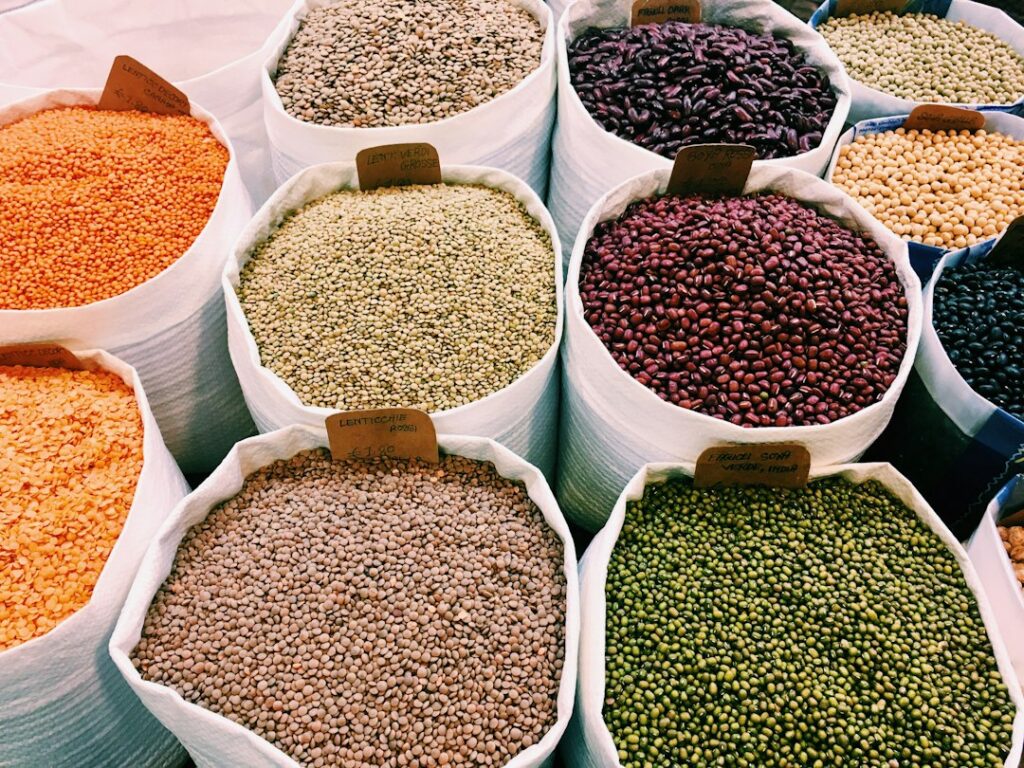
Soluble fibre mixes with water and often forms a gel. Insoluble fibre stays mostly whole and adds bulk. But the type matters more than the label. Gel-forming psyllium has the best evidence for IBS and constipation, while bran often upsets a sensitive gut. Aim for 25 to 30 g a day from many plants.
In this article
- What is the difference between soluble and insoluble fibre?
- Why is soluble vs insoluble fibre not the full story?
- Which fibre helps constipation more?
- Which type of fibre is best for IBS?
- Why does fibre type matter to your gut bacteria?
- Does soluble fibre lower cholesterol and blood sugar?
- How much fibre do you need each day?
- How can you eat more fibre without bloating?
- When should you see a doctor about fibre and gut changes?
- Frequently asked questions
- What I want you to remember
In a 2009 trial of 275 people with IBS, the bran group had the most early dropouts. The main reason was that their IBS got worse. The people given psyllium, a soluble fibre, did best. That one study shows why soluble vs insoluble fibre is more than a label on a cereal box.
In this guide I explain what the two types of fibre really do in your gut. I also explain why the old rule of soluble for diarrhoea and insoluble for constipation is too simple. You will learn which fibres have the best evidence for IBS, constipation, cholesterol and blood sugar, and how to eat more fibre without bloating.
What is the difference between soluble and insoluble fibre?
Soluble fibre mixes with water, and insoluble fibre does not. That is the whole textbook difference. Fibre (spelled fiber in the US) is the part of plant food your body cannot digest on its own.
- Soluble fibre dissolves or swells in water. Some kinds form a thick gel. You find it in oats, barley, beans, lentils, apples, citrus fruit and psyllium husk.
- Insoluble fibre stays mostly whole as it moves through your gut. You find it in wheat bran, whole grains, nuts, seeds and the skins of fruit and vegetables.
Most plant foods contain both types. An apple has soluble fibre in its flesh and insoluble fibre in its skin. So you do not need to sort every meal into two piles.
Why is soluble vs insoluble fibre not the full story?
Solubility is only one of three things that matter. A 2021 review in Nature Reviews Gastroenterology and Hepatology listed the three key traits. They are solubility, viscosity and fermentability. Viscosity means how thick a gel the fibre makes. Fermentability means how fast your gut bacteria break it down.
A 2017 review by McRorie and McKeown says the soluble and insoluble split has led to “enduring misconceptions”. Their point is simple. Two soluble fibres can act in opposite ways in your gut.
- Gel-forming soluble fibres include psyllium, oat beta-glucan and raw guar gum. These are the ones that lower cholesterol and help blood sugar.
- Thin soluble fibres include inulin, fructo-oligosaccharides (FOS) and wheat dextrin. These do not give the same cholesterol or blood sugar benefits.
- Coarse insoluble fibre, like large wheat bran flakes, can help constipation. Finely ground bran may not, and the review says it can even be constipating.
This is why two people can take “a fibre supplement” and have very different results. The type matters more than the label.
Which fibre helps constipation more?
Both types can help constipation, but psyllium has the strongest evidence. The 2017 review explains that only two things in fibre create a laxative effect. Large, rough bran particles rub the bowel lining, which makes it release water and mucus. Gel-forming psyllium holds on to water, so stool stays soft.
Both only work if the fibre is not fully eaten up by gut bacteria first. Fast-fermenting fibres like inulin and FOS do not give a laxative effect, according to the same review.
A 2022 review in the American Journal of Clinical Nutrition looked at 16 trials with 1,251 adults with long-term constipation. About 66% responded to fibre, compared with 41% on a dummy treatment. Psyllium and pectin worked best. The best results came with more than 10 g a day (about 1/3 ounce) for at least 4 weeks. Fibre also caused more wind.
Wheat bran still has a place. A 2015 review of 65 studies in healthy people found that each extra gram of wheat fibre added about 3.7 g to daily stool weight. In people whose gut transit took longer than 48 hours, each extra gram cut transit by about 47 minutes.
Whole foods count too. A 2024 review found that fruit, especially kiwifruit, led to slightly more bowel movements than psyllium. Rye bread did better than white bread. The 2025 British Dietetic Association guideline now includes kiwifruit, prunes and rye bread. My guide to constipation remedies covers these in detail.
Which type of fibre is best for IBS?
Soluble, gel-forming fibre is best for IBS, and psyllium has the most evidence. A 2014 review of 14 trials with 906 people found that soluble fibre helped IBS. About 7 people needed to take it for 1 extra person to feel better. Bran did not show a clear benefit.
A 2026 review in Gastroenterology is the newest and largest. It pooled 30 trials with 1,904 people with IBS. About 52% responded to fibre, compared with 44% on a dummy treatment. Psyllium stood out, with about 1.5 times the chance of a response. Overall symptom scores did not change much, though. A prebiotic fibre called beta-galacto-oligosaccharides (beta-GOS) did improve symptoms in 2 trials.
In the 2009 trial I mentioned above, people took 10 g of psyllium, bran or rice flour each day for 12 weeks. In the first month, 57% on psyllium had enough relief, compared with 35% on the dummy powder. Bran only helped in the third month, and that result did not hold up in a stricter analysis. Early dropout was highest with bran, mostly because IBS symptoms got worse.
So if a “healthy” bran cereal made your bloating worse, you are not imagining it. In my view, bran is often the wrong fibre for a sensitive gut. It is not a sign that all fibre is bad for you. My guide to psyllium for IBS explains how to start it gently.
Why does fibre type matter to your gut bacteria?
Fermentable fibre is food for your gut bacteria, and different bacteria like different fibres. I strongly believe fibre is the single most important thing you can give your gut. When bacteria ferment fibre, they make substances that help feed and protect the bowel lining.
A famous 2016 study in Nature showed what can happen without it. Mice carrying human gut bacteria were fed a low-fibre diet. Within one generation, the losses could be reversed. Over several generations, bacterial diversity kept falling and did not come back when fibre returned. This was a mouse study, so we cannot copy the numbers to people. But it shows how much our gut bacteria depend on the fibre we eat.
There is a catch for people with IBS. Fast fermentation also makes gas. That is why fibres like inulin, found in many “gut health” bars and powders, can cause bloating and wind. Slower, gel-forming fibres like psyllium are often kinder. If gas is your main problem, my guide to excessive gas may help.
The best way to feed many kinds of bacteria is to eat many kinds of plants. Try my Gut Garden game to see how a varied plate grows a healthier gut. My guide to 30 plants a week shows how to build that variety step by step.
Does soluble fibre lower cholesterol and blood sugar?
Yes, but only the thick, gel-forming kinds do. A 2014 review of 28 trials found that at least 3 g a day of oat beta-glucan lowered LDL cholesterol by about 0.25 mmol/L. That is roughly 10 mg/dL. The amount of beta-glucan in oat foods varies, so check the pack.
Psyllium helps blood sugar too, mostly in people who need it. A 2015 review of 35 trials found that psyllium taken before meals lowered fasting blood sugar and HbA1c in people with type 2 diabetes. It did not lower blood sugar in people with normal levels. This review used data from a psyllium maker, so keep that in mind.
If you take diabetes medicine, talk to your doctor before adding a psyllium supplement. Your blood sugar may drop more than expected.
How much fibre do you need each day?
Most adults need about 25 to 30 g of fibre a day, and most people eat far less. The NHS says adults should aim for 30 g a day (about 1 ounce). Most UK adults eat only about 20 g. In the US, only about 5% of people meet the advice, according to a 2017 report.
A large 2019 review in The Lancet looked at 185 studies and 58 trials. People who ate the most fibre had a 15% to 30% lower risk of early death, heart disease, stroke, type 2 diabetes and bowel cancer. The biggest benefits were seen at 25 to 29 g a day. These numbers come from observational studies, which show links rather than proof, but the trials also showed lower weight, blood pressure and cholesterol.
The NHS gives these examples of how fibre adds up.
- Breakfast. 2 slices of wholemeal toast with peanut butter and a medium orange give about 8 g.
- Lunch. Wholemeal spaghetti with a lentil and tomato sauce gives about 11 g.
- Dinner. Chicken with a skin-on baked potato, carrots and green beans gives about 11 g.
That day adds up to about 30 g without a single supplement. On a food label, a “high fibre” food has at least 6 g of fibre per 100 g (about 3.5 ounces).
How can you eat more fibre without bloating?
Go slowly, drink water and choose gentle fibres first. Here is a simple plan for a sensitive gut.
- Write down your starting point. Track your fibre for 3 days so you know where you begin.
- Add about 5 g a week. A sudden jump is the most common reason for bloating. My guide to fibermaxxing explains why more is not always better.
- Start with gel-forming fibre. Oats, chia seeds and psyllium are often kinder than bran for IBS. My guide to oats and FODMAPs gives safe portions.
- Drink with it. Take psyllium with a full glass of water. Fibre holds water in your stool, so you need to supply it.
- Swap refined for whole. Try rye or wholegrain bread instead of white, and brown rice instead of white rice.
- Keep skins on. Potato, kiwifruit and apple skins add insoluble fibre for free.
- Go easy on inulin. Check labels for inulin, chicory root fibre and FOS if you get gassy.
- Give it 4 weeks. The 2022 constipation review found the best results after at least 4 weeks.
If you have IBS, beans, lentils, onions and wheat are high in FODMAPs. You may need to start with smaller portions. My complete IBS diet guide shows you how to find your own limits. Stress also changes how your gut handles fibre, so try my free 30-Day Calm Gut Challenge alongside these steps.
When should you see a doctor about fibre and gut changes?
See a doctor if your bowel habits change for no clear reason, even if more fibre seems to help. Blood in your stool, losing 3 kg (about 7 lb) or more without trying, and diarrhoea that wakes you at night are warning signs. So is a new change in bowel habit after age 50.
Always take psyllium with plenty of water. If you have trouble swallowing or have ever had a bowel blockage, ask your doctor before using it. Ask your pharmacist how to time it with any regular medicines. My guide to IBS with constipation explains other options if fibre is not enough.
Frequently asked questions
Is soluble or insoluble fibre better for diarrhoea?
Gel-forming soluble fibre, like psyllium, is usually better for diarrhoea. It holds water and makes loose stool firmer. Coarse insoluble fibre like wheat bran speeds things up, which can make diarrhoea worse. Start with a small dose and build up slowly.
Is soluble vs insoluble fibre different for IBS?
Yes. Reviews of trials show that soluble fibre, especially psyllium, helps IBS symptoms, while bran shows no clear benefit. In one 2009 trial, bran had the most early dropouts, mainly because symptoms got worse. Fast-fermenting fibres like inulin can also cause gas in a sensitive gut.
Do I need a fibre supplement?
Most people can reach 25 to 30 g a day from food alone, with oats, beans, lentils, fruit, vegetables, nuts and whole grains. A supplement like psyllium can help if you have IBS or constipation, or if you struggle to eat enough. Ask your doctor first if you take regular medicines.
Which foods have both soluble and insoluble fibre?
Most plant foods have both. Apples, pears, beans, lentils, oats, carrots and kiwifruit all contain a mix. Eating a wide variety of plants is the easiest way to get both types and to feed many kinds of gut bacteria.
Why does fibre make me bloated?
Bloating usually happens when you add fibre too fast or eat a lot of fast-fermenting fibre. Your gut bacteria make gas when they break it down. Add about 5 g a week, drink enough water and choose gentler fibres like oats or psyllium first.
What I want you to remember
The soluble vs insoluble fibre split is a useful start, but it is not the whole story. What matters most is whether a fibre forms a gel, how coarse it is and how fast your bacteria ferment it.
For IBS and constipation, psyllium has the strongest evidence. Bran can help constipation but often upsets a sensitive gut. Aim for 25 to 30 g of fibre a day from many different plants, and build up slowly. Your gut bacteria depend on it.
Sources
- McRorie JW, McKeown NM. Understanding the physics of functional fibers in the gastrointestinal tract. An evidence-based approach to resolving enduring misconceptions about insoluble and soluble fiber. Journal of the Academy of Nutrition and Dietetics, 2017
- Gill SK, et al. Dietary fibre in gastrointestinal health and disease. Nature Reviews Gastroenterology and Hepatology, 2021
- Staudacher HM, et al. Fiber supplementation in irritable bowel syndrome. A systematic review and meta-analysis of randomized controlled trials. Gastroenterology, 2026
- Moayyedi P, et al. The effect of fiber supplementation on irritable bowel syndrome. A systematic review and meta-analysis. American Journal of Gastroenterology, 2014
- Bijkerk CJ, et al. Soluble or insoluble fibre in irritable bowel syndrome in primary care? Randomised placebo controlled trial. BMJ, 2009
- van der Schoot A, et al. The effect of fiber supplementation on chronic constipation in adults. An updated systematic review and meta-analysis of randomized controlled trials. American Journal of Clinical Nutrition, 2022
- de Vries J, et al. Effects of cereal fiber on bowel function. A systematic review of intervention trials. World Journal of Gastroenterology, 2015
- van der Schoot A, et al. Systematic review and meta-analysis. Foods, drinks and diets and their effect on chronic constipation in adults. Alimentary Pharmacology and Therapeutics, 2024
- Dimidi E, et al. British Dietetic Association guidelines for the dietary management of chronic constipation in adults. Journal of Human Nutrition and Dietetics, 2025
- Sonnenburg ED, et al. Diet-induced extinctions in the gut microbiota compound over generations. Nature, 2016
- Whitehead A, et al. Cholesterol-lowering effects of oat beta-glucan. A meta-analysis of randomized controlled trials. American Journal of Clinical Nutrition, 2014
- Gibb RD, et al. Psyllium fiber improves glycemic control proportional to loss of glycemic control. A meta-analysis. American Journal of Clinical Nutrition, 2015
- Reynolds A, et al. Carbohydrate quality and human health. A series of systematic reviews and meta-analyses. The Lancet, 2019
- Quagliani D, Felt-Gunderson P. Closing America's fiber intake gap. Communication strategies from a Food and Fiber Summit. American Journal of Lifestyle Medicine, 2017
- NHS. How to get more fibre into your diet, reviewed 2026
This article shares general information. It is not a diagnosis or a treatment plan. Please talk to your own doctor before you change your diet, medicines or supplements.

Dt. Hashika Vyas
Hashika is a dietitian who works with clients in 15+ countries on gut health, PCOS and weight. She healed her own IBS, and writes every guide on this site to be calm, clear and practical.