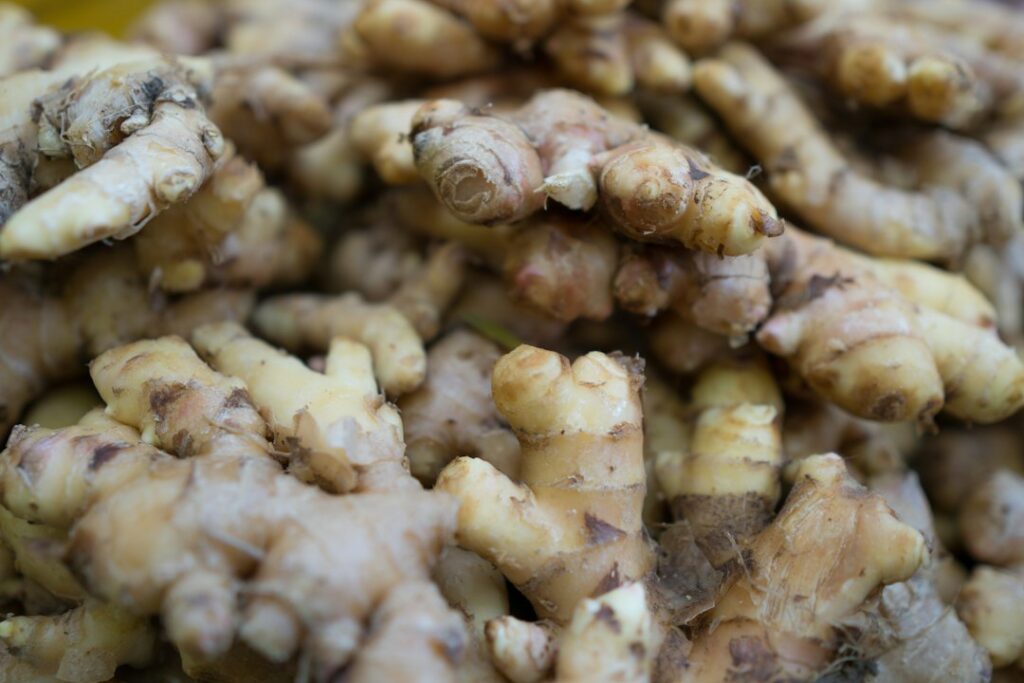
Ginger is low FODMAP and safe for most people with IBS, and it has good evidence for easing nausea. In the only IBS trial, though, 1 to 2 g a day did no better than a placebo. It may help a slow, full stomach. Enjoy it in food or tea, and ask your doctor before supplements.
In this article
- Is ginger good for IBS?
- Does ginger help with bloating?
- Is ginger good for nausea?
- Is ginger low FODMAP?
- How does ginger affect your gut bacteria?
- What does traditional medicine say about ginger?
- Who should be careful with ginger?
- How do you use ginger for IBS?
- Frequently asked questions
- What I want you to remember
Ginger is one of the most popular home remedies for IBS. Yet in the only placebo-controlled trial of ginger in IBS that I could find, the dummy pill did slightly better.
So is ginger for IBS worth trying? It is gentle, low FODMAP and great for nausea. For bloating and pain the proof is still weak. Here is what the research really shows, how to use ginger and who should be careful.
Is ginger good for IBS?
Ginger is safe for most people with IBS, but it has not been shown to ease IBS symptoms better than a placebo. The best trial so far was small and short.
In a 2014 US trial, 45 people with IBS took a placebo, 1 g of ginger or 2 g of ginger. They took it every day for 28 days. Nobody knew which one they had.
About 57% improved on placebo, 47% on 1 g of ginger and 33% on 2 g. Adequate relief was the same, at 53% in both groups. Ginger was well tolerated, with fewer side effects than placebo.
The authors called it a pilot study and said larger trials are needed. So this does not prove ginger fails. It shows we simply do not know yet.
A 2026 review of every plant treatment tested in IBS reached the same view. Ginger results were mixed or inconsistent. Peppermint oil was the only plant remedy that guidelines for adults and children consistently support.
Does ginger help with bloating?
It may help bloating that comes from a slow stomach, but the evidence is early. Ginger seems to work on the upper gut more than on the colon.
In a 2011 Taiwanese study, 11 people with functional dyspepsia took 1.2 g of ginger or a placebo before a bowl of soup. Their stomachs emptied faster after ginger, in about 12 minutes instead of 16.
Their symptoms did not change in that one test, though. A 2026 review of diet and supplements for functional dyspepsia still listed ginger among the options that show benefit.
Functional dyspepsia means fullness, upper tummy pain or nausea after meals. It often overlaps with IBS. If your bloating sits high under your ribs after eating, ginger is a fair thing to try.
If your bloating comes later in the day and sits low in your belly, gas from FODMAPs is the more likely cause. My guide to bloating causes helps you work out which kind you have.
Is ginger good for nausea?
Yes. Nausea is where ginger has the strongest evidence. A 2019 review of clinical trials found that a lower daily dose, split through the day and adding up to about 1,500 mg, helped nausea.
The evidence in pregnancy is the largest. A 2014 review of 12 trials with 1,278 pregnant women found ginger eased nausea better than placebo. It did not clearly reduce vomiting.
A 2026 umbrella review of 18 reviews agreed. Ginger supplements of about 450 to 1,950 mg a day reduced nausea, with a good safety record. If you are pregnant, please talk to your doctor or midwife before you take ginger supplements.
Is ginger low FODMAP?
Yes. Monash University lists ginger as a low FODMAP spice and uses fresh ginger in many of its low FODMAP recipes. That makes it one of the easiest ways to add flavour while you avoid onion and garlic.
Monash suggests using it in stir fries, curries and Middle Eastern or Moroccan dishes. Check the Monash app for exact serve sizes, because these are not given in their blogs.
Watch out for ginger drinks and sweets, though. Ginger ale, ginger beer and ginger biscuits can contain high FODMAP sweeteners such as honey or high fructose corn syrup. Many fizzy drinks also add gas of their own.
How does ginger affect your gut bacteria?
Early research suggests ginger may shift gut bacteria in a helpful direction. I strongly believe gut health plays a major role in nearly every health condition, so this caught my eye.
In a 2021 Chinese crossover study, 123 healthy adults drank fresh ginger juice or salt water for a short time. Ginger juice raised the number of bacterial species in their gut. It lowered some bacteria linked to inflammation and showed a trend toward more Faecalibacterium, a friendly anti-inflammatory bacteria.
The changes were different in men and women, and the people did not have IBS. So we cannot say yet that ginger will change your symptoms.
A 2026 umbrella review pooled 36 meta-analyses with 296 trials and 43,570 people. Ginger supplements lowered two markers of inflammation, CRP and IL-6. They also improved blood fats and blood sugar in most of the reviews.
In rats with an IBS-like gut, ginger calmed gut pain signals and inflammation in a 2020 study. Animal results often do not carry over to people, so I see this as a reason for more trials, not a treatment.
What does traditional medicine say about ginger?
Ginger has a long history in traditional medicine, including global traditional Ayurveda and traditional Chinese medicine. Both have long used it as a home remedy for digestion.
Modern research backs some of this for nausea, but not yet for IBS itself. My guide to Ayurveda for IBS grades the evidence for each herb with safety notes.
Who should be careful with ginger?
Most people can enjoy ginger in food without any problem. Supplements and large amounts need more care.
- If you take a blood thinner, such as warfarin, talk to your doctor first. A 2025 review warned that ginger, even in small amounts, can boost the effect of warfarin.
- If you get heartburn, go slowly. In a 2025 trial, 47 people with functional dyspepsia took 1,080 mg a day for 8 weeks. Of these, 13% had heartburn, 15% had bloating and 11% had diarrhoea.
- If you are pregnant, check with your doctor or midwife before supplements.
- Before any surgery, tell your doctor about every supplement you take.
In that 2025 trial, the side effects were mild and short, and 87% rated ginger as good or excellent to take. It was an open trial with no placebo group, so these numbers are a rough guide.
How do you use ginger for IBS?
Use it as a food first, and try a supplement only after you check with your doctor or pharmacist.
- Make fresh ginger tea. Slice a thumb-sized piece of fresh ginger into a mug of hot water and let it steep for 5 to 10 minutes.
- Cook with it. Grate fresh ginger into stir fries, soups and marinades in place of onion and garlic.
- Sip it before meals if you feel full or queasy early in a meal.
- Keep a simple diary for 2 weeks. Note what you took and how your gut felt.
- Calm the gut and brain loop with slow breathing in my Breathe With Me exercise while you sip.
If you like a morning drink, my guide on coffee and IBS shows how to keep it gentle. For the full picture of what to eat, read my IBS diet guide.
Please see a doctor about blood in your stool or weight loss without trying, such as 3 kg (about 7 lb). Do this before you try any home remedy.
Frequently asked questions
Is ginger tea good for IBS?
Fresh ginger tea is low FODMAP and soothing, and many people enjoy it after meals. It has strong evidence for nausea but weak evidence for other IBS symptoms. Try it for 2 weeks and keep a symptom diary to see if it helps you.
Is ginger good for IBS with diarrhoea?
There is no good human trial of ginger in IBS with diarrhoea yet. One rat study suggests it may calm gut inflammation and pain signals. Some people get looser stools on ginger supplements, so start small. My IBS diarrhoea diet guide has foods with better evidence.
Which is better for IBS, ginger or peppermint oil?
Peppermint oil has more evidence for IBS pain and overall symptoms. A 2026 review found it is the only plant remedy guidelines support consistently. Ginger is better studied for nausea.
How much ginger is safe a day?
Studies have mostly used about 1 to 2 g of ginger a day, and up to about 1,950 mg in pregnancy reviews. Food amounts are safe for most people. If you take a blood thinner or are pregnant, ask your doctor first.
What I want you to remember
Ginger is low FODMAP and great for nausea, and it may help a slow, full stomach. It has not beaten placebo for IBS yet, so do not expect it to fix pain or bloating alone. Enjoy it in food and tea, and check with your doctor before supplements.
Ginger pairs well with gentle foods such as homemade hummus, which I explain in is hummus low FODMAP. Feed a happy gut in the Feed the Tummy game, and join my free 30-Day Calm Gut Challenge.
Sources
- van Tilburg MA, et al. Is ginger effective for the treatment of irritable bowel syndrome? A double blind randomized controlled pilot trial. Complementary Therapies in Medicine, 2014
- Pastras P, et al. Plant-derived treatments for IBS. Clinical outcomes, mechanistic insights, and their position in international guidelines. Nutrients, 2026
- Hu ML, et al. Effect of ginger on gastric motility and symptoms of functional dyspepsia. World Journal of Gastroenterology, 2011
- Pasta A, et al. Dietary and nutraceutical interventions for functional dyspepsia. A narrative review. Digestive and Liver Disease, 2026
- Nikkhah Bodagh M, Maleki I, Hekmatdoost A. Ginger in gastrointestinal disorders. A systematic review of clinical trials. Food Science and Nutrition, 2019
- Viljoen E, et al. A systematic review and meta-analysis of the effect and safety of ginger in the treatment of pregnancy-associated nausea and vomiting. Nutrition Journal, 2014
- Tahergorabi Z, Eslami M, Arab-Zozani M. Treatment of nausea and vomiting with Zingiber officinale in pregnancy. An umbrella review of systematic reviews with meta-synthesis. Phytotherapy Research, 2026
- Monash University FODMAP. A guide to low FODMAP herbs and spices, 2017
- Monash University FODMAP. Low FODMAP Asian condiments, sauces and seasonings, 2024
- Wang X, et al. Gut microbiota variation with short-term intake of ginger juice on human health. Frontiers in Microbiology, 2021
- Musazadeh V, et al. Ginger supplementation and metabolic health. An umbrella review of meta-analyses of randomized trials. Diabetology and Metabolic Syndrome, 2026
- Zhang C, et al. Ginger relieves intestinal hypersensitivity of diarrhea predominant irritable bowel syndrome by inhibiting proinflammatory reaction. BMC Complementary Medicine and Therapies, 2020
- Talasaz AH, et al. Pharmacokinetic and pharmacodynamic interactions between food or herbal products and oral anticoagulants. Seminars in Thrombosis and Hemostasis, 2025
- Aregawi LG, Zoltan C. Evaluation of adverse effects and tolerability of dietary ginger supplementation in patients with functional dyspepsia. Current Therapeutic Research, 2025
This article shares general information. It is not a diagnosis or a treatment plan. Please talk to your own doctor before you change your diet, medicines or supplements.

Dt. Hashika Vyas
Hashika is a dietitian who works with clients in 15+ countries on gut health, PCOS and weight. She healed her own IBS, and writes every guide on this site to be calm, clear and practical.