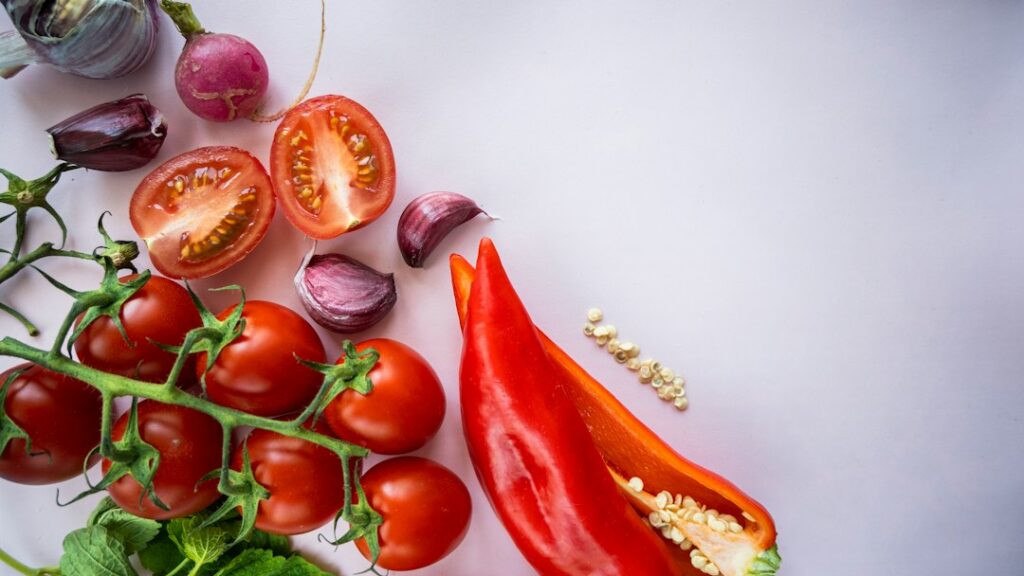
High FODMAP foods include garlic, onion, wheat and rye bread, beans, apples, pears, mango, honey, milk, yogurt, mushrooms and sugar-free sweets. Swap them for garlic-infused oil, rice, oats, firm tofu, lactose-free milk, oranges and kiwifruit. Limit them for only 2 to 6 weeks, then test each group back, because most people react to just a few.
In this article
- What makes a food high FODMAP?
- Which high FODMAP foods should you limit, and what can you swap in?
- Which high FODMAP foods cause the most trouble?
- Where do high FODMAP ingredients hide?
- Can you still eat high FODMAP foods with IBS?
- Who should not cut out high FODMAP foods?
- Frequently asked questions
- What I want you to remember
High FODMAP foods are some of the healthiest foods you can eat. Garlic, onion, beans, wheat, apples and yogurt all feed your gut bacteria. Yet in people with IBS, these same foods can bring on bloating, pain, wind and urgent trips to the toilet.
The good news is that you rarely need to give them all up. In a 2024 trial, people with IBS reacted to 2.5 FODMAP groups on average, not all 6. This guide shows which high FODMAP foods to limit, what to swap in and how to bring the healthy ones back.
What makes a food high FODMAP?
A food is high FODMAP when a normal portion holds enough fermentable carbs to trigger symptoms in a sensitive gut. Monash University, which created the low FODMAP diet, tests foods in its lab. It rates them green, amber or red for each serve size.
These carbs are not fully absorbed in your small intestine. They reach the large bowel, where gut bacteria ferment them into gas. They also draw in water. In IBS the gut is more sensitive to that stretch, so normal amounts of gas can hurt.
Portion matters a lot. Many foods are low FODMAP in a small serve and high in a big one. My full IBS diet guide explains how this fits into a wider plan.
Which high FODMAP foods should you limit, and what can you swap in?
Limit the high FODMAP foods in each group below and swap in a low FODMAP food from the same group. Both lists come from the sample food list Monash University publishes. My full list of FODMAP foods shows every group in one place.
Fructans. Garlic, onion, wheat and rye
- Limit. Garlic, onion, leek, spring onion bulbs, artichoke, wheat and rye bread, wheat pasta, rye crackers and muesli with wheat.
- Swap in. Garlic-infused oil, chives, the green tops of spring onions, rice, oats, quinoa, corn or rice pasta, and spelt sourdough.
Fructans do not dissolve in oil, which is why garlic-infused oil is safe while garlic itself is not. My onion guide has more flavour swaps.
GOS. Beans, lentils and chickpeas
- Limit. Red kidney beans, baked beans, split peas, falafel and large serves of boiled dried legumes.
- Swap in. Firm tofu, tempeh, eggs, plain meat or fish, and small serves of rinsed canned lentils or chickpeas.
Monash lists half a cup of canned lentils as low FODMAP, because draining and rinsing washes some GOS away.
Lactose. Milk, yogurt and soft cheese
- Limit. Cow’s milk, yogurt, ice cream, custard, evaporated milk, condensed milk and soft fresh cheeses.
- Swap in. Lactose-free milk and yogurt, hard cheeses, brie, camembert, feta, butter, almond milk and soy milk made from soy protein.
My guide to lactose and IBS explains why many people still handle a small glass of milk.
Excess fructose. Honey, apples and mango
- Limit. Apples, pears, mango, watermelon, figs, apple juice, dried fruit, honey and high fructose corn syrup.
- Swap in. Orange, mandarin, green kiwifruit, pineapple, cantaloupe, blueberries, maple syrup and table sugar.
Polyols. Stone fruit, mushrooms and sugar-free sweets
- Limit. Cherries, peaches, nectarines, plums, mushrooms, celery, cauliflower and sugar-free gum or sweets.
- Swap in. Oyster mushrooms, carrot, zucchini, cucumber, eggplant and sweets made with regular sugar in small amounts.
Most fresh mushrooms are rich in mannitol, so the swap matters more than people expect.
Nuts and snacks
- Limit. Cashews and pistachios, plus biscuits and snack bars made with wheat, inulin or honey.
- Swap in. Peanuts, macadamias, walnuts, pumpkin seeds, plain rice cakes and dark chocolate. My low FODMAP snacks guide has easy ideas.
Which high FODMAP foods cause the most trouble?
Fructans and mannitol cause the most trouble for people with IBS. In a 2024 trial in Gastroenterology, 117 people with IBS followed a low FODMAP diet for 6 weeks. Those who improved then tested hidden FODMAP powders one at a time.
- Fructans triggered symptoms in 56% and mannitol in 54%.
- GOS triggered them in 35%.
- Lactose, fructose and sorbitol each triggered them in 23% to 28%.
The plain glucose powder triggered symptoms in 26%, so not every reaction was the FODMAP itself. Polyols tended to cause pain on day 1, fructans and GOS on day 2 and lactose on day 3. That is why I suggest watching your gut for 3 days after each test.
Fructans also explain why many people feel better off wheat. In a 2018 Norwegian trial of 59 people who believed gluten upset them, hidden fructans raised bloating while gluten did not differ from placebo. My guide to gluten sensitivity vs FODMAPs covers it.
Polyols are tricky too. In a 2014 Monash trial, 10 g of sorbitol or mannitol raised gut symptoms in people with IBS but not in healthy people. Read more in my guide to sorbitol and IBS.
Where do high FODMAP ingredients hide?
High FODMAP ingredients hide in sauces, ready meals, protein bars, gut health products and sugar-free foods. Monash names garlic and onion based marinades and sauces, vegetarian mince and processed meats as common high FODMAP traps.
Look for these words on labels.
- Fructans. Inulin, chicory root, fructooligosaccharides (FOS), garlic powder, onion powder and wheat flour high in the list.
- Fructose. Honey, agave, high fructose corn syrup, fruit juice concentrate and apple or pear juice.
- Polyols. Sorbitol, mannitol, xylitol, maltitol and isomalt.
- Lactose. Milk solids, milk powder and whey in large amounts.
Inulin is worth a special mention. It is added to many fibre and gut health products. In a 2022 trial in Gut, 20 g of inulin caused the biggest rise in colonic gas in 19 people with IBS. Taking 20 g of psyllium with it cut that gas a lot.
Can you still eat high FODMAP foods with IBS?
Yes, most people with IBS can bring many high FODMAP foods back once they know their triggers and limits. The strict phase is meant to last only 2 to 6 weeks, according to Monash. After that you test each group and keep what your gut handles.
I strongly believe this step matters for your gut bacteria. A 2022 meta-analysis of 9 trials found the low FODMAP diet consistently lowered Bifidobacteria, a helpful group of microbes. Many high FODMAP foods are exactly what those microbes like to eat.
Here are research-backed ways to keep more of these foods.
- Find your dose. Test half a serve first, then a full one. Many people find a small amount of garlic, wheat or apple is fine.
- Rinse canned legumes. Rinsed canned lentils and chickpeas are far gentler than boiled dried ones. My hummus guide shows a safe portion.
- Ask about an enzyme for beans. A 2018 trial tested an alpha-galactosidase enzyme in 31 people with IBS. Taken with high GOS foods, it eased symptoms and bloating in those sensitive to GOS. Check with your doctor or pharmacist first.
- Choose lactose-free dairy. Lactose-free milk and yogurt keep the protein and calcium without the lactose.
- Try slow-rise sourdough. A long rise breaks down part of the wheat fructans. Monash lists spelt sourdough as low FODMAP.
- Space your servings. FODMAPs stack up within a meal, so spread fruit and small serves across the day.
- Pair fibre gently. If you take a fibre supplement, choose psyllium over inulin. In the 2022 trial, psyllium alone made far less gas.
Stress plays a part too. A calm gut tolerates more. My Breathe With Me game is a quick, guided breathing break before meals.
Who should not cut out high FODMAP foods?
Some people should not cut out high FODMAP foods without medical advice. That includes children, pregnant people and anyone with a history of disordered eating. It also includes anyone underweight or losing weight, such as 3 kg (about 7 lb) without trying.
Restriction can backfire. A 2026 study looked at 326 people with IBS at a specialist centre. It found 33% met criteria compatible with ARFID, an eating disorder of fear-based food avoidance. If your list of safe foods keeps shrinking, please speak to your doctor or a dietitian.
Cutting wheat before a coeliac test can also hide the disease. Get tested first while you still eat gluten. Monash advises working with a dietitian, and the diet is meant for people with diagnosed IBS.
Frequently asked questions
What are the worst high FODMAP foods for IBS?
Garlic, onion and wheat are often the worst, because they are rich in fructans and hide in many meals. In a 2024 trial, fructans triggered symptoms in 56% of people with IBS and mannitol, found in mushrooms and cauliflower, in 54%. Your own triggers may differ, so test them one at a time.
Do I have to avoid high FODMAP foods forever?
No. The strict phase lasts only 2 to 6 weeks, according to Monash University. After that you bring each FODMAP group back to find your own triggers and limits. Most people react to only 2 or 3 groups, so they can keep many high FODMAP foods in their diet.
Is garlic-infused oil low FODMAP?
Yes, garlic-infused oil is low FODMAP. Fructans, the FODMAP in garlic, dissolve in water but not in oil, so the flavour moves into the oil without the fructans. Shop-bought garlic oil is the simplest choice. If you make your own, keep it in the fridge and use it within a few days.
Is bread high FODMAP?
Most wheat and rye bread is high FODMAP, because of fructans. Low FODMAP options include spelt sourdough, which Monash lists as low, and breads made without wheat, rye or barley. Gluten-free bread is not always low FODMAP, as some add inulin, apple or honey, so read the label.
Are all fruits high FODMAP?
No, many fruits are low FODMAP. Monash lists orange, mandarin, green kiwifruit, pineapple, cantaloupe and blueberries as low FODMAP choices. Apples, pears, mango, watermelon, cherries and stone fruits are high. Portion size still matters, so keep to one serve of fruit at a time.
What I want you to remember
High FODMAP foods are not unhealthy. They are foods your gut bacteria love that a sensitive gut can struggle with. Limit them for a short time, swap in a low FODMAP food from the same group, and then test them back.
Most people only need to limit a few groups, often just in large portions. Keep as much variety as your gut allows. For daily support and calm habits, join my free 30-Day Calm Gut Challenge.
Sources
- Monash University. FODMAP food list (high and low FODMAP foods)
- Monash University. FODMAPs and irritable bowel syndrome
- Van den Houte K, et al. Efficacy and findings of a blinded randomized reintroduction phase for the low FODMAP diet in irritable bowel syndrome. Gastroenterology, 2024
- Skodje GI, et al. Fructan, rather than gluten, induces symptoms in patients with self-reported non-celiac gluten sensitivity. Gastroenterology, 2018
- Yao CK, et al. Dietary sorbitol and mannitol. Food content and distinct absorption patterns between healthy individuals and patients with irritable bowel syndrome. Journal of Human Nutrition and Dietetics, 2014
- Gunn D, et al. Psyllium reduces inulin-induced colonic gas production in IBS. MRI and in vitro fermentation studies. Gut, 2022
- Tuck CJ, et al. Increasing symptoms in irritable bowel symptoms with ingestion of galacto-oligosaccharides are mitigated by alpha-galactosidase treatment. American Journal of Gastroenterology, 2018
- So D, Loughman A, Staudacher HM. Effects of a low FODMAP diet on the colonic microbiome in irritable bowel syndrome. A systematic review with meta-analysis. American Journal of Clinical Nutrition, 2022
- Black CJ, Staudacher HM, Ford AC. Efficacy of a low FODMAP diet in irritable bowel syndrome. Systematic review and network meta-analysis. Gut, 2022
- Mikhael-Moussa H, et al. When food avoidance meets compatible diagnostic criteria. Avoidant/restrictive food intake disorder features in irritable bowel syndrome. Neurogastroenterology and Motility, 2026
- Rubio-Tapia A, et al. American College of Gastroenterology guidelines update. Diagnosis and management of celiac disease. American Journal of Gastroenterology, 2023
This article shares general information. It is not a diagnosis or a treatment plan. Please talk to your own doctor before you change your diet, medicines or supplements.

Dt. Hashika Vyas
Hashika is a dietitian who works with clients in 15+ countries on gut health, PCOS and weight. She healed her own IBS, and writes every guide on this site to be calm, clear and practical.