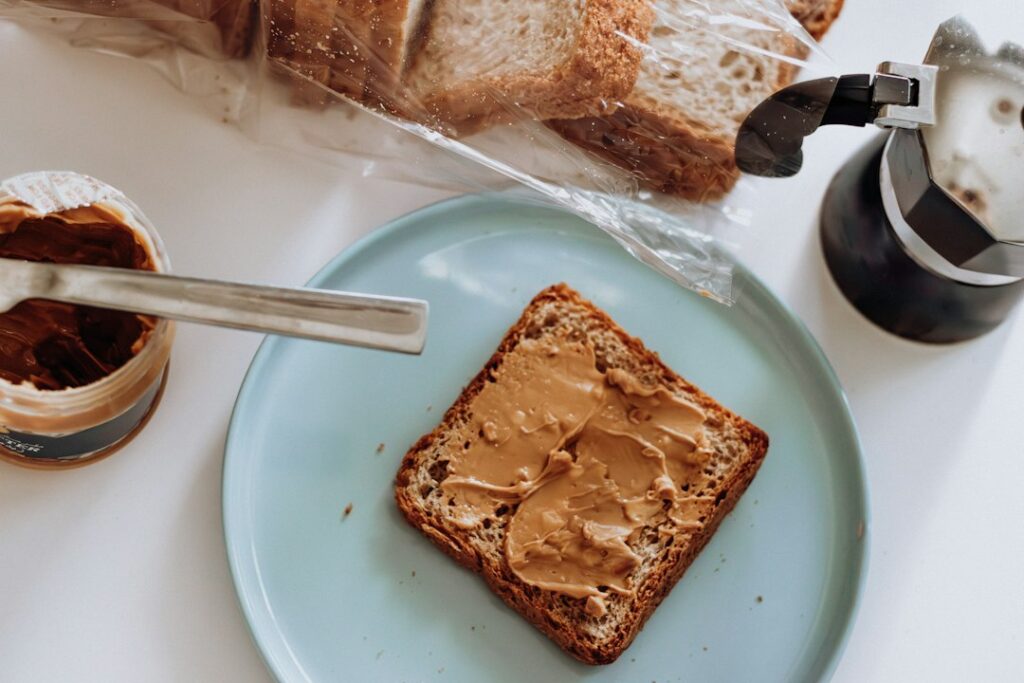
Yes, peanut butter is low FODMAP. Monash University lists it as a low FODMAP spread, and peanuts as a low FODMAP nut. Choose a jar made from just peanuts and salt, and avoid ones with honey, high fructose corn syrup, inulin or sugar alcohols. Start with 1 tablespoon, because its high fat can also upset IBS.
In this article
- Is peanut butter low FODMAP?
- Which peanut butter is best for IBS?
- How much peanut butter can you eat with IBS?
- Is peanut butter good for your gut?
- Is peanut butter healthy?
- What if you have a peanut allergy?
- How can you enjoy peanut butter on a low FODMAP diet?
- Frequently asked questions
- What I want you to remember
Peanut butter is one of the few spreads on the Monash University low FODMAP shopping list. That is good news if you live with IBS and miss easy, filling snacks. But not every jar is the same, and the portion matters for a sensitive gut.
So is peanut butter low FODMAP? Yes, plain peanut butter is. In this guide I explain which jars to choose, how much to eat and what peanuts may do for your gut bacteria.
Is peanut butter low FODMAP?
Yes, peanut butter is low FODMAP. Monash University, the team that created the low FODMAP diet, lists it under spreads in its 2025 low FODMAP shopping list. Its page of high and low FODMAP foods also names peanuts as a low FODMAP nut.
Monash keeps the exact low FODMAP serve for nuts and spreads in its app, not on its public pages. Serving advice can change after new lab tests, so check the Monash app for the latest amount.
Peanuts are actually legumes, like beans and lentils. Many beans are high in FODMAPs, so people often worry about peanuts too. Peanuts behave more like nuts here, and Monash lists them alongside macadamias and walnuts.
Which peanut butter is best for IBS?
The best jar for IBS has a short ingredient list, ideally just peanuts and a little salt. Some brands add sweeteners or fibres that are high in FODMAPs. Check the label for these.
- Honey. Monash lists honey as a high FODMAP sugar because of its fructose.
- High fructose corn syrup. Monash also lists this as high FODMAP.
- Inulin or chicory root fibre. These are fructans, often added to “high fibre” or “protein” spreads.
- Sugar alcohols. Names ending in “itol”, such as sorbitol or xylitol, can trigger symptoms. My guide to sorbitol explains why.
Smooth and crunchy versions are both made from peanuts, so pick the one you enjoy. If you want a sweet touch, Monash lists maple syrup and table sugar as low FODMAP options.
How much peanut butter can you eat with IBS?
Start with 1 tablespoon and see how you feel, then build up to 2 tablespoons if you are comfortable. FODMAPs are only part of the story here. It is very rich in fat, and a large amount of fat can upset a sensitive gut.
According to USDA data, 2 tablespoons (32 g, about 1.1 oz) of the smooth unsalted kind has about 191 calories. It gives 7 g of protein, 16 g of fat and 1.6 g of fibre. Most of the fat is the unsaturated kind.
In my view, one modest spread sits better on a sensitive gut than a heaped spoonful eaten from the jar. Pair it with a low FODMAP carb, such as oats, rice cakes or sourdough spelt toast.
Is peanut butter good for your gut?
Peanuts may feed some helpful gut bacteria, though the research is still early. I strongly believe gut health shapes nearly every part of our health, so I love that everyday foods can play a part.
A 2022 crossover trial included 50 adults with raised blood sugar. They ate 28 g (about 1 oz) of peanuts as a night snack for 6 weeks. Compared with a higher carb snack, peanuts raised Ruminococcaceae. This bacterial family includes butyrate makers, and butyrate fuels the cells lining your colon.
A 2024 trial in Vietnam gave 51 adults 50 g (about 1.8 oz) of peanuts a day for 16 weeks. Peanuts shifted several bacterial groups but did not change overall gut diversity. The authors call for bigger and longer studies.
Both trials used whole peanuts, not a spread, and neither studied people with IBS. So I see peanut butter as a gut-friendly food, not a gut treatment.
Is peanut butter healthy?
Yes, in sensible amounts the plain kind is a healthy food for most people. A 2022 umbrella review gathered the research on nuts, including peanuts. Eating 28 g of nuts a day was linked to a 21% lower risk of heart disease. It was also linked to a 22% lower risk of death from any cause.
A 2026 review of 63 studies found similar links with heart disease and death. These are observational studies. They show links, not proof that nuts cause the benefit.
It can also help you feel full. In a small 2013 trial, 15 women ate breakfast with or without 42.5 g (about 1.5 oz) of peanut butter. With it, they had a lower desire to eat and steadier blood sugar after lunch.
What if you have a peanut allergy?
A peanut allergy is very different from IBS, and it can be dangerous. A 2019 US survey of 40,443 adults estimated that 1.8% had a convincing peanut allergy. A 2026 study across 9 countries found peanut was one of the most common food allergies in adults.
Signs such as hives, swelling of the lips or throat, wheezing or vomiting soon after eating need urgent help. Bloating alone is not usually an allergy sign. If you suspect an allergy, see your doctor for proper testing rather than guessing.
For babies, the advice has changed. The 2015 LEAP trial randomised 640 high-risk infants. Among infants with negative skin tests, allergy at age 5 was 13.7% with avoidance versus 1.9% with eating peanut. Talk to your child’s doctor before starting peanut foods.
How can you enjoy peanut butter on a low FODMAP diet?
It fits easily into meals and snacks. Here are some simple ideas.
- Breakfast. Stir 1 tablespoon into porridge. My guide to oats and FODMAPs covers safe portions.
- Snack. Spread it on rice cakes with a few slices of firm banana. Read my banana guide for the ripeness tip.
- Dinner. Make a satay sauce with peanut butter, soy sauce, lime and ginger, served over rice and vegetables.
- On the go. Pair it with carrot or cucumber sticks. My low FODMAP snacks guide has more ideas.
To test your food knowledge in a fun way, play my Feed the Tummy game. For the full picture, read my complete IBS diet guide.
Frequently asked questions
Are peanuts low FODMAP?
Yes, Monash University lists peanuts as a low FODMAP nut, along with macadamias and walnuts. The exact serve is in the Monash app. Plain roasted or raw peanuts are the safest choice. Some coated or flavoured peanuts contain honey, onion or garlic powder, so check the label.
Is crunchy peanut butter low FODMAP?
Crunchy versions use the same peanuts as smooth, so they are low FODMAP too. The difference is texture, not FODMAP content. Check the ingredients for honey, high fructose corn syrup, inulin or sugar alcohols, which some brands add.
Can peanut butter cause bloating or diarrhoea?
It can, mostly because of its high fat content or added high FODMAP ingredients. Large portions of fatty food can speed up or upset a sensitive gut. Start with 1 tablespoon, choose a jar with just peanuts and salt, and see how your body responds.
Is peanut butter good for IBS constipation?
It adds a little fibre, about 1.6 g in 2 tablespoons, but it is not a strong constipation fix. Pair it with fibre foods like oats or kiwifruit, and drink plenty of water. My IBS constipation guide has proven steps.
What I want you to remember
Plain peanut butter is low FODMAP and a handy, filling food for an IBS gut. Choose a jar with just peanuts and salt, and skip ones with honey, inulin or sugar alcohols.
Start with 1 tablespoon, because the fat can matter as much as the FODMAPs. If you want a calm, guided reset for your gut, join my free 30-Day Calm Gut Challenge.
Sources
- Monash University. High and low FODMAP foods
- Monash University. Valentine C. Low FODMAP shopping list, 2025
- Monash University. Rhys-Jones D. Low FODMAP snacks, 2021
- USDA FoodData Central. Peanut butter, smooth style, without salt (SR Legacy 172470)
- Sapp PA, et al. Peanuts as a nighttime snack enrich butyrate-producing bacteria compared to an isocaloric lower-fat higher-carbohydrate snack in adults with elevated fasting glucose. A randomized crossover trial. Clinical Nutrition, 2022
- Nguyen SM, et al. Influence of peanut consumption on the gut microbiome. A randomized clinical trial. Nutrients, 2024
- Balakrishna R, et al. Consumption of nuts and seeds and health outcomes including cardiovascular disease, diabetes and metabolic disease, cancer, and mortality. An umbrella review. Advances in Nutrition, 2022
- Liu M, et al. Nut consumption and risk of cardiovascular disease events and all-cause mortality. A systematic review and dose-response meta-analysis of prospective cohort studies. Archives of Cardiovascular Diseases, 2026
- Reis CE, et al. Acute and second-meal effects of peanuts on glycaemic response and appetite in obese women with high type 2 diabetes risk. A randomised cross-over clinical trial. British Journal of Nutrition, 2013
- Gupta RS, et al. Prevalence and severity of food allergies among US adults. JAMA Network Open, 2019
- Fiocchi A, et al. Prevalence of IgE-mediated food allergies in children and adults. Results from the multinational ASSESS FA study. Journal of Allergy and Clinical Immunology. In Practice, 2026
- Du Toit G, et al. Randomized trial of peanut consumption in infants at risk for peanut allergy. New England Journal of Medicine, 2015
This article shares general information. It is not a diagnosis or a treatment plan. Please talk to your own doctor before you change your diet, medicines or supplements.

Dt. Hashika Vyas
Hashika is a dietitian who works with clients in 15+ countries on gut health, PCOS and weight. She healed her own IBS, and writes every guide on this site to be calm, clear and practical.