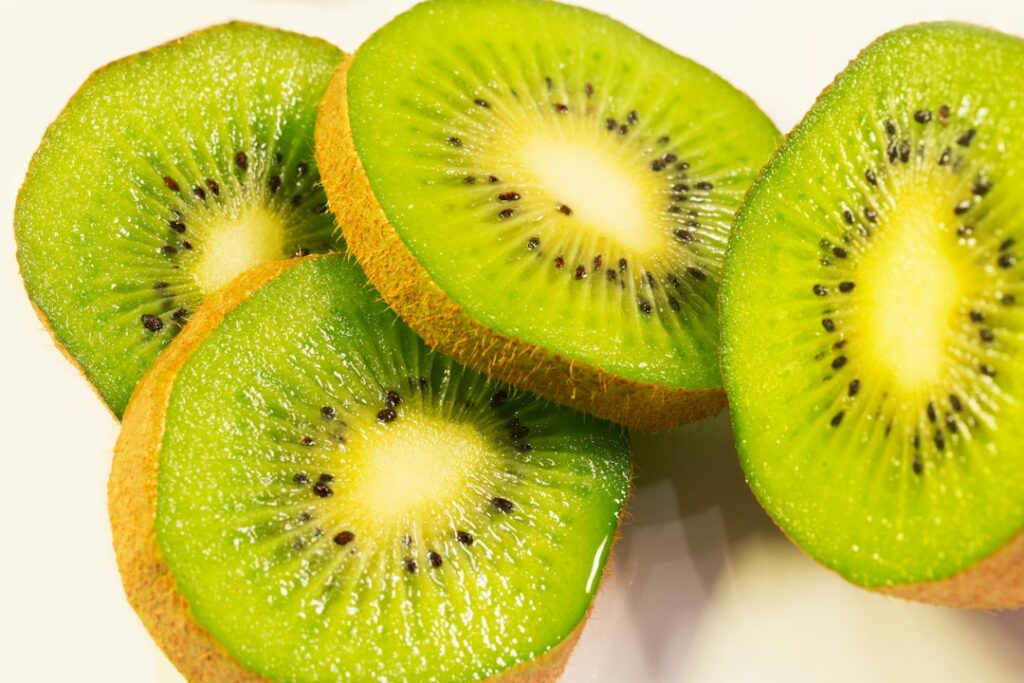
The best natural constipation remedies are 2 green kiwifruit a day, prunes, psyllium husk built up slowly, rye bread and mineral-rich water. In trials, 2 kiwifruit a day added about 1.5 bowel movements a week within 4 weeks. A toilet footstool and a morning routine help too. See a doctor about blood or weight loss.
In this article
- What counts as constipation?
- Why does constipation happen?
- What does your gut bacteria have to do with it?
- What are the best natural constipation remedies?
- Does a high-fibre diet always fix constipation?
- How do I start? A simple 2-week plan
- What if natural fixes are not enough?
- When should I see a doctor about constipation?
- Frequently asked questions
- What I want you to remember
In 2025 the British Dietetic Association published the first full diet guidelines for chronic constipation in adults. The experts pooled 75 trials. Two green kiwifruit a day, prunes, rye bread and mineral-rich water made the list. “Just drink more water and eat more fibre” turned out to be only part of the story.
In this guide I share 10 constipation remedies that have real research behind them. I explain how much to use, what the studies really showed and when it is time to see a doctor. I also explain why I always look at the gut bacteria when a client tells me they are stuck.
What counts as constipation?
Constipation means you pass stools less often than usual, or they are hard, lumpy or painful to pass. Many people also strain, or feel they have not fully emptied. Doctors usually call it chronic when it lasts for several months.
It is very common. A 2021 review pooled 45 studies with over 275,000 adults around the world. Using the newest Rome IV criteria, about 1 in 10 adults had functional constipation. Women were about twice as likely to have it as men.
Functional constipation is different from IBS with constipation, where belly pain is the main problem. If pain and bloating lead the picture, read my guide to IBS with constipation as well.
Why does constipation happen?
Constipation usually happens when stool moves too slowly through the colon, or when the muscles that push it out do not work well together. The slower stool moves, the more water the colon takes back, and the harder it gets.
Common triggers include low fibre, too little fluid, ignoring the urge to go, travel, stress and some medicines. Iron tablets, strong painkillers and GLP-1 medicines are well known examples. If you take one of those medicines, my guide to Ozempic constipation and bloating may help. Never stop or change a medicine without your doctor.
What does your gut bacteria have to do with it?
I strongly believe the gut bacteria are part of almost every constipation story. When clients come to me, I ask about their sleep, their gut health and their poop. Research now supports looking at the microbes too.
A 2026 review of the past 10 years of research found that people with constipation often have different gut bacteria from people without it. Some genetic studies suggest certain changes may come before constipation, not only after it. The authors were honest, though. Most studies are small, and microbe-based treatments are still early.
One gas made by gut microbes is linked with slow bowels. Methane is found in 30% to 50% of healthy adults, according to a 2014 review. Methane production is linked with slower transit and constipation, but scientists have not proven it is the cause. My guide to the gut-brain axis explains how these microbes also talk to your nerves and brain.
What are the best natural constipation remedies?
The best natural constipation remedies are kiwifruit, prunes, psyllium, rye bread and mineral-rich water, used every day for at least 2 to 4 weeks. A better toilet position and a regular routine help too. Here are 10 fixes, starting with the strongest evidence.
1. Eat 2 green kiwifruit a day
Kiwifruit has some of the best evidence of any food. A 2023 trial in New Zealand, Italy and Japan included 184 adults, some of them healthy volunteers. Each person ate 2 green kiwifruit a day for 4 weeks and took psyllium for another 4 weeks. People with constipation had about 1.5 more complete bowel movements a week on kiwifruit. Their gut comfort improved too.
The trial was funded by a kiwifruit company, so keep that in mind. A 2021 United States trial of 79 adults also found kiwifruit worked about as well as prunes and psyllium. Kiwifruit caused the fewest side effects and the fewest unhappy patients.
2. Try prunes
Prunes are dried plums, rich in fibre and sorbitol, a natural sugar that draws water into the bowel. In the 2021 trial, people ate 100 g (about 3.5 oz) of prunes a day. That is about 10 prunes. Stool frequency, stool softness and straining all improved.
Sorbitol can cause gas and loose stools in some people, especially with IBS. My guide to sorbitol and IBS explains why. Start with 3 or 4 prunes and build up.
3. Take psyllium the right way
Psyllium is the fibre supplement with the strongest proof. A 2022 review pooled 16 trials with 1,251 adults. About 66% of people improved on fibre, compared with 41% on the control. Psyllium worked best, at doses above 10 g a day for at least 4 weeks.
Fibre also caused more wind than the control, so go slowly. Start with 1 teaspoon a day in a large glass of water and build up over a few weeks. My guide to psyllium shows how to do it without bloating.
4. Swap white bread for rye bread
Rye bread helped more than white bread in a 2024 review. Across 2 small trials, rye bread added about half an extra bowel movement a week. The evidence is limited, but it is an easy swap. Look for wholegrain or wholemeal rye.
5. Drink mineral-rich water
Water high in minerals such as magnesium and sulfate may help. The same 2024 review pooled 4 studies with 539 people. People on high-mineral water were about 1.5 times more likely to improve than people on low-mineral water.
A 2026 German trial gave adults 1 litre (about 34 fl oz) a day of magnesium- and sulfate-rich water for 3 weeks. Bowel movements went up more than with normal water by week 2, and people felt better sooner. The main result at week 3 was not significant, so the benefit looks modest. Check the label for magnesium and sulfate, and ask your doctor first if you have kidney disease.
6. Drink enough fluid with your fibre
Fibre needs water to work. Psyllium and other fibres hold water and make stool softer and bulkier. If you add fibre without enough fluid, you may feel more blocked. Keep a glass of water with each fibre dose and sip through the day.
7. Put your feet on a stool
Raising your feet on a small stool can make going easier. In a 2019 study, 52 adults recorded 1,119 bowel movements with and without a toilet footstool. With the stool they strained less, emptied more fully and spent less time on the toilet. This was a small study in healthy young adults, but the change costs almost nothing.
8. Give your bowels a regular time
A regular routine helps your bowels learn when to go. Many people find the urge is strongest shortly after breakfast. Try sitting on the toilet for a few relaxed minutes after your morning meal. When you feel the urge during the day, go soon rather than holding on.
9. Have your morning coffee, if it suits you
Coffee helps some people go, but the research is mixed. A 2025 review found 8 studies on caffeine and constipation. Four suggested a benefit and 4 showed no help, or even more constipation. If coffee works for you, enjoy it. If it upsets your gut, read my guide to coffee and IBS.
10. Consider a probiotic or synbiotic
Some probiotics and synbiotics may help, but the evidence is weaker than for food. A 2024 analysis pooled 37 trials with 3,903 adults. Synbiotics, which mix probiotics with prebiotic fibres, raised weekly stool numbers. The certainty of the evidence was moderate to very low. My guide to probiotics for IBS explains how to choose and test one.
Does a high-fibre diet always fix constipation?
No, a high-fibre diet does not fix every case. This is a common myth. The 2025 British guidelines made no recommendation for whole diet approaches, because there was not enough evidence. The strongest proof is for specific foods and supplements.
Too much fibre too fast can also cause gas and bloating. My guide to fibermaxxing explains why slow and steady works better. Plant variety still matters for your gut bacteria, so my 30 plants a week guide is a good next step once you feel more regular.
How do I start? A simple 2-week plan
Start with one or two changes, give them 2 weeks and then add more. Changing everything at once makes it hard to see what works.
Try this
- Days 1 to 3. Eat 2 green kiwifruit a day, with or without the skin. Put a footstool by the toilet.
- Days 4 to 7. Add 1 teaspoon of psyllium in a large glass of water each day. Sit on the toilet for a few minutes after breakfast.
- Week 2. Swap white bread for rye bread. Try a mineral-rich water as part of your daily fluid.
- Keep a simple diary. Note how often you go and how your stool looks. My Gut Check game is a fun way to learn what a healthy stool looks like.
- After 4 weeks. Keep what helped. If little has changed, talk to your doctor.
What if natural fixes are not enough?
If food changes have not helped after about 4 weeks, there are well-tested medicines. A 2023 American guideline gave strong recommendations for several, including polyethylene glycol. It made conditional recommendations for fibre, senna and magnesium oxide.
Magnesium oxide is sold over the counter in many countries. In a 2021 Japanese trial of 90 adults, about 68% improved on magnesium oxide and 69% on senna, compared with about 12% on placebo. Magnesium is not safe for everyone, especially people with kidney disease. Ask your doctor or pharmacist before you take it.
Stress can slow your bowels too. My free 30-Day Calm Gut Challenge gives you a short daily habit to calm the gut and brain.
When should I see a doctor about constipation?
See a doctor if constipation is new and lasts more than a few weeks, especially as you get older. Also go if you see blood, lose weight without trying, or have severe pain. These signs need a proper check, not home remedies.
Losing 3 kg (about 7 lb) or more without trying is always worth a check. So is constipation that swaps with diarrhoea, or a stool shape that suddenly changes. My guide to IBS vs IBD explains other warning signs.
Frequently asked questions
How fast do natural constipation remedies work?
Most food fixes take days to weeks, not hours. In the kiwifruit and prune trials, people used them every day for 4 weeks. Psyllium worked best after at least 4 weeks. Give each change 2 to 4 weeks before you decide whether it helps.
How many kiwifruit should I eat for constipation?
Two green kiwifruit a day is the amount used in the main trials. You can eat them with breakfast or as a snack. Some people eat the skin for extra fibre. If you have a kiwi allergy, choose prunes or psyllium instead.
Is it safe to take psyllium every day?
For most adults, yes, psyllium is safe to take every day. Start with 1 teaspoon and build up slowly, and always take it with plenty of water. Take it at a different time from medicines, as fibre can affect how some are absorbed. Ask your pharmacist if you are unsure.
Do I need to go every day?
No, you do not need to go every day. Healthy bowel habits vary a lot from person to person. What matters more is a change from your usual pattern, hard stools, straining or pain.
Is drinking more water enough to fix constipation?
Water alone often does not fix constipation unless you are not drinking enough to begin with. Water works best together with fibre. Mineral-rich water may give a small extra boost, based on a 2024 review and a 2026 trial.
What I want you to remember
The best constipation remedies are simple foods used every day. Start with 2 green kiwifruit, a few prunes or a slow build of psyllium. Add rye bread, mineral-rich water, a footstool and a morning routine. Give each change 2 to 4 weeks.
Your gut bacteria play a part, so feed them a wide range of plants over time. If natural fixes are not enough, safe medicines exist, so talk to your doctor. If you also struggle with wind, read my guide to excessive gas, and start with my complete IBS diet guide if you have IBS.
Sources
- Dimidi E, et al. British Dietetic Association guidelines for the dietary management of chronic constipation in adults. Journal of Human Nutrition and Dietetics, 2025
- Barberio B, et al. Global prevalence of functional constipation according to the Rome criteria. A systematic review and meta-analysis. Lancet Gastroenterology and Hepatology, 2021
- Gearry R, et al. Consumption of 2 green kiwifruits daily improves constipation and abdominal comfort. American Journal of Gastroenterology, 2023
- Chey SW, et al. Exploratory comparative effectiveness trial of green kiwifruit, psyllium, or prunes in US patients with chronic constipation. American Journal of Gastroenterology, 2021
- van der Schoot A, et al. The effect of fiber supplementation on chronic constipation in adults. American Journal of Clinical Nutrition, 2022
- van der Schoot A, et al. Foods, drinks and diets and their effect on chronic constipation in adults. Alimentary Pharmacology and Therapeutics, 2024
- Mansouri K, et al. Daily consumption of sulfate- and magnesium-rich mineral water enhances bowel function in adults with chronic constipation. Frontiers in Nutrition, 2026
- Modi RM, et al. Implementation of a defecation posture modification device. Journal of Clinical Gastroenterology, 2019
- Latthe A, et al. The effectiveness of caffeine in reducing constipation in adults. A systematic review. International Urogynecology Journal, 2025
- Deng X, et al. Network meta-analysis of probiotics, prebiotics, and synbiotics for the treatment of chronic constipation in adults. European Journal of Nutrition, 2024
- Chang L, et al. AGA-ACG clinical practice guideline. Pharmacological management of chronic idiopathic constipation. Gastroenterology, 2023
- Morishita D, et al. Senna versus magnesium oxide for the treatment of chronic constipation. A randomized, placebo-controlled trial. American Journal of Gastroenterology, 2021
- Chen Y, et al. Gut microbiota and constipation. From causal evidence to therapeutic strategies. Frontiers in Microbiology, 2026
- Triantafyllou K, et al. Methanogens, methane and gastrointestinal motility. Journal of Neurogastroenterology and Motility, 2014
This article shares general information. It is not a diagnosis or a treatment plan. Please talk to your own doctor before you change your diet, medicines or supplements.

Dt. Hashika Vyas
Hashika is a dietitian who works with clients in 15+ countries on gut health, PCOS and weight. She healed her own IBS, and writes every guide on this site to be calm, clear and practical.