Green poop is usually harmless. It most often means food moved through your gut quickly, so bile did not have time to turn brown. Leafy greens, food colouring, iron tablets, antibiotics and stomach bugs are common causes. See a doctor for pale, black or bloody stools, fever, severe pain or diarrhoea lasting over 2 days.
In this article
- What does green poop mean?
- Why is poop normally brown?
- What causes green poop?
- Is green poop normal in babies?
- Is green poop a sign of IBS?
- When should you see a doctor about green poop?
- What can you do about green poop?
- How can you support the gut bacteria that colour your poop?
- Frequently asked questions
- What I want you to remember
Your poop is brown because of your gut bacteria. In 2024, scientists finally found the bacterial enzyme that starts turning green and yellow bile pigment into brown. So when you see green poop, your gut is often telling you something simple about speed, food or bile.
Green poop is usually harmless. I ask my clients about their poop, because it tells us a lot about the gut. In this guide I explain the common causes, what is normal for babies and the signs that mean you should see a doctor.
What does green poop mean?
Green poop usually means bile moved through your gut faster than normal, or you ate something green. It is rarely a sign of serious disease on its own.
Your liver makes bile to help you digest fat. Bile is a yellow to green fluid. As it travels through your gut, your bacteria slowly change its pigments. The final products give stool its normal brown colour.
If stool moves quickly, the bacteria have less time to do this work. The poop can come out green or yellow. One green poop after a big salad or a stomach bug is very common.
Why is poop normally brown?
Poop is brown because gut bacteria break down bilirubin, a pigment from old red blood cells. Your liver sends bilirubin into the gut with bile.
A 2024 study in Nature Microbiology found the enzyme that does the first key step. It is called BilR, and it turns bilirubin into urobilinogen. Most of the bacteria that carry it belong to a group called Firmicutes.
The team checked gut samples from many people. BilR was found in nearly all healthy adults. It was less common in newborn babies and in people with inflammatory bowel disease (IBD).
A 2026 study of 119 people looked at the last steps of this pathway. People with IBD had less stercobilin in their stool, the brown end product. They also had fewer bacteria from a family called Lachnospiraceae. This is early research, so it shows a link and not cause and effect.
What causes green poop?
The most common causes are fast transit, green foods, food colouring, iron tablets, antibiotics and gut infections. Here is what each one means.
Fast transit and diarrhoea
When stool rushes through, bile has less time to turn brown. This is why diarrhoea is often green or yellow. A 1997 study of 66 volunteers measured gut transit with small markers. When they took senna, a laxative, transit got faster and stools got looser.
Stool form matched transit time better than how often people went to the toilet. My guide on what to eat with diarrhea has a gentle plan for those days.
Green foods and food colouring
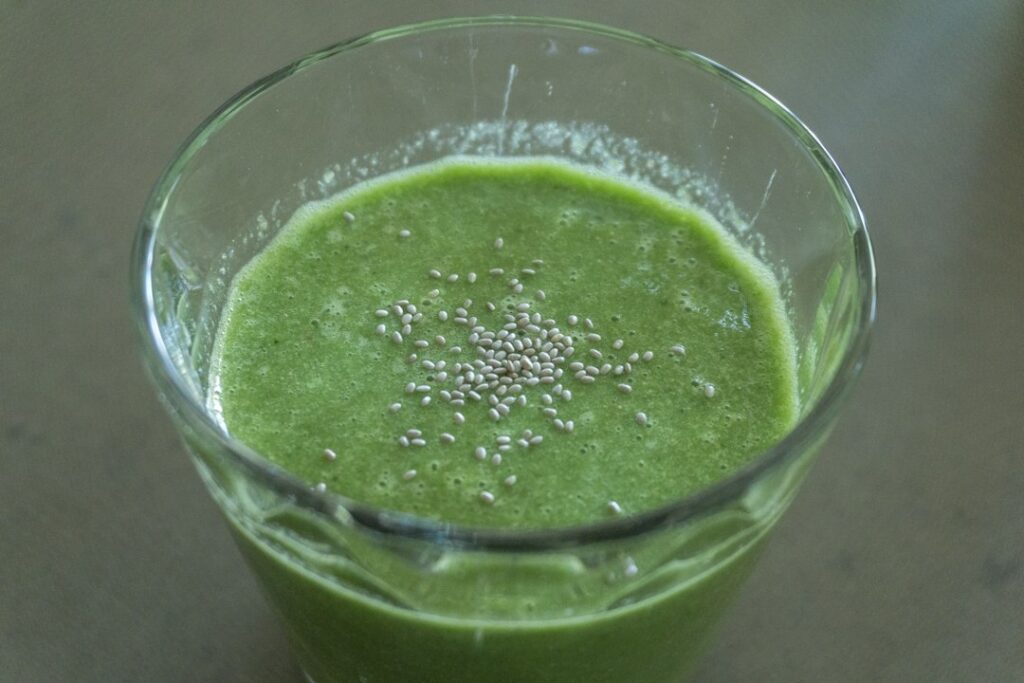
Spinach, kale, broccoli, green smoothies and herbs contain chlorophyll, the green pigment in plants. A large serving can tint your poop green. Green or blue food colouring in sweets, icing, sports drinks and party foods can do the same.
This is harmless. In fact, plenty of leafy greens is good news for your gut bacteria. My guide to 30 plants a week explains why variety matters.
Iron tablets
Iron can turn poop dark green or nearly black. The NHS lists darker than usual poo as a common side effect of ferrous sulfate and says it is usually nothing to worry about.
Iron can also upset the gut. A 2015 review of 43 trials and 6,831 adults found ferrous sulfate more than doubled the odds of gut side effects compared with a placebo. If iron bothers you, ask your doctor about other options. Never stop a prescribed iron tablet without advice.
Antibiotics
Antibiotics change your gut bacteria for a while. Fewer bacteria may mean less bile pigment gets turned brown. NIDDK lists antibiotics as a common cause of diarrhoea too, which speeds transit further. Colour usually returns to normal once you finish the course and your gut settles.
Gut infections
Stomach bugs and food poisoning often bring green, watery diarrhoea. The cause is usually the fast transit, not the colour of the germ. NIDDK names viral gastroenteritis and food poisoning as the most common causes of sudden diarrhoea.
Giardia, a parasite from unsafe water, causes smelly, greasy poop that can float, according to the CDC. My guide to food poisoning vs stomach flu can help you tell common bugs apart.
Bile acid diarrhoea
Some people do not reabsorb bile acids well, so extra bile reaches the colon. This draws in water and can cause urgent, loose and sometimes yellow or green stools.
A 2015 review of 6 studies and 908 people found this in 28% of adults diagnosed with IBS with diarrhoea. If you have long-term loose stools, ask your doctor whether a test for bile acid diarrhoea makes sense.
Is green poop normal in babies?
Yes, green poop is very common in healthy babies. A 2024 Finnish study followed 1,052 healthy babies for their first 17 weeks.
Nearly half of them, 47.4%, had mostly green stools for at least one week. Green poop was just as common in breastfed babies (47.7%) as in formula-fed babies (45.2%). Green stools went along with more frequent poops.
A 2012 Dutch study of 600 healthy babies found that by 3 months, half the stools of formula-fed babies were green. The authors said green stools in these babies should be seen as normal.
Newborns carry fewer of the bacteria that turn bilirubin brown, as the 2024 BilR study showed. That may be one reason baby poop is often yellow or green.
Which baby poop colours need a doctor?
Pale poop in a baby needs a doctor quickly. The NHS says to get an urgent appointment if a baby with jaundice has pale, creamy poo. Keep a nappy to show the midwife or doctor.
Pale stools can be a sign of biliary atresia, a rare blocked bile duct. Some countries give parents a stool colour card to spot it. A 2024 review of 7 studies and nearly 1 million babies found the card picked up about 80% of cases at one month of age.
Blood, black poop after the first few days or a baby who seems unwell also need a doctor.
Is green poop a sign of IBS?
Green poop is not a sign of IBS by itself, but it is common during IBS with diarrhoea. When stools are fast and loose, they are more often green or yellow.
I lived with IBS with diarrhoea myself, so I know how worrying a sudden change in your poop can feel. What matters most is the pattern. Tracking your stool form, colour and triggers for two weeks tells you far more than one strange poop.
A 2016 study of 53 healthy women linked looser stools with fewer types of gut bacteria. A 2021 study of 863 people used blue muffins to time gut transit. Transit time was linked with the gut microbiome more closely than stool form or frequency.
My IBS with diarrhoea diet guide explains how to calm fast transit with food. For a wider plan, read my complete IBS diet guide.
When should you see a doctor about green poop?
See a doctor if green poop lasts more than a few days with diarrhoea, or comes with any warning sign. NIDDK says adults should see a doctor if diarrhoea lasts more than 2 days or they have 6 or more loose stools in a day.
Get help straight away for black, tar-like or red poop, or blood or pus in your stool. The same goes for a high fever, severe belly pain or signs of dehydration. The NHS advises calling for urgent advice if diarrhoea lasts more than 7 days or contains blood. Losing 3 kg (about 7 lb) or more without trying also needs a check.
Green poop with mucus can mean your gut is irritated. My guide to mucus in stool explains when that is normal. If you are worried about IBD, read my guide to IBS vs IBD.
What can you do about green poop?
Most of the time you do not need to do anything. If the cause is food or a short stomach bug, colour returns to brown within a day or two. Try these steps if it keeps happening.
- Think back 24 to 48 hours. Note any green smoothies, leafy greens, coloured sweets, iron tablets or new medicines.
- Drink enough fluid. With diarrhoea, sip water or an oral rehydration drink often. Small, frequent sips are easier on an upset gut.
- Eat gentle foods for a day or two. Rice, oats, bananas, eggs, toast and plain chicken or fish are easy choices.
- Add soluble fibre slowly. Oats and psyllium can firm up loose stools. My guide to soluble vs insoluble fibre explains the difference.
- Keep a two week poop diary. Write down colour, form, timing, food and stress. Bring it to your doctor if things do not settle.
- Take iron with advice. If iron changes your poop, that is expected. If it upsets your gut, ask about a different dose or type.
Try this today. Play my Gut Check game to see what your gut signs may be telling you.
How can you support the gut bacteria that colour your poop?
Feed them a wide range of plant foods. I strongly believe gut health shapes nearly every part of our health, and even the colour of your poop depends on your gut bacteria.
The research on bilirubin bacteria is new, and no study yet shows that a certain diet changes poop colour. But fibre from beans, lentils, oats, fruit, vegetables, nuts and seeds feeds many helpful gut bacteria. Steady meals, good sleep and calm, slow eating help keep transit regular too.
Frequently asked questions
Can stress cause green poop?
Stress can speed up your gut and cause loose stools, and fast stools are more often green. So stress may lead to green poop in some people. It is the speed, not stress itself, that changes the colour.
Is green poop a sign of infection?
It can be, but usually it is not. Gut infections often cause fast, watery diarrhoea that looks green. See a doctor if you also have a high fever, blood in your stool, severe pain or diarrhoea that lasts more than 2 days.
How long does green poop last?
Green poop from food or a short bout of diarrhoea usually goes back to brown within a day or two. If it lasts longer than a few days without a clear cause, keep a diary and talk to your doctor.
Why is my poop dark green?
Dark green poop often comes from iron tablets, lots of leafy greens or dark food colouring. The NHS lists darker poo as a common side effect of iron. Black, tar-like poop is different and needs a doctor quickly.
Is green poop normal for breastfed babies?
Yes. A 2024 study of 1,052 healthy babies found nearly half had mostly green stools for at least one week. It was as common with breastfeeding as with formula. Pale, white or creamy poop is the colour that needs a doctor.
What I want you to remember
Green poop is usually harmless. It most often means food moved through quickly, or you ate something green. Your gut bacteria turn bile brown, so a fast gut or a change in bacteria can leave it green.
Look at the pattern, not one poop. Pale, black or bloody stools, fever, severe pain or diarrhoea that will not settle all need a doctor. If you want a calm, guided reset for your gut, join my free 30-Day Calm Gut Challenge.
Sources
- Hall B, et al. BilR is a gut microbial enzyme that reduces bilirubin to urobilinogen. Nature Microbiology, 2024
- Sabti O, et al. Disrupted terminal bilirubin catabolism links Lachnospiraceae depletion to inflammatory bowel disease. Frontiers in Microbiology, 2026
- Lewis SJ, Heaton KW. Stool form scale as a useful guide to intestinal transit time. Scandinavian Journal of Gastroenterology, 1997
- Vandeputte D, et al. Stool consistency is strongly associated with gut microbiota richness and composition, enterotypes and bacterial growth rates. Gut, 2016
- Asnicar F, et al. Blue poo. Impact of gut transit time on the gut microbiome using a novel marker. Gut, 2021
- Solasaari T, et al. Bowel function in a prospective cohort of 1052 healthy term infants up to 4 months of age. European Journal of Pediatrics, 2024
- den Hertog J, et al. The defecation pattern of healthy term infants up to the age of 3 months. Archives of Disease in Childhood Fetal and Neonatal Edition, 2012
- Gopal SH, et al. Population-based screening strategies for biliary atresia in the newborn. A systematic review and meta-analysis. PLOS ONE, 2024
- Slattery SA, et al. Systematic review with meta-analysis. The prevalence of bile acid malabsorption in the irritable bowel syndrome with diarrhoea. Alimentary Pharmacology and Therapeutics, 2015
- Tolkien Z, et al. Ferrous sulfate supplementation causes significant gastrointestinal side-effects in adults. A systematic review and meta-analysis. PLOS ONE, 2015
- NHS. Side effects of ferrous sulfate. Reviewed 2023
- NHS. Jaundice in babies. Reviewed 2026
- NHS. Diarrhoea and vomiting. Reviewed 2023
- NIDDK. Symptoms and causes of diarrhea. Reviewed 2024
- CDC. About Giardia infection. Reviewed 2026
This article shares general information. It is not a diagnosis or a treatment plan. Please talk to your own doctor before you change your diet, medicines or supplements.

Dt. Hashika Vyas
Hashika is a dietitian who works with clients in 15+ countries on gut health, PCOS and weight. She healed her own IBS, and writes every guide on this site to be calm, clear and practical.