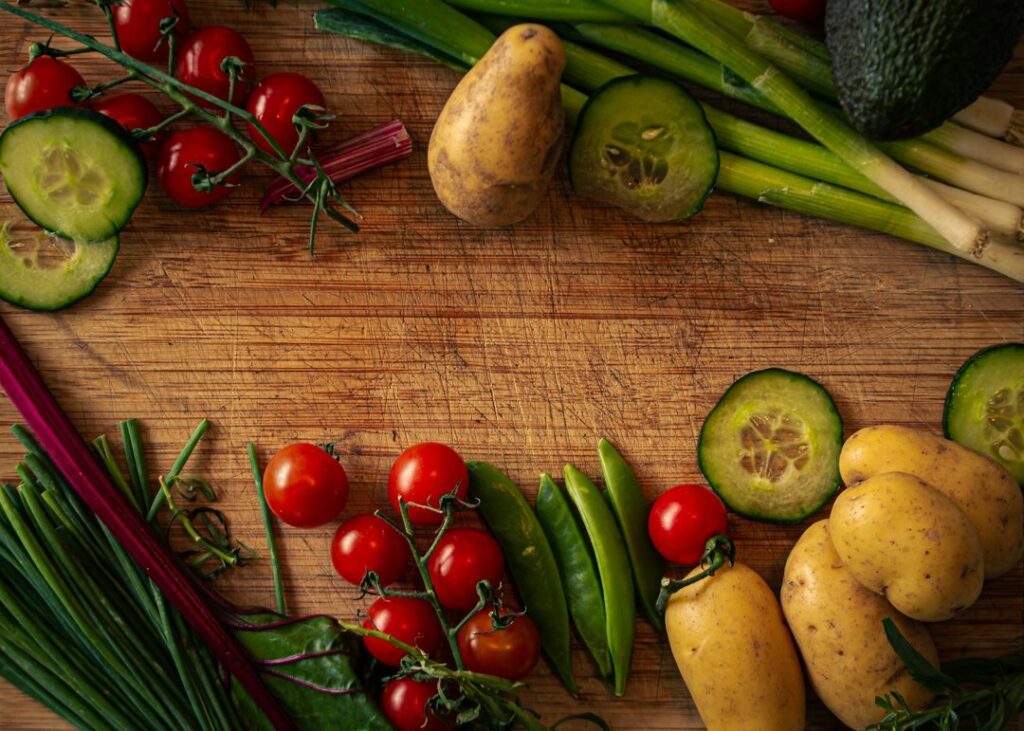
FODMAP foods are carbs that a sensitive gut ferments, causing gas, bloating and pain in IBS. High FODMAP foods include garlic, onion, wheat bread, beans, apples, honey and milk. Low FODMAP foods include rice, oats, potatoes, carrots, eggs, plain meat, firm tofu, hard cheese, oranges and kiwifruit. Portion size often decides which list a food is on.
In this article
- What are FODMAP foods?
- Which foods are high in FODMAPs?
- Which foods are low in FODMAPs?
- Why can the same food be low or high FODMAP?
- Which FODMAP foods trigger IBS most often?
- Does a low FODMAP diet really work for IBS?
- What does a low FODMAP diet do to your gut bacteria?
- How do you use a FODMAP food list the right way?
- Frequently asked questions
- What I want you to remember
FODMAP foods are everyday foods rich in short-chain carbs that your gut bacteria ferment. Monash University, the team that created the low FODMAP diet, says symptoms improve in 3 out of 4 people with IBS who follow it. That makes a good list of FODMAP foods one of the most useful tools you can have.
Monash also warns that many FODMAP food lists online are inaccurate. So this guide sticks to what Monash has published, what lab tests show and what recent trials found. I healed my own IBS-D, and the right list, used the right way, was a big part of my story.
What are FODMAP foods?
FODMAP foods are foods that contain sugars and fibres your small intestine does not fully absorb. FODMAP stands for fermentable oligosaccharides, disaccharides, monosaccharides and polyols. Monash describes them as short-chain carbohydrates.
When these carbs reach your large bowel, gut bacteria ferment them and make gas. They also pull water into the bowel. Most people never notice. In people with IBS, the stretch in the bowel wall can cause pain, bloating, wind and changes in poop.
There are 5 main FODMAP groups. Monash lists these common sources.
- Fructans. Wheat, rye, onion, garlic and some fruits and vegetables.
- GOS (galacto-oligosaccharides). Beans, lentils, chickpeas and other legumes.
- Lactose. Milk, soft cheeses and yogurt.
- Excess fructose. Honey, apples, mango and high fructose corn syrup.
- Polyols (sorbitol and mannitol). Some fruits and vegetables, plus sugar-free sweets and gum.
FODMAP foods are not bad foods. Many of them feed your helpful gut bacteria. The problem is only how a sensitive gut reacts to them.
Which foods are high in FODMAPs?
High FODMAP foods include garlic, onion, wheat bread, beans, apples, honey and regular milk. Here is the sample list Monash University publishes, grouped by food type.
High FODMAP vegetables
- Artichoke, asparagus, garlic, leek, onion and spring onion bulbs (fructans)
- Green peas and sugar snap peas
- Mushrooms, celery and cauliflower (mannitol, for mushrooms and celery)
- Red capsicum, also called red bell pepper
Garlic and onion are the big ones because they hide in so many meals. My guides on garlic and onion show how to keep the flavour without the fructans. Most fresh mushrooms are high too, though oyster mushrooms are a safe swap.
High FODMAP fruits
- Apples, pears, nashi pears, mango, watermelon and figs (excess fructose)
- Cherries, peaches, nectarines and plums (sorbitol)
- Apple juice and dried fruit
Apples are high in both excess fructose and sorbitol, which is why they bother so many people.
High FODMAP dairy
- Cow’s milk, evaporated milk and sweetened condensed milk
- Yogurt, custard and ice cream
- Soft fresh cheeses
- Soy milk made from whole soybeans
High FODMAP grains, legumes and protein
- Wheat, rye and barley breads, wheat pasta, many breakfast cereals, biscuits and snack products
- Most legumes, such as red kidney beans, baked beans, split peas and falafel
- Some marinated meats, sausages, salami and meats in gravy or sauce
- Cashews and pistachios
High FODMAP sweeteners
- Honey and high fructose corn syrup
- Sugar-free sweets and gum made with polyols such as sorbitol and xylitol
My guide to sorbitol and IBS explains why sugar-free products can act like a laxative.
Which foods are low in FODMAPs?
Low FODMAP foods include rice, oats, potatoes, carrots, eggs, plain meat and fish, firm tofu, hard cheeses and lactose-free milk. Monash publishes this sample list of low FODMAP choices.
Low FODMAP vegetables
- Eggplant, carrot, cucumber, lettuce, green beans and bok choy
- Green capsicum, zucchini and potato
- Spinach and broccoli heads at a 75 g (2.65 oz) serve
Low FODMAP fruits
- Cantaloupe, green kiwifruit, mandarin, orange and pineapple
- Blueberries
- Strawberries at 65 g, about 5 medium berries
- A firm, just-yellow banana
Low FODMAP dairy and dairy swaps
- Lactose-free milk and lactose-free yogurt
- Hard cheeses, brie, camembert and feta
- Butter
- Almond milk and soy milk made from soy protein
Monash advises choosing plant milks with more than 120 mg of calcium per 100 ml. My guide on cheese lists the gentlest choices.
Low FODMAP grains and protein
- Oats, rice, quinoa, plain rice cakes and corn or rice pasta
- Spelt sourdough and wheat, rye and barley free breads
- Eggs, firm tofu, tempeh and plain cooked meat, poultry and seafood
- Rinsed canned lentils in a small serve
Low FODMAP nuts, seeds and sweeteners
- Macadamias, peanuts, walnuts and pumpkin seeds
- Peanut butter made only from peanuts and salt
- Maple syrup, rice malt syrup, table sugar and dark chocolate
Monash says most seeds are low FODMAP. Coffee is low FODMAP too, though it can still stir the bowel. My guide to coffee and IBS covers that.
Why can the same food be low or high FODMAP?
The same food can be low or high FODMAP because the amount you eat decides the dose. Monash rates foods with a traffic light in its app. Many foods turn from green to amber or red as the portion grows.
- Sweet potato. Monash lists 75 g (about 2.65 oz) as low FODMAP. Over 100 g it holds moderate mannitol.
- Strawberries. 65 g is low. At 100 g or more they hold a large amount of fructose.
- Broccoli. The heads are low at 75 g. The stalks have a much smaller safe serve, reported at about 45 g.
- Banana. Ripeness matters. A firm banana is low, while a soft, ripe one is higher in fructans.
- Lentils and chickpeas. Canned and rinsed is gentler than dried and boiled, because some GOS washes into the canning water.
FODMAPs also stack up. Three small low FODMAP serves at one meal can add up to a high dose. So spread your fruit and small serves across the day.
Monash keeps exact serves in its app and updates them as testing improves. The figures above come from my earlier food guides, so check the app for the latest number.
Which FODMAP foods trigger IBS most often?
Fructans and mannitol trigger IBS most often, according to a 2024 trial in Gastroenterology. Researchers in Belgium gave 117 people with IBS a 6-week low FODMAP diet. Then those who improved tested each FODMAP, hidden in a powder, without knowing which one they had.
- Fructans brought back symptoms in 56%.
- Mannitol did so in 54%.
- GOS did so in 35%.
- Lactose did so in 28%.
- Fructose did so in 27%.
- Sorbitol did so in 23%.
Here is the honest twist. The glucose control powder also brought back symptoms in 26%. That is a reminder that expectation and a sensitive gut play a part too.
On average each person reacted to 2.5 FODMAPs, not all of them. So you do not need to avoid every food on the high list forever. You need to find your own triggers.
Fructans also explain a lot of so-called gluten sensitivity. In a 2018 Norwegian trial, 59 people who avoided gluten ate hidden gluten, fructans or a placebo in muesli bars. Fructans raised symptoms and bloating, while gluten did not differ from placebo. My guide on gluten sensitivity vs FODMAPs explains more.
Does a low FODMAP diet really work for IBS?
Yes, a low FODMAP diet has more trial evidence than any other diet for IBS. The American College of Gastroenterology’s 2021 guideline recommends a limited trial of it to improve global IBS symptoms.
- A 2014 Monash trial. 30 people with IBS ate almost all their food from the study for 21 days. Symptom scores were about half as high on the low FODMAP diet as on a typical Australian diet.
- A 2017 UK trial. 104 people with IBS were counselled on a low FODMAP diet or a sham diet. Adequate relief was 57% vs 38%, a gap that just missed statistical significance. Symptom severity scores were clearly lower.
- A 2022 network meta-analysis in Gut. Across 13 trials and 944 patients, the low FODMAP diet ranked first for global symptoms, pain and bloating.
- A 2025 network meta-analysis in Lancet Gastroenterology and Hepatology. Across 28 trials and 2,338 patients, it was the only diet that beat a usual diet for bloating. A starch and sugar reduced diet ranked higher for global symptoms, but in only 2 trials.
The low FODMAP diet is not the only option. In a 2022 Sheffield trial of 99 people with non-constipated IBS, 55% responded to low FODMAP and 42% to traditional dietary advice. That gap was not statistically significant, and people found traditional advice cheaper and easier.
Monash also says the diet does not cure IBS. About 1 in 4 people do not improve on it. If that is you, other options like gut-directed hypnotherapy, fibre or medicine may help more.
What does a low FODMAP diet do to your gut bacteria?
A low FODMAP diet lowers Bifidobacteria, one group of helpful gut bacteria. I strongly believe gut health shapes nearly every part of your health, so this matters to me.
A 2022 meta-analysis of 9 trials and 403 patients found the diet consistently lowered Bifidobacteria. It found no clear change in overall diversity, in short-chain fatty acids or in stool pH. In the 2017 UK trial, a multistrain probiotic brought Bifidobacteria back up.
This is why the strict phase is short, usually 2 to 6 weeks. You then bring foods back to feed your bacteria again. Long-term data is reassuring so far. A 2026 Australian study saw 74 people about 7 years after low FODMAP education. Their FODMAP intake was not linked to metabolic syndrome or new illness, though the study was small and had no control group.
My view is simple. Restrict briefly, then widen your diet as far as your gut allows. Variety is food for your microbiome. My guide to relieving gas has gentle extras for the meantime.
How do you use a FODMAP food list the right way?
Use a FODMAP food list as a short-term map, not a lifelong rulebook. The diet has 3 phases, and the list matters most in the first one. My guide to the 3 phases of the low FODMAP diet covers each step.
- Get checked first. See your doctor to rule out coeliac disease and other conditions before you change your diet. Monash says the diet is meant for people with diagnosed IBS.
- Swap, do not just cut. Replace each high FODMAP food with a low one from the same group, so your meals stay full and balanced.
- Keep the strict phase short. Monash says benefits usually show within 2 to 6 weeks.
- Weigh a few key foods once. Learn what 75 g of a vegetable or 65 g of berries looks like on your plate.
- Read labels. Look for inulin, chicory root, honey, apple juice concentrate, high fructose corn syrup, sorbitol, mannitol and xylitol.
- Test one FODMAP group at a time. Bring back one food for 3 days, watch your gut, then wait before the next.
- Keep a simple diary. Note food, portion, stress, sleep and your poop. Patterns show up within weeks.
- Work with a dietitian if you can. Monash and UK experts both advise dietitian support.
Be careful if food already feels scary. A 2026 study looked at 326 people with IBS at a specialist centre. It found 33% met criteria compatible with ARFID, an eating disorder of avoidance and restriction. If your food list keeps shrinking, a strict diet is not the answer. Please talk to your doctor or a dietitian.
Want to test what you have learned? Play my Trigger or Safe game and sort foods in seconds.
Frequently asked questions
What foods are high in FODMAPs?
Common high FODMAP foods include garlic, onion, leek, wheat and rye bread, and most beans and lentils. Apples, pears, mango, watermelon, honey, regular milk, soft cheese and sugar-free sweets are high too. Monash University publishes a sample list by food group. Many foods are only high in larger portions, so check the Monash app for exact serves.
What can I eat on a low FODMAP diet?
You can eat rice, oats, quinoa, potatoes, carrots, zucchini, spinach, eggs, plain meat, fish, firm tofu, hard cheese, lactose-free milk, oranges, kiwifruit, pineapple and blueberries. Flavour food with garlic-infused oil, fresh herbs and the green tops of spring onions. A balanced low FODMAP plate can be just as varied as a usual one.
How long should I avoid high FODMAP foods?
Most people avoid high FODMAP foods for only 2 to 6 weeks, according to Monash University. After that you bring foods back one group at a time to find your triggers. Staying strict for months is not advised, because it lowers helpful Bifidobacteria and makes eating harder than it needs to be.
Is a low FODMAP diet good for weight loss?
No, a low FODMAP diet is not a weight loss plan. Monash University says so clearly. It is a short test to find which carbs trigger your IBS symptoms. Some people lose a little weight while learning it, so plan full meals. If you lose 3 kg (about 7 lb) or more without trying, see your doctor.
Why do FODMAP lists online disagree?
FODMAP lists disagree because portion size changes a food’s rating, foods are retested over time and many lists copy old or untested data. Monash University warns that online lists are often inaccurate. Use the Monash app or a list based on it, and check the serve size, not just whether a food is listed.
What I want you to remember
FODMAP foods are not good or bad foods. They are carbs that a sensitive gut can react to, and portion size often decides whether a food is safe. Fructans and mannitol are the most common triggers, but most people react to only 2 or 3 groups.
Use the list for a short reset, then bring foods back so your gut bacteria stay well fed. For the bigger picture, read my complete IBS diet guide, and join my free 30-Day Calm Gut Challenge for gentle daily support.
Sources
- Monash University. FODMAP food list (high and low FODMAP foods)
- Monash University. FODMAPs and irritable bowel syndrome
- Lacy BE, et al. ACG clinical guideline. Management of irritable bowel syndrome. American Journal of Gastroenterology, 2021
- Vasant DH, et al. British Society of Gastroenterology guidelines on the management of irritable bowel syndrome. Gut, 2021
- Van den Houte K, et al. Efficacy and findings of a blinded randomized reintroduction phase for the low FODMAP diet in irritable bowel syndrome. Gastroenterology, 2024
- Halmos EP, et al. A diet low in FODMAPs reduces symptoms of irritable bowel syndrome. Gastroenterology, 2014
- Staudacher HM, et al. A diet low in FODMAPs reduces symptoms in patients with irritable bowel syndrome and a probiotic restores Bifidobacterium species. A randomized controlled trial. Gastroenterology, 2017
- Black CJ, Staudacher HM, Ford AC. Efficacy of a low FODMAP diet in irritable bowel syndrome. Systematic review and network meta-analysis. Gut, 2022
- Cuffe MS, et al. Efficacy of dietary interventions in irritable bowel syndrome. A systematic review and network meta-analysis. Lancet Gastroenterology and Hepatology, 2025
- Rej A, et al. Efficacy and acceptability of dietary therapies in non-constipated irritable bowel syndrome. A randomized trial of traditional dietary advice, the low FODMAP diet, and the gluten-free diet. Clinical Gastroenterology and Hepatology, 2022
- Rej A, et al. Diet and irritable bowel syndrome. An update from a UK consensus meeting. BMC Medicine, 2022
- Skodje GI, et al. Fructan, rather than gluten, induces symptoms in patients with self-reported non-celiac gluten sensitivity. Gastroenterology, 2018
- So D, Loughman A, Staudacher HM. Effects of a low FODMAP diet on the colonic microbiome in irritable bowel syndrome. A systematic review with meta-analysis. American Journal of Clinical Nutrition, 2022
- Silva H, et al. Metabolic syndrome and health outcomes many years after education in a low FODMAP diet in patients with irritable bowel syndrome. JGH Open, 2026
- Mikhael-Moussa H, et al. When food avoidance meets compatible diagnostic criteria. Avoidant/restrictive food intake disorder features in irritable bowel syndrome. Neurogastroenterology and Motility, 2026
This article shares general information. It is not a diagnosis or a treatment plan. Please talk to your own doctor before you change your diet, medicines or supplements.

Dt. Hashika Vyas
Hashika is a dietitian who works with clients in 15+ countries on gut health, PCOS and weight. She healed her own IBS, and writes every guide on this site to be calm, clear and practical.